Category: COVID-19 Massage Safety/Making Money

  • Google My Business Questions & Answers

    How do you complete Google My Business Questions & Answers when a customer hasn’t submitted a question?

    You write the questions yourself and answer them.

    Wait, that’s deceptive, Mark.

    Well, first of all, you’re not claiming that a specific client, like Terrance, asked you a specific question.

    And if you’re approaching Google My Business (GMB) Q&A with your customer in mind, then you’re doing all your potential customers a favor by answering the common questions that many will have.

    By the way, when you answer common customer-questions you’re doing yourself a favor too because it’s also good marketing.

    How so?

    For one, answering questions shows that you’re going above-and-beyond with your customer care.

    In addition, you can also address common “barrier-to-entry” themes in a way that will give your potential client/customer peace of mind.

    And icing on the cake is that Google likes it when you check all the GMB boxes.

    So, in order to squeeze every drop of marketing juice from your GMB Q&A I’ve categorized the most important questions that customers have asked me during my 25+ years as a business owner.

    Here are my categories:

    1. COVID-19 questions
    2. 1st-time client questions
    3. Barrier-to-entry questions
    4. Set-yourself-apart questions.

    Before we jump into the questions I need to show you how to add questions to your GMB page.

    You are not going to do this in your account.

    You are actually going to do a Google search for your business. When you do, your GMB page will come up on the side. Scroll down your page until you see Questions and Answers and click on Ask a Question.

    You can check out our GMB page by Googling PressurePerfect Massage.

    Okay, now to the questions.

    COVID-19 Questions

    Letting potential customers know the COVID-19 safety measures you have implemented is a must. And a Q&A format is a great way to get that information out.

    Here’s an example of how you could do Q&A around COVID-19:

    Q: Does the massage therapist wear a mask during the massage?

    Yes. The massage therapist will wear a N95, double-layer cotton mask or a 3-ply surgical mask during the massage.

    In addition, we limit the number of people in our office at a time to two, each room has a HEPA air filter unit and each room is thoroughly disinfected after each massage.

    Q: Do I need to wear a mask during the massage?

    No. Therapists are trained to dodge droplets.

    Haha. Okay, here’s my real answer:

    Yes. To help protect all clients we require everyone in the office to wear a mask at all times. We offer disposable medical masks for anyone who wants one. Some clients prefer the disposable medical mask while on the table because there’s flex to the material.

    Q: What do I do when I arrive?

    In order to assure that you’re not in the office when another client is in the office, please stay in your car and the massage therapist will come out to get you or will text you when it’s okay to come in.

    Safety questions like these are the number one thing that I’d want answered if I were looking for a massage right now, especially if I were a first-time client.

    Speaking of first-time clients, here are some Q&A that we have on our GMB page.

    First-Time Client Questions

    Q: Do I need to fill out an intake?

    Yes. Please go to our website www.pressureperfectmassage.com. Scroll down and towards the bottom of the page you’ll find an intake-form link. Click on the link and you can either print out the form, fill it out and bring it in with you when you come for your appointment or you can complete the form as a Word doc and email it to  mark@pressureperfectmassage.com.

    Q: How should I pay?

    We take cash, check, credit card, Paypal or Venmo.

    Also, in case you didn’t know, we have a no tipping policy. It keeps the math easy and you don’t need to worry about running to the ATM before your massage.

    Q: Do I keep my clothes on during the massage?

    Disrobe to your comfort level. During the massage, you’ll be covered by a blanket and sheet. When the massage therapist is working a particular area, she/he will expose only the area she/he is working while keeping everything else covered.

    For example, if the massage therapist is working your back, the sheet and blanket will be covering your entire lower-body.

    At this point, you may be noticing that some first-time Q&A sound a lot like barrier-to-entry questions.

    For example, a 1st-time massage customer may want to know how much he needs to disrobe for the massage, and at the same time disrobing could be considered a barrier-to-entry because of the general uncertainty around disrobing.

    So, now I want to focus on barrier-to-entry questions that are not necessarily 1st-time client questions.

    Barrier-To-Entry Questions

    Q: Do you do charge extra for deep pressure massage?

    No. We charge the same price for relaxation, deep pressure and sports massage.

    Q: Do you accept insurance?

    We accept Workers’ Compensation. We would like to accept auto or health insurance, but they are not reimbursed in PA.

     Q: Is massage helpful when I’m going to PT?

    You’ll need to ask your PT that question as it relates to your case. That said, when we’re working with a client who is in PT, we encourage the client to allow us to coordinate care with the physical therapist.

    For example, say you strained your back and are going to PT and are now coming to see us. With your consent we would reach out to your PT so that we could all be on the same page to getting you healthy.

    The last category of questions is set-yourself-apart questions. And like 1st-time-client and barrier-to-entry, there’s cross-over. That’s okay. The point is not have sharply defined categories. The point is to make sure that your Q&A section is helpful to potential customers and puts your best foot forward.

    Set-Yourself-Apart Questions

    When you’re thinking of set-yourself-apart questions, think of your massage and massage business strong points. Here’s one we use:

    Q: Do you work with runners?

    Yes. Runners come to see us for help with plantar fasciitis, tibialis posterior tendinopathy, hamstring strains, IT band syndrome and other running issues.

    We also help runners who are training for events by being part of their recovery and monitoring process.

    In addition, we collaborate with running coaches and personal trainers to help their clients reach their running goals.

    Q: Do you work with chiropractors?

    Yes. We coordinate care with chiropractors, physical therapists, personal trainers, exercise physiologists and other medical/health professionals because being on the same page is the key to achieving health/wellness goals.

    As you work on your Q&A information you may start to notice that a narrative is emerging. In other words, each answer to a question is defining who you are as a business, and themes and sub-themes are starting to emerge.

    Your Business Narrative

    Take a look at our boiled-down version of our GMB Q&A page:

    Does the massage therapist wear a mask? Yes.

    Do I need to wear a mask? Yes

    What do I do when I arrive? Stay in your car.

    Do I fill out an intake? Yes—email it or bring it in.

    Do I take my clothes off for the massage? Disrobe to comfort level.

    How do I pay? Cash, check, credit card, Paypal, Venmo. No tipping.

    Do you charge extra for deep pressure? No.

    Do you accept insurance? Only Workers’ Compensation

    Is massage helpful when going to PT? We defer to your PT and we’ll co-ordinate care with your PT.

    Do you work with runners? Yes—and we coordinate care with running coaches and personal trainers.

    Do you work with chiropractors? Yes—and we coordinate care with chiropractors and any health/wellness professional you would like us to contact.

    Here’s the narrative that emerges in my brain from reading our short-version Q&A:

    PressurePerfect takes Covid-19 safety very seriously. They go out of their way to ensure that you are as safe as possible when getting a massage. They are health and wellness oriented and routinely coordinate care with other health professionals to help your reach your health and wellness goals.

    Guess what? That narrative is not new. It’s the same narrative that’s on our website and on our Yelp page.

    I need to mention that I chose the word “narrative” to describe what you offer to your clients over other words like “messaging” or “branding”.

    I did that for a reason. To me, “branding” and “messaging” feel more market-y, and “narrative” makes me think harder about who I am and what I have to offer.

    But don’t get hung up on the words. Whether you call it a “narrative”, “messaging” or “branding”, you’re relaying specific information—who you are and what you offer—to the customer.

    The good thing here is that once you figure out what your narrative is, you can plug it into all of your social media and free, online advertising platforms, like GMB and Yelp.

    GMB Q&A Recap

    Here’s my GMB Q&A recap:

    Create the questions for these 4 categories:

    1. COVID-19 questions
    2. 1st-time client questions
    3. Barrier-to-entry questions
    4. Set-yourself-apart questions.

    Answer how you’re keeping clients safe as possible.

    Address the fears of 1st-timers.

    Remove common barrier-to-entry concerns.

    Show how your business is different from the businesses around you.

    And as you’re creating the Q&A section on your GMB page, pay attention to the business narrative that’s emerging.

    Are you creating questions that emphasize your relaxation massage?

    Are you creating questions that sell rehab massage?

    What are the questions that your ideal customer is asking?

    That narrative should be consistent in all of your advertising.

    If you already know your narrative, plug it into your GMB Q&A.

    Need Help?

    If you want to work with me to get your business off the ground, the easiest and cheapest way is to sign up for the Accelerator Program.

    It has the GMB plan that I used to build and grow my business. It also has my referral building (word of mouth) plan as well as all of my free (or very low cost) tactics for building a business using strategic effort rather than paid-for advertising.

    Lastly it has me in it–3 months of email support. Email me with any questions have you and we’ll get it done together.

    Accelerator
  • N95 Masks for Massage Therapists

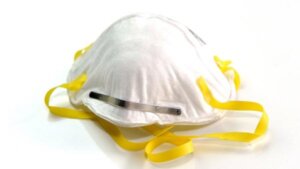
    N95 Masks for Massage Therapists

    Should you wear a N95 mask when doing a massage during Covid-19?

    Yes.

    Why?

    COVID-19 is an airborne illness. The first place to stop COVID-19 from enter your lungs and going into your bloodstream are at the holes where air comes in, nostrils and mouth.

    A mask keeps the COVID -19 virus out and if you have it, it can help keep the COVID-19 virus in.

    • If N95s are out of your price range or you’re having a hard time finding them, skip to the bottom of this article for some alternatives.

    The Research Behind Masks

    Recently the CDC stated the importance of a mask in protecting the wearer.  And there has been compelling examples from the beginning of this pandemic that masks protect wearers like this one: In July of 2020 two hair stylists in Sprinfield, Missouri tested positive for Covid-19 after interacting with 139 clients and 6 coworkers.

    Here’s the important thing: No one they interacted with was known to get Covid-19.

    How did that happen?

    Most experts think it was because both the hair stylists, fellow employees and customers wore masks.

    Studies bolstered this conclusion.

    Can you say mask up?

    But not with any mask in the massage room. Mask up with a good mask.

    The N95 Advantage

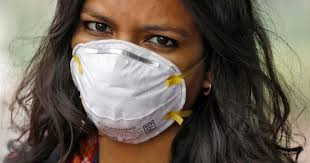
    According to a Duke study, the best mask to protect the user and the people around the user is the N95.

    The N95 is a “respiratory protective device designed to achieve a very close facial fit and very efficient filtration of airborne particles.” (Source: FDA).

    In fact the N95 is so good that it filters out 95% of airborne particles; hence the numerical part of the name—95.

    Think about that for a minute.

    Forty-ish percent of people infected with Covid-19 are asymptomatic; so they don’t know they have Covid.

    What’s the likelihood that someone climbs on your table with Covid, has no symptoms and you massage him?

    Well, without calling in a statistician I think we can all agree that the likelihood increases as the infection rate increases. And right now in the US the infection rate is off the charts.

    Now imagine you’re massaging that person in your massage room for a 90 minute massage. That’s a lot of time to be in close contact with someone who’s infectious, right?

    Wouldn’t you want a mask that leads the pack in filtering out the airborne particles?

    Interestingly, I had a chance to test the N95 out in this exact scenario.

    Manut is my Friday, 8 am, 90 minute weekly massage. Covid-19 cases had been swirling around him.

    His girlfriend’s son had been diagnosed with COVID-19 weeks prior to him getting on my table as a pre-symptomatic (not exhibiting symptoms yet; the next day he did), Covid-19 carrier. At the time when he was potentially exposed to COVID-19 Manut did a 14 day quarantine. After the quarantine Manut came back to see me for his Friday weekly massage.

    Then on a Wednesday he texted me: “Sorry, I’m going to need to cancel. I tested positive for Covid.”

    Huh?

    I knew that this was coming at some point, and I had been preparing myself for the treacherous fall/winter surge, but it was still unsettling. No work (because I would need to quarantine) AND I might be infected AND I may have re-infected my wife, Lisa, who is a long-hauler.

    Shit.

    I had spent 90 minutes in the massage room with Manut at close quarters BUT I had on a N95.

    My N95 was on the saving-my-ass side.

    Long story short, I tested negative for COVID-19 and never had symptoms during my 14 day quarantine, nor did Lisa.

    PPE -1, Infection-0.

    I say PPE because I wore a face shield as well as a N95. And I had good air exchange in my room. Read more about what I do to stay COVID-safe in the massage room here.

    If you’re thinking how do you know that it was the N95 that worked, I’m thinking you’re right. I don’t know. But I do know this: All the measures I took have solid research merit. And since there’s no time for science to figure out which one helps the most, I did them all and I didn’t get infected, which brings me back to my best bud, my N95.

    My N95 Mask Procedure

    In the massage room I wear a N95 with a disposable medical mask on the outside of the N95. After each massage I change out the disposable medical mask, but keep the same N95 on through the course of the day.

    I do this to keep the N95 as “clean” as possible because I don’t throw out the N95 after one use. Instead, I reuse it by rotating it back into my PPE gear after at least a three day air-out period.

    During times when the infection and/or positivity rate is not soaring I have three to six N95s I rotate out throughout the week, depending on how many days I’m working.

    During high infection and positivity rate times I rotate 2 or 3 throughout a workday to keep them as fresh as possible. That means I need around 10-ish N95s in my rotation cycle.

    Taking Care of Your N95

    I air-out each N95 that I’m going to reuse in a paper bag instead of a plastic bag to cut down on moisture which could be a breeding ground for bacteria.

    Each bag is labeled a day of the week. When the used N95 goes into the appropriate day bag, I then write the date on the bag so that I can keep track of how many times I used that particular N-95.

    I give at least 4 days for any virus on the mask to die. These experts recommend 3 – 4 days of airing out.

    Getting a Good Seal

    The N95 is going to be less effective keeping potential COVID out if you don’t have a good seal around your face. The challenge with getting a good seal is that you’re going to have to do the best you can without having special equipment.

    So, let’s get that seal right.

    The N95 has two head bands. The lower one goes around the base of your skull. The upper one should ride high on the back of your skull.

    In a minute I have a video for you showing you how to put an N95 on and how to test the seal around your face, but before I show you the video I want to share the CDC recommendations for testing your N95 seal. They are the Positive Pressure User Seal Check (exhale) and the Negative Pressure User Seal Check (inhale) test.

    Positive Pressure User Seal Check

    For the Positive Pressure User Seal Check you are going “Place both hands completely over the respirator and exhale. If you feel leakage, there is not a proper seal.Go here for the full CDC explanation.

    Negative Pressure User Seal Check

    For a Negative Pressure User Seal Check you are going to “inhales sharply while blocking the paths for air to enter the facepiece. A successful check is when the facepiece collapses slightly under the negative pressure that is created with this procedure.” This CDC download goes into more detail.

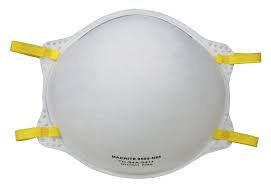
    One thing about the Negative Pressure User Seal Check is that you can’t use that test for some N95s, like the Makrite 9500-N95, which is what I use.

    The Makrite 9500-N95 is oil resistant so it’s rigid which means this mask is not going to collapse when doing a Negative Pressure User Seal Check.

    Now for the video, I asked one of my clients, Charley Herbick, trained in N95 fitting, to show us how to get a good seal with the N95.

    You can see how he does it in this video (and if you want to see new videos, please subscribe to the Make the Most of Massage YouTube channel):

    Taking Off a N95

    Now that you have the N95 on, how do you take it off without contaminating your hands with the COVID-19 virus?

    Simple.

    You don’t touch the mask itself when taking it off. Instead you slip it off using the headbands.

    Take the top headband off, then take the lower one off, like in this.

    Great, right, now you know how to put on and take off a N95, but where do you get them and how much are they?

    Well, they’re not cheap.

    But remember you’re going to be reusing them and that will cut down on costs a lot.

    N95 Pricing

    You’re going to pay about $3.50 t0 $4.50 a mask.

    Wait, Mark, I saw some N95s on Amazon for cheaper.

    About Amazon and N95s…be careful because there are counterfeits circulating on Amazon.

    One way to know if a N95 is a counterfeit is that National Institute for Occupational Safety and Health (NIOSH)-approved N95s have no ear loops. They have headbands.

    Personally, I don’t want to risk having a N95 that is faulty.

    So, to find a N95 that is  NIOSH-certified as a N95 respirator (filters at least 95% of airborne particles) and/or is FDA cleared as surgical mask (liquid resistant) takes a little  research.

    Start your research here: NIOSH – Approved N95 Particulate Filtering Facepiece Respirators.

    In this list you’ll find approved manufacturers and their products.

    After you choose a manufacturer/product, you’ll contact them to get in touch with one of their official distributors.

    My N95 Search

    My research turned up the FDA-approved Makrite 9500-N95 Pre-Formed Cone Particulate Cone Particulate Respirator Mask. It’s both NIOSH certified and FDA cleared as surgical mask (the surgical mask liquid-resistant-clearance is less important for us because we usually don’t slip in a little open heart surgery during our relaxation massage).

    Once I found the approved manufacturer I wanted to go with, I Googled them and then contacted them through their contact form.

    From there, they put me in touch with an official distributor of their products.

    Yes, this is more complicated than simply clicking on an Amazon link, but, again, that easy click yields a world of unnecessary risk in my book–and I don’t want that extra worry that comes with that risk with the 2nd wave coming.

    By the way, the price I paid for N95s through an official distributor of an FDA-approved manufacturer was within the price range of the unofficial distributors on Amazon, which was about $4/mask. (Remember, that a box of 20 for $80-ish will last you a two to three months if you reuse them on a rotating basis.)

    I’m going to tell you the N95 manufacturer I went with, but before I do that I want to let you know that I am NOT an affiliate marketer of their products and or receive any compensation from them.

    So, after searching for a NIOSH certified and FDA-approved N95 mask, I went with the  9500-N95 made by Makerite. The manufacturing company, Makerite, was very responsive.

    They put me in touch with this distributor: SPH Medical Supplies.

    Tony from SPH got back to me and was very informative and helpful. Ultimately, I purchased the Makerite 9500 N95 and the Sekura N95 also made by Makerite.

    The 9500 N95 is both a surgical mask (resistant to fluids) and a respirator.

    The Sekura N95 is not a surgical mask, but is a respirator. Again, respirator meets our working requirements–surgical mask is above and beyond.

    I ordered the Sekura N95 because it’s supposed to be more comfortable than the 9500 N95.

    One more thing to say about getting your N95s: If you hate dealing with the research and have a client or know someone in the medical field, contact that person. She/he may let you order PPE through her/his organization.

    If N95s are out of reach for you for whatever reasons, you’ll be okay. There are alternatives.

    Alternatives to the N95

    KN95

    N95 and KN95 are the same in that “both masks must filter out and capture 95 percent of tiny 0.3 micron particles in the air (hence the “95” in the names).” (RollingStone.Com)

    The difference between the two is in certification. N95s are certified in the USA and KN95s are certified in China. Because a mask was certified in a particular country doesn’t mean it was made there. For instance, according to Rolling Stone, most N95s are made in China, but are certified in the USA.

    The CDC has authorized the KN95 as a suitable alternative to a N95, and KN95s can be cheaper than N95s. Click here to go to a list of FDA-approved KN95 providers.

    Here’s something that I’m really excited about—a mask brace.

    Mask Brace/Mask Fitter

    A mask brace, also known as a mask fitter, is designed to seal a cloth or surgical mask tight around the face. According to the Insider, Dr. John Brooks, the chief medical officer for the CDC’s COVID-19 response, said, “…fitters have been scientifically demonstrated to improve filtration performance by as much as 90% or more, which, again, is getting into that range of filtration efficiency afforded by N95 respirators.”

    Proponents of mask fitters draw their conclusion from studies like this one. And if you’re looking for Sabrina Paseman’s mask fitter, the one used in the mask fitter studies (Source: Insider), go here: Fix The Mask.

    Personally, I ordered four of them and can’t wait until they arrive.

    One more alternative to consider…

    Two Masks

    According to Insider, not enough research has been done regarding doubling up with masks, but here’s what Dr. Anthony Fauci recently said: “So if you have a physical covering with one layer, you put another layer on, it just makes common sense that it likely would be more effective. That’s the reason why you see people either double masking or doing a version of an N95.” (CNBC)

    It also makes sense that two mask would provide a tighter seal, but David Rothamer, coauthor of the University of Wisconsin’s mask-fitter study, says that more studies really need to be done because in some cases more pressure created between the face and the mask due to wearing two masks at once could cause more leakage out the sides and top.

    You can test your seal with two masks by putting your hands around the edges of the masks as you exhale to determine if you have more or less leakage than you did with one mask.

    Winning Formula

    I can’t say 100% for sure that it was the N95 that was the main PPE intervention that prevented me contracting COVID-19 after working on a pre-symptomatic client for 90 minutes because in my little, impromptu experiment, there was no way to tease apart N95 from face shield and good air exchange in the room.

    But I do know that medical frontliners wear N95s and that N95s performed the best for preventing droplet transmission.

    And that’s enough evidence and incentive for me to double down with wearing a N95 in massage room.

    Here’s my COVID-19 safety formula in a nutshell:

    Mask up. (Preferably with a N95 or an N95 alternative.)

    Face shield up.

    Create good air exchange in your room.

    And we’ll get through this:-)

    To get my latest info, sign up for my free, email group.

  • Massage Therapist PPE – Protecting Yourself From COVID-19

    The PPE you must have when doing massage during COVID-19 are (1) a good mask and (2) a face shield to reduce your risk of getting COVID-19 and/or infecting others.

    If you’re only doing one, it’s time to up your game.

    Last week, two clients cancelled because of sickness and a third cancelled because a family member tested positive for COVID. This week another client cancelled because of a fever.

    I’m not claiming to be the bellwether of the COVID 2nd wave, but this cluster of data points in my work-life makes complete sense in the context of a country (US) whose infection rate and positivity rates are soaring.

    It’s decision making time: Are you going to shutter your office for a few months or are you going to work through this COVID 2nd wave (as long as you can)?

    If you choose to do massage as long as you can through the 2nd wave, it’s imperative that you keep yourself as safe as possible by not straying from protocol.

    “Straying from protocol” was said for my benefit.

    Why?

    Because as this pandemic drags on, fatigue has set in and I find myself wanting to cut corners.

    The client was only in the waiting room for 30 seconds, do I really need to wipe the coffee table down again?

    Do I really need to get another disinfectant wipe to do that massage stool because this one is drying out?

    Do I really need to wash my cloth mask that I use in between clients for tomorrow?

    Yes.

    Yes.

    And YES!

    This is not just the time to be vigilant. It’s the time to be HYPER-vigilant.

    I have extra incentive to be hyper-vigilant. My wife, Lisa, had COVID in April. If you thought there were only two options with COVID—living or dying—there’s actually one more option: living with COVID after-effects that may or may not go away. They call this group of people who have not fully recovered from COVID-19 long haulers.

    Lisa is a long hauler. Her long-hauler issues have improved, but they haven’t disappeared and she is starting month seven post-COVID diagnosis. In addition, there are cases of COVID-19 re-infection. In other words, once you have COVID, immunity is not guaranteed.

    So, I desperately don’t want her to get COVID-19 again.

    And that’s the extra reason why I’m going out of my way to protect myself in the massage room.

    By the way, the measures I take to protect myself, act as protection for my clients, too.

    If you don’t get COVID-19, you can’t give it (through airborne transmission).

    So, looking out for yourself is a 100% win/win for you and your client.

    Before we get into the exact details of protecting yourself, I want to give you a mental framework to work within so that you can make the best decisions regarding your safety and your clients’ safety.

    The framework is this: Act as if your client has COVID-19.

    The Mental Framework for Staying Safe

    This is what happens in my brain when I start with that premise.

    If my client has COVID-19 would I walk back into the massage room she just came out of without a face shield on?

    No.

    If my client has COVID-19 would I take my mask off in the office after the he has left?

    No.

    If my client has COVID-19 would I work in a room with poor air exchange?

    No.

    Raising your level of vigilance may be raising your blood pressure, too, but if you take action and follow strict safety protocols, your brain should feel some sense of relief, knowing that you’re doing everything humanly possible to stay safe, and subsequently keeping your client safe, during a massage.

    Alright, now let’s talk about essential PPE and two PPE related items that protect me and my clients at the same time.

    Massage Therapy PPE

    Here’s the PPE:

    1. Masks
    2. Face shields

    Here are the PPE-related items:

    1. Air exchange
    2. Viral load

    Masks

    I’m starting with masks because it makes the most sense when I talk about protecting myself from getting infected.

    COVID-19 is an airborne illness. The first place to stop COVID-19 from enter my lungs and going into my bloodstream are at the holes where air comes in, nostrils and mouth.

    A mask keeps the COVID -19 virus out and if you have it, it can help keep the COVID-19 virus in.

    A good mask does a better job at keeping COVID in or out than an average mask.

    Recently the CDC stated the importance of a mask in protecting the wearer.  And there has been compelling examples from the beginning of this pandemic that masks protect the wearers like this one: In July of 2020 two hair stylists in Sprinfield, Missouri tested positive for Covid-19 after interacting with 139 clients and 6 coworkers.

    Here’s the important thing: No one they interacted with was known to get Covid-19.

    How did that happen?

    Most experts think it was because both the hair stylists, fellow employees and customers wore masks.

    Studies bolstered this conclusion.

    Can you say mask up?

    And that means everybody—no client exceptions.

    At our office we have disposable medical masks that we offer the client who have forgotten to bring a mask or whose mask is too uncomfortable to wear face down.

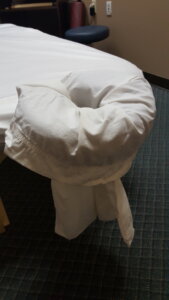
    For the one or two clients who can’t breathe through any mask face down, we do the open pillow case over the face cradle so that the client is breathing into the open pillow case.

    So, we agree that universal mask wearing in the massage room is a must, right?

    Now the question is which type of mask should you use?

    Pick Your Mask Using The Best Information

    Which is the best mask for preventing droplet transmission?

    According to a Duke study, the N95.

    The N95 is a “respiratory protective device designed to achieve a very close facial fit and very efficient filtration of airborne particles.” (Source: FDA).

    Also, effective for blocking droplet transmission are 3-ply surgical masks (“a loose-fitting, disposable device that creates a physical barrier between the mouth and nose of the wearer and potential contaminants in the immediate environment”, Source: FDA) and cotton masks.

    Not effective and possibly worse than wearing no mask were thin, polyester neck gaiters. You can read more about that here.

    Here are some suggestions to test see if your current mask is up to snuff: If you hold the mask up to the light and can see through it, get another mask. Or if you can easily blow threw it, turn the mask into a finger puppet.

    Personally, in the massage room, I wear a N95 with a disposable medical mask on the outside of the N95. After each massage I change out the disposable medical mask, but keep the same N95 on through the course of the day.

    And I don’t throw out the N95 after one use. Instead, I reuse it by rotating it back into my PPE gear after a three day air-out period.

    So, that means I have three to four N95s I rotate out throughout the week, depending on how many days I’m working.

    I air-out each N95 that I’m going to reuse in a paper bag instead of a plastic bag to cut down on moisture which could be a breeding ground for bacteria.

    Where do you get N95s?

    So, where can you get N95s?

    My advice is do NOT buy them off Amazon.

    Why?

    Because there are counterfeits circulating on the Amazon website–and, personally, I don’t want to risk having a N95 that is faulty.

    So, to find a N95 that is  National Institute for Occupational Safety and Health (NIOSH) certified as a N95 respirator (filters at least 95% of airborne particles) and/or is FDA cleared as surgical mask (liquid resistant) takes a little  research.

    Start your research here: NIOSH – Approved N95 Particulate Filtering Facepiece Respirators.

    In this list you’ll find approved manufacturers and their products.

    After you choose a manufacturer/product, you’ll contact them to get in touch with one of their official distributors.

    My N95 Search

    My research turned up the FDA-approved Makrite 9500-N95 Pre-Formed Cone Particulate Cone Particulate Respirator Mask. It’s both NIOSH certified and FDA cleared as surgical mask (the surgical mask liquid-resistant-clearance is less important for us because we usually don’t slip in a little open heart surgery during our relaxation massage).

    Once I found the approved manufacturer I wanted to go with, I Googled them and then contacted them through their contact form.

    From there, they put me in touch with an official distributor of their products.

    Yes, this is more complicated than simply clicking on an Amazon link, but, again, that easy click yields a world of unnecessary risk in my book–and I don’t want that extra worry that comes with that risk during this 2nd wave.

    By the way, the price I paid for N95s through an official distributor of an FDA-approved manufacturer was within the price range of the unofficial distributors on Amazon, which was about $4/mask. (Remember, that a box of 20 for $80-ish will last you a two to three months if you reuse them on a rotating basis.)

    I’m going to tell you the N95 manufacturer I went with, but before I do that I want to let you know that I am NOT an affiliate marketer of their products and or receive any compensation from them.

    So, after searching for a NIOSH certified and FDA-approved N95 mask, I went with the  9500-N95 made by Makerite. The manufacturing company, Makerite, was very responsive.

    They put me in touch with this distributor: SPH Medical Supplies.

    Tony from SPH got back to me and was very informative and helpful. Ultimately, I purchased the Makerite 9500 N95 and the Sekura N95 also made by Makerite.

    The 9500 N95 is both a surgical mask (resistant to fluids) and a respirator.

    The Sekura N95 is not a surgical mask, but is a respirator. Again, respirator meets our working requirements–surgical mask is above and beyond.

    I ordered the Sekura N95 because it’s supposed to be more comfortable than the 9500 N95.

    One more thing to say about getting your N95s: If you hate dealing with the research and have a client or know someone in the medical field, contact that person. She/he may let you order PPE through her/his organization.

    * Below are Amazon affiliate links. As an Amazon Associate I earn from qualifying purchases.

    3 Layer Surgical and Cloth Masks

    If you don’t have the budget for N95s, you still have options. Three-ply surgical masks and certain cloth masks did well in the Duke Study.

    3-Layer Surgical Face Masks

    Cloth Masks

    Here are plain, old standard 2-ply cotton masks:

    Okay, time to talk about face shields.

    Face Shields

    Wait, we already covered the mouth and nose to reduce the possible transmission of COVID-19 through droplets via coughing or sneezing. Why the eyes now?

    From an article in Managed Healthcare Executive:

    “The eyes are an important part of the body to protect because, like the nose and mouth, they are mucous membranes where germs can infect the body,” Ruchman says. “The virus spreads when infected droplets from a sick person’s mouth or nose come in contact with another person’s face, often when they cough, sneeze or talk. Although it’s more likely to be infected by inhaling these droplets through your mouth or nose, they can also enter through your eyes, especially if you touch something that has viral particles on it and then rub your eyes.”

    Still not ready to look like a chem lab tech or a HAZMAT 1st responder?

    According to an NPR article, Dr. Joseph Fair, virologist and epidemiologist, believes that he caught coronavirus through the eyes. On a crowded flight he wore a mask and gloves, but no eye protection. Two weeks later he had COVID-19.

    The CDC also acknowledges that transmission could happen through the eyes.

    Dr. Abraar Karan at Harvard Medical School says, “it’s hard to quantify exactly what the risk is in terms [of] through the eye specifically.” (NPR article.)

    And even though Karan and other experts feel that eye transmission is less likely than nose or mouth, Karan goes on to say in the article that “…in health care settings, eye coverings are immensely important. ‘We definitely don’t go into [coronavirus patients’] rooms without eye coverings.’ He says other jobs that require people to work face-to-face, like a barber, might also choose to wear a full-face clear plastic shield.”

    More Reasons To Wear a Face Shield

    And let’s add this to our particular mix: In order to do our job, we break almost every COVID-19 no-no.

    We are in a enclosed area with a person for a protracted period of time where we can’t social distance.

    In fact, even though the client is wearing a mask (if you still have reservations of insisting clients wear masks during a massage, go here now), we are often within feet of the client’s nose or mouth.

    Guess what? I’m wearing a face shield.

    What You Need to Know About Face Shields

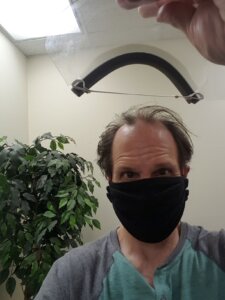
    According to the CDC, a face shield should cover your forehead, go below your chin and wrap around the sides of your face.

    Here’s the good news about face shields: They are inexpensive and easy to clean.

    I purchased my face shield on Amazon.

    Experts recommend soapy warm water so that you don’t destroy the anti-fogging coating if it has one. I use disinfectant wipes because my shield is cheap and it’s more convenient for me to clean that way.

    At this point, you may be ready to ditch your mask in lieu of a shield. But that is not what the experts want you to do.

    They are saying add the shield as a supplement to the mask.

    Why?

    There is not enough research to determine if shields alone are as effective as masks for protecting against COVID-19 transmission.

    Eyes, nose and mouth protected? Check.

    One more thing: air exchange.

    Air Exchange in the Massage Room

    Wait, that’s not PPE, Mark.

    You’re right, but it’s part of the protecting yourself from the airborne transmission of COVID-19.

    Plain and simple: You want lots of air exchange in your massage room.

    Why?

    If a client has COVID-19, you ultimately don’t want to breathe in any virus particles.

    Assume you’re wearing an N95. That’s good, but it’s an N95, not an N100, right? So, some particles are getting in and at some point you might be breathing in COVID-19 air.

    Fresh air coming into the room and stale air going out helps with diluting the room air or getting the potential virus out of the room.

    How do you get good air exchange in your massage room?

    Just open a window and if you’re space allows it and your client is comfortable with it, open the massage room door, too.

    Since we now space our clients out, I can confidently assure the client that no one will be coming into the office while she is on the table. And I haven’t had a client object to the massage room door being open or partially open. In fact, most seem to think it is a good idea. I’m guessing they don’t want to be breathing in “stale” (COVID) air either.

    Remember when I said one more thing? I lied. I have one more thing regarding my one more thing.

    It’s viral load.

    Viral Load

    If a client comes into your office and has COVID-19 but is asymptomatic and you have an N95 on and a window and a door open, you’re still probably not going to be able to dodge each COVID-19 particle in the room.

    BUT if you reduce the amount of exposure time to COVID-19, you could be reducing the viral load, the amount of virus that gets into your bloodstream, and that could just be the ticket to getting a low-grade infection instead of a severe infection.

    So, how do you minimize potential viral load?

    By minimizing how much potential COVID-19 air you breathe in.

    Masks help with that.

    So does opening a window and a door by “diluting” the air.

    An air purifier may reduce viral load by killing the virus, but they are expensive.

    The good news is that there’s something super-inexpensive, in fact free, that you can do to potentially reduce viral load.

    It’s work COVID-19 smart.

    Work COVID-19 Smart

    Did you ever see demonstrations of someone talking or sneezing with a standard cotton mask on? The area of droplet spray is around the edges of the mask, especially around the nose where there tends to be bigger gaps between the material and the face.

    Think about that when your client is face up or even face down on the table. Where do you want to be in relation to droplet flow? Not above the nose, right?

    This is a challenge for me because I love doing supine neck and face work. But since COVID-19 mask demonstrations I realized that the above-the-head position not only puts me close to the clients face, but also aligns me with where the biggest gaps in the face mask are.

    So here’s how I’ve adapted to spend less time in the potential COVID-19 exposure zone. I…

    (1) do less work at the head of the table by working from the shoulders.

    (2) spend less time working at the head of the table in general, 1 – 3 minutes at time.

    (3) have the client not talk when working at the head of the table.

    (4) use a fan to blow client exhalation away when I’m at the head of the table (yet to try).

    (5) turn off any heating or cooling device that is blowing the clients exhalation towards me while I’m at the head of the table working.

    (6) work up and down a body instead of side to side so that I can break up the amount of time that I’m close to the client’s face.

    (7) let my room air-out after the massage.

    (8) rotate between two massage rooms.

    (9) wear all PPE, N95 and face shield, when cleaning the room in case there still may be aerosolized COVID-19 particles in the room.

    The idea here is to not to drive yourself crazy; it’s to give yourself ways to reduce your potential exposure time to the virus so that you don’t get sick (or die), become a long-hauler or spread the virus and subject others to the virus’s wrath.

    Vow to Be Hyper-Vigilant Until COVID-19 Is Under Control

    Who would have thought that being self-centered, protecting yourself to the hilt, turns out to be best thing you can do to protect your client, too.

    But it is.

    Now that the pandemic is raging again, we need to shake off the battle fatigue and double-down on protecting ourselves.

    And don’t cheap it.

    That was inner-dialogue that got out because right now I’m thinking about my PPE and cleaning/disinfecting costs and wondering how I can save money.

    Forget it, Mark.

    Get the N95 that will keep the COVID out.

    Use as many wipes as you need to disinfect the face cradle to reduce contact transmission.

    Go ahead and use a disposable medical mask over top your N95 for each massage.

    This is not forever and letting your guard down could cause a whole lot of hurt for you, your loved ones, your clients and people you don’t even know.

    Mask up.

    Face shield up.

    Create decent air exchange in your room.

    Reduce potential viral load.

    Clean and disinfect like you’ve never cleaned and disinfected before.

    We’ll get through this by protecting ourselves and never taking our eye off the ball until it’s safe to do so.

    My Email Group

    Want to get my latest info? Sign up for my email group. It’s free.

  • Massage Therapist: Act as if Your Client Has COVID-19

    Wave 2 is here in the US.

    If you’re going to continue doing massage during possibly the worst phase of COVID-19, you need to step up your safety plan to keep your client and YOU as safe as possible.

    In this post, I want to specifically talk about protecting yourself so that you don’t get sick, spread the virus and/or have to shut down.

    How do you protect yourself from a client giving you COVID-19?

    Implement mitigation strategies for contact transmission and airborne transmission.

    Contact Transmission and Airborne Transmission

    I’m assuming that you have the contact transmission of COVID-19 in check through cleaning and disinfecting protocols you follow.

    I’m going to focus on airborne transmission of COVID-19 because we (massage therapists) break so many of the COVID-19 airborne transmission safety rules.

    For one, we have to do our work inside, not outside (unless you live in the tropics).

    We can’t social distance to do our job. In fact, we are in close contact.

    And if you’re in close contact, less than 6 feet, with someone who has COVID-19 for 15 minutes or longer, then the CDC wants you to quarantine for 14 days. (https://www.cdc.gov/coronavirus/2019-ncov/php/public-health-recommendations.html)

    But, Mark, my clients don’t have COVID-19.

    Actually, how do you know?

    40% of COVID-19 cases are asymptomatic.

    And a temperature check is just one data point that will only catch a potentially COVID-19 infected client if she/he has a high fever.

    To be as safe as possible while you continue to do massage from here on out, you need to act is if every client that walks into your massage office has COVID-19.

    By acting as if the client has COVID-19 you can potentially reduce the risk of you getting COVID-19 should the client actually have it.

    I’m seriously not trying to scare you to the point of quitting massage. I’m simply providing a mental framework to keep you vigilant and on your toes so that you keep yourself as safe as possible while doing massage during the 2nd wave of this pandemic.

    Here’s how I mitigate risks of getting COVID-19 in the massage room through airborne transmission.

    I create an environment that is more like outside than inside and I wear medical grade PPE.

    PPE in the Massage Room

    Let’s start with PPE.

    I wear an N95 respirator.

    Why?

    Because it filters out at least 95% of airborne particles. It’s what healthcare professionals who are on the frontline wear. It’s what medical professional clients tell me to wear.

    My advice is to not skimp here. Bite the bullet. An N95 is about $4 a piece, but you can re-use them by rotating them throughout the week. A box of 20 got me through 3 months. Read more about N95s and other masks here.

    I put a fresh disposable mask over the N95 for each massage to keep the outer side of N95 cleaner. By cleaner I mean less likely to be contaminated with the virus if it is airborne.

    I wear a face shield to protect from COVID-19 entering my eyes. I think there is enough evidence to warrant a face shield. You can decide for yourself: Massage Therapist—Wear A Face Shield During COVID-19.

    Air Exchange in Your Massage Room

    That’s PPE, now let’s talk about air exchange in the massage room: You want lots of it.

    Why?

    If a client has COVID-19, you ultimately don’t want to breathe in any virus.

    Assume you’re wearing an N95. That’s good, but it’s an N95, not an N100, right? So, some particles are getting in and at some point you might be breathing in COVID-19 air.

    Fresh air coming into the room and stale air going out helps with diluting the room air or getting the potential virus out of the room.

    How do you get good air exchange in your massage room?

    Simple. Just open a window and if you’re space allows it and your client is comfortable with it, open the massage room door, too.

    Now, let’s talk about airborne transmission and viral load. If a client comes into your office and has COVID-19 but is asymptomatic and you have an N95 on and a window and a door open, you’re still probably not going to be able to dodge every COVID-19 particle in the room.

    BUT if you reduce the amount of exposure time to COVID-19, you could be reducing the viral load, the amount of virus that gets into your bloodstream, and that could just be the ticket to getting a low-grade infection instead of a severe infection.

    So, how do you minimize potential viral load?

    By minimizing how much potential COVID-19 air you breathe in.

    Masks help with that.

    So does opening a window and a door by “diluting” the air.

    An air purifier may reduce viral load by killing the virus, but they are expensive.

    The good news is that there’s something super-inexpensive, in fact free, that you can do to potentially reduce viral load.

    It’s work COVID-19 smart.

    Work COVID-19 Smart

    Did you ever see demonstrations of someone talking or sneezing with a standard cotton mask on? The area of droplet spray is around the edges of the mask, especially around the nose where there tends to be bigger gaps between the material and the face.

    Think about that when your client is face up or even face down on the table. Where do you want to be in relation to droplet flow? Not above the nose, right?

    This is a challenge for me because I love doing supine neck and face work. But since COVID-19 mask demonstrations I realized that the above-the-head position not only puts me close to the clients face, but also aligns me with where the biggest gaps in the face mask are.

    So here’s how I’ve adapted to spend less time in the potential COVID-19 exposure zone. I…

    (1) do less work at the head of the table by working from the shoulders.

    (2) spend less time working at the head of the table in general, 1 – 3 minutes at time.

    (3) have the client not talk when working at the head of the table.

    (4) use a fan to blow client exhalation away when I’m at the head of the table (yet to try).

    (5) turn off any heating or cooling device that is blowing the clients exhalation towards me while I’m at the head of the table working.

    (6) work up and down a body instead of side to side so that I can break up the amount of time that I’m close to the client’s face.

    (7) let my room air-out after the massage.

    (8) rotate between two massage rooms.

    (9) wear all PPE, N95 and face shield, when cleaning the room in case there still may be aerosolized COVID-19 particles in the room.

    The idea here is to not to drive yourself crazy; it’s to give yourself ways to reduce your potential exposure time to the virus so that you don’t get sick (or die), become a long-hauler or spread the virus and subject others to the virus’s wrath.

    We Got This

    When my mom was in her last months and I was wearing thin between trying to take care of her and doing my work and not sucking as a husband, I remember hearing myself say, This is not forever.

    The severity of COVID-19 will end. Yes, it’s going to be around for a while, and the 2nd wave is here in the US, but it won’t be forever.

    So, keep yourself as safe as possible during Wave #2 by acting as if your client has COVID-19.

    Think about the strategies I just talked about.

    Try them. Use the ones that seem to have merit to you.

    You’ll think of more.

    And we’ll get through this:-)

    P.S. Get my latest info for free. Sign up below.