Category: Client/Therapist Relationship

  • Massaging Mom Until One of Us Dies

    Massaging Mom Until One of Us Dies

    I wrote this post in December of 2015, a few months after my dad died. I added a postscript to this post in February of 2020, a few months after my mom died.

    Before you read on, I need to say this: I don’t always love massage.

    In fact, there are times in my life when I absolutely hated massage. You know what I’m talking about–difficult clients or not having enough clients or your body is falling apart or all the above. (By the way, that’s all fixable. Go here.)

    But as I look back over the last 30 years I can not ignore the huge, positive impact that massage had on my relationship with my mom. And that’s what these two stories are about. So, here we go starting with…

    Massaging Mom Until One Of Us Dies

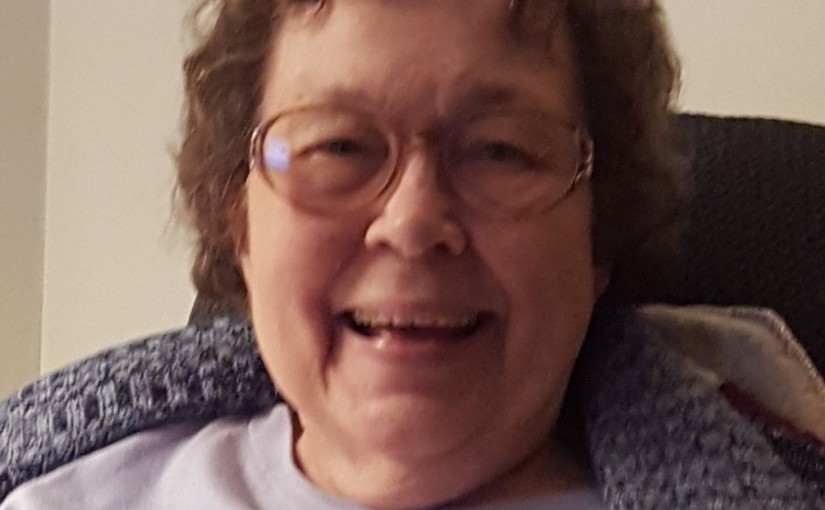
    The room was silent except for the pings of the medical devices that were keeping my dad alive in the ICU. The family sat around him. My mom was in a wheelchair and held dad’s hand.

    The elective heart surgery had not gone well and we, the family, had just made the decision to take Dad off life support. I worried how mom was going to do when he was gone. Little did I know that her massage sessions with me would help her get through some tough times.

    Mom and Massage

    I started training to be a massage therapist in 1992. As with most schools at the time, the practicing part of massage happened outside the classroom, and my mom happily volunteered to be my first massage body to practice on.

    Mom was a great massage body. She was good at giving feedback without hurting my feelings and didn’t complain when I had to poke around to find a particular muscle.

    After I got my massage certification, I was ready to move from massage bodies to massage clients. Ironically, mom was too. She now wanted to be one of my paying customers.

    It made sense that mom would want to continue with her weekly massages. She had learned that massage could help her manage her post-polio pain, and she liked having the one-on-one time with me.

    The Imperfect Son

    I wish I could say that I was the perfect son and embraced my mom’s request as an opportunity to further connect with her, but to be honest, it felt more like a life sentence: I was going to have to massage my mom until one of us dies.

    There were several reasons why I felt this way. For one, I wanted to be the therapist that actually got clients better, not the therapist who only helped clients reduce their pain. In addition, I had worked on my mom for a year—I knew all her conditions and she was not a challenge.

    But the most significant reason why I didn’t want to work on my mom was that even though I felt close to her, I had some unresolved family issues that were affecting my desire to see her on weekly basis. Emotionally, I was in a difficult place.

    Fortunately for me something stronger than self-preservation won out in my brain: Guilt.

    Guilt had a strong case: Mom had made all the mom sacrifices to raise me—and she was genuinely a nice person. If I didn’t massage her until one of us died, I would be rightfully consumed by guilt.

    A Powerful Force

    Massaging my mom for the first five years was a mixed bag. Sometimes we would joke and other times she would lecture me and I would dismiss everything she had said on the basis that she was my mom.

    But as time went on things slowly started to change. We laughed more. We actually listened to each other. And I felt more connected to my mom than I ever had.

    To me, the turn of events in the massage room couldn’t be explained entirely by the idea of people mellowing with age. I believe that there was another powerful force at work here, something that we as massage therapists harness each day at work—therapeutic rapport.

    Therapeutic rapport is the means by which one connects (psychologically and emotionally) and stays connected to a client to positively affect treatment outcomes. Over the years, as I became more experienced as a massage therapist, my ability to maintain therapeutic rapport throughout the entire massage session became automatic—even with my mom.

    Don’t get me wrong, there were times when mom and I still had our disagreements and my rapport was not so therapeutic—but if that happened, it wouldn’t be long before my automatic pilot took over and I was back to focusing on what’s best for mom.

    A Treasured Gift

    On Sept. 15, 2015 my mom climbed onto my table like she had done for 23 years except this time something was profoundly different—the man she had loved and been with for 68 years was dead.

    I could tell my mom really needed to talk about dad and as I listened to her I felt myself become overwhelmed with grief. But before I lost control of my emotions, my automatic pilot took over. This time, this hour, was about my mom and what she needed in order to feel better. It was a good feeling knowing that I could hold it together, maintain therapeutic rapport, and help mom process her thoughts and feelings.

    There’s no doubt that working on a family member can be tricky because you share a deep and complicated history with that person. However, if you can learn to establish and maintain therapeutic rapport throughout each session wonderful things can start to happen—and who knows, you may discover that at first what feels like a life sentence may actually turn out to be a treasured gift.

    Okay, it’s me, Mark-in-the-“present”. Now the postscript…

    After my dad died, my mom was still driving. So, getting to my office for a massage was not a problem…well, then her driving sort of became a problem. One day a streak of white mysteriously appeared on the side of her Buick LeSabre.

    Hey mom, how did that white paint get on your car?

    Beats me. Can you hand me my Coke, please?

    Later her friend confessed that they brushed up against a fence. Hey, at least they didn’t go through the fence.

    Eventually, after a lot of deliberation Mom decided to stop driving. And that’s when I found GoGoGrandparent, an app that acts as an interface between Uber/Lyft and the customer who doesn’t have a smart phone.

    That worked great. Mom loved chatting it up with the different drivers, but overtime it became a little expensive, and the fam ixnayed the Uber-ay, which meant we were down to my brother driving her.

    That worked for a while, but as my mom’s health declined, I and the rest of my family needed to give her more hands-on care and massages dropped to inconsistent.

    During the last 6 months of her life, she had two major surgeries. It was all-hands-on-deck and the sporadic massages went to no massages.

    I was 100% aware that this was happening, but as weak as this sounds to me now that I’m not in the throes of the helping to care for my mom, I had nothing left in the tank.

    I was going to work, then driving to my mom’s at night to help with bed duties, sleeping over and doing it again. Eventually, my wife, Lisa, and I moved in with my mom.

    Interestingly, even though massaging my mom had stopped during this time period, massage still played a huge part in our relationship in this way: Because I was a massage therapist who worked for myself, I could make even more time for my mom.

    And believe me I tweaked, twisted and turned my client schedule upside down. Through it all I was still able to hit my weekly numbers because my referral sources were solid and I had a steady stream of clients from them.

    If I had to cancel a regular one week because I needed to take my mom to the doctor’s, I knew I could make that money up somewhere down the line in my schedule because of new clients constantly coming in.

    Schedule flexibility became relationship gold.

    And guess what?

    Some of the extra time I made for Mom was now used for massaging her again.

    As the pancreatic cancer was advancing, I gently massaged her fatigued legs and post-polio knees. At this point, I’m not sure the massage helped with her pain even though she said it did.

    But I do know this: Massage was our routine for 30 years.

    It’s what we did together.

    We’d laugh a lot. Often we’d sing. Sometimes we’d even cry.

    Towards the end our communication was non-verbal.

    My hands would circle her arthritic knees. They’d say, It’s okay. Mom.

    Her tired eyes would look down at me and say, It’s okay, Son.

    It was moving to me that we both were trying to comfort each other. I’d keep massaging her knees. She’d close her eyes for a minute, then open them and look at me.

    And that’s how our conversations would go until a few days later when the morphine was upped.

    So, technically, I didn’t massage mom until the day she died because too much stimulation distressed her.

    But as you’ve guessed by now, the title was meant to be taken figuratively, as in I’m committed to taking care of my mom.

    I’m grateful that massage was a conduit in my relationship with my mom.

    And I’m grateful that when silence became the norm I still could do something to show my mom that I loved her and cared about her and was there for her.

    Rest in peace, Mom.
  • How to Tell your Client that Her Doctor is Wrong

    How to Tell your Client that Her Doctor is Wrong

    As you’re building your massage practice, you don’t want to burn bridges—with clients, referral sources and other health care professionals. But there may be a time when acting in your client’s best interest means that you must speak up.

    Here’s how I recently got my point across to my client without throwing the doctor under the bus.

    Lucy is a Good Runner

    Lucy was training for a marathon, and her running coach, Ian, sent her to me. Lucy had been diagnosed with plantar fasciitis by her podiatrist who specialized in running injuries. An X-ray didn’t reveal a bone issue.

    Before seeing me, the podiatrist had given Lucy a cortisone shot and treated with her shock wave therapy (sonic waves directed at a soft tissue area). Lucy was also seeing a chiropractor.

    Ian’s Concern

    Ian had seen a lot of injuries in his decades of training runners and was concerned about how long it was taking Lucy to heal. In addition, she was experiencing a new pain across the top of her foot. Nevertheless, the podiatrist had given the Lucy the green light to continue training for her marathon.

    Even with the green light to run, Ian had modified Lucy’s training to pool work and the stationary bike. He was also concerned that Lucy was being over-treated with cortisone, shock wave therapy and adjustments.

    I Work on Lucy

    When I started working on Lucy’s foot, I discovered that she had a high pain tolerance. So we used an adjusted pain scale to make sure that I wasn’t applying too much pressure. After the massage, she said her foot felt better. I told her that if it were my foot and it didn’t improve in the next couple of days, I would consider getting more diagnostics done.

    The next day she ran 6 miles. It was the first time she ran in a week or so.

    She reported to me that her plantar fasciitis felt a lot better during the run, but the pain across her foot was still there.

    It Gets Worse

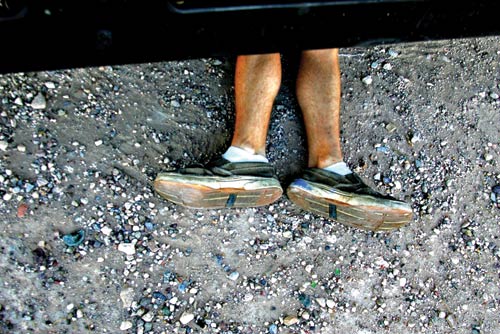
    Over the next 2 weeks, Lucy continued to run and started seeing a chiropractor who began treating her with more shock wave therapy. Then on one training day, Ian noticed something different about Lucy’s foot. It was swollen across the top of her foot. With Lucy’s permission, he sent me a pic of her foot.

    Battle Lines are Drawn

    Well, it looked like a no brainer to me—time to get another X-ray, then an MRI. But WAIT, when Lucy asked the podiatrist and chiropractor about the swelling, they both said that they didn’t think she had a fracture and didn’t need an MRI.

    The battle lines were drawn. To get my point across I needed to make sure Lucy understood that her condition had gotten worse under the current treatment plan even though she may not have noticed because of her high pain tolerance and that an MRI was more definitive than an educated guess.

    Here’s what I did to get my opinion across without throwing anybody under the bus.

    1. Provide information that supported my point.

    Since Ian was the one who sent me the pic, I texted him links to Youtube videos that talked about metatarsal fractures. In one video, the podiatrist explained how easily a metatarsal fracture can be misdiagnosed. In another one, the podiatrist showed a manual (and potentially painful) test for a metatarsal fracture—something I was positive that no one had done with Lucy.

    1. Stay in touch.

    After I sent the text to Ian I was going to give the situation 24 hours before I followed up. But Ian had shared the videos with Lucy and shortly after I had texted Ian, Lucy texted me. She had decided to go for further testing.

    Then she texted me when the X-ray came back negative. I texted back: “Great! I hope that the podiatrist and chiropractor are right.”

    When the MRI came back, it turned out that the chiropractor and podiatrist were right: Lucy didn’t have a fractured metatarsal.

    She had fractures in THREE metatarsals! And there was another metatarsal that had a recently healed fracture.

    1. Shut up.

    Yes, I wanted to gloat. But I think gloating is connected to the gambler’s memory where you remember your wins, but not your losses. And if I really thought about it, I had gotten plenty wrong.

    The most important thing was that the guessing was over. Lucy now knew what was wrong with her foot and she could get started with an appropriate treatment.

    Getting Along without Going Along

    For the most part, the Getting Along without Going Along formula has worked for me when it comes to letting the client know my opinion without jeopardizing the delicate balance between the client, myself, the coach and other health professionals.

    It has three parts: 1. support your point in a professional way, 2. stay in touch with the client, and 3. shut up no matter the outcome.

    For other ways that I help my clients out, check out I Saved My Client $5000.

    Need  More Help?

    Sign up for my email group and get my latest info. It’s free and you can unsubscribe whenever you want:-)


  • A Quick Way to Connect with a Client

    A Quick Way to Connect with a Client

    Pam had a neck problem and had come to see me. I was working for a chiropractor at the time and had recently been certified in neuromuscular massage therapy. During the intake Pam talked about how she hurt her neck and I diligently took notes. While she was changing, I figured out which muscles I was going to focus on. I went back into the room and did the massage. After she left I changed the table for the next client, but before I had finished the chiropractic stepped into the room to deliver some bad news. Pam did not like the massage.

    Needless to say, I was upset. What had I done wrong? The chiropractor offered a piece of constructive criticism. He said that I was being too clinical. I thought about what he had said and after a few more awkward massage endings I started to see that it was deeper than just me being too clinical: I didn’t know how to connect with the client.

    Disconnected

    When you connect with a client, the client feels that you value her. For instance, if you had asked me to describe Pam’s pain condition a few days after I had done the massage, I would have said her right, cervical erectors were hypertonic. But if you had asked me to recall one detail about her life, I would have drawn a blank. The fact that I viewed Pam only as a “patient” and not as a whole person made her feel disconnected to me.

    Obstacles in the Way

    Sometimes there are obstacles in the way to connecting with a client. One obstacle is time—we have to get a lot done (intake, massage, wrap-up, change the table) in a short period of time. Feeling rushed sometimes means we chop out any small talk during the intake and miss an opportunity to connect.

    Lack of confidence as an MT can be another obstacle. Looking back I now see that when I worked on Pam I over-emphasized neuromuscular therapy during the intake and avoided interaction on a personal level because she might had seen that I was nervous.

    Lack of confidence can also be situational. You could simply be having a low confidence day in your personal life which could have a global effect and spill over into your work life. No matter the obstacle, here’s a way around it.

    Instant Connection

    Listening is an important component to connecting with a client, but listening by itself is not connecting. To connect you need to demonstrate to the client that you were listening. In other words, you need to let the client know that you heard her. One way to do that is to immediately acknowledge that you heard the client by responding to her right then. For example, the client says that she likes to eat pizza. You might ask: What’s your favorite type of pizza?

    However, for greater connectivity impact, hypnotist Mark Tyrrell (his blog) suggests that instead of acknowledging a detail about the client’s life right away, hold back and work that detail into the conversation later. For example, applying Tyrrell’s suggestion to massage, when doing the intake with your client write down a trivial (unrelated to the massage) thing that client has said in passing, but don’t comment on it then. At a later point during the massage (if appropriate) or after the massage, work that piece of trivia back into the conversation. Tyrrell explains that when you don’t immediately acknowledge the small detail of life that the client shares with you, the client forgets about it. And when you bring it up later the client thinks: “Wow, she really was listening to me to remember that detail!”

    Cheesy?

    On the surface gathering details about a client’s life and then working them into a conversation later may seem a little cheesy. However, in the massage setting this planned connectivity is a tremendous way to build therapeutic rapport. It also forces us to see the client as a whole, rather than just a person with a pain condition. And for anyone struggling with confidence, it’s a great way to develop therapeutic rapport with the client without having to put yourself out there during the intake.

    Need  More Help?

    Sign up for my email group and get my latest info. It’s free and you can unsubscribe whenever you want:-)