Author: Mark Liskey

  • How to Stop Feeling Like an Impostor

    How to Stop Feeling Like an Impostor

    Do you need massage confidence? Then do this:

    1. Get reliable feedback about your massage.

    2. Then tweak your massage if you need to.

    That will give you confidence 80% of the time. For the other 20% of the time…

    3. Do a high-power pose.

    High-power?

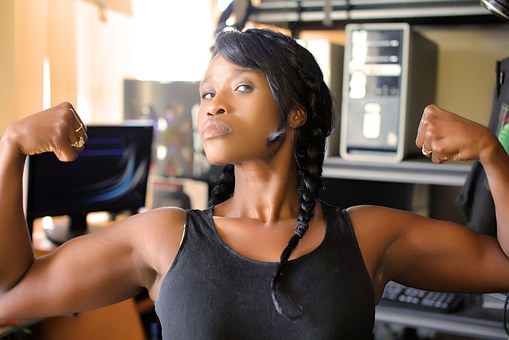
    Yeah, think Wonder Woman pose. (Believe it or not, there’s science to this.) 

    Seriously, Dude?

    I know this seems way too simple, but here’s how all this looks in real life.

    You have some solid confidence because you got good feedback and tweaked your massage.

    Then one day during a massage you press a couple of spots that make your client squirm.

    Ruh-roh.

    You start thinking: Is my pressure off?

    Next thing you notice is that your client’s breathing is shallow.

    So you slow your stroke down, anticipating your client will start breathing deeper, but instead you get a head adjustment.

    Is she hating on my massage!?

    Then you lift her arm to put it under the sheet, but she won’t let it go and does all the work.

    OMG, I suck!

    Your fingers now feel like wooden sticks. Your strokes are awkward. And you can’t get out of your head.

    And that’s precisely when a high-power pose can snap you back into that “doing not thinking” mindset.

    But before we get into high-power poses, let’s talk about steps 1 and 2: Evaluating your massage and tweaking it if necessary.

     A Massage Confidence Struggle

    Jim was in his late 40’s when he graduated from massage school. He was a hard worker but his massage needed improvement and he knew it.

    In fact, he thought he was so bad that he felt like an impostor.

    I put together a plan and we started working on his massage issues. Soon his massage started to get better, but Jim still had that little voice in his head telling him that he was an impostor.

    Looking for Massage Confidence

    Here’s some more background about Jim: He wasn’t so good at relationships.

    Don’t get me wrong, Jim was a kind person and everyone liked him. His issue was staying engaged with and connected to people.

    In some ways, I saw massage as a way that Jim could connect with people through helping them, and it could serve as a template for deepening his personal relationships.

    And I had a feeling that Jim sensed this, too.

    So, to me this was not only a massage mission, it was also a life mission.

    Reliable Plan and Feedback

    That’s when I brought in reinforcements–fellow MTs who could give Jim reliable feedback.

    After a few sessions, Jim knew he was getting better because his colleagues were giving him good reviews.

    Even so, Jim refused to work on a paying customer.

    Quite frankly, the little voice in his head just wouldn’t shut the f*** up.

    Fighting the Little Voice

    I tried countering that voice by reminding Jim that he had graduated from massage school.

    I also reminded him that though he wasn’t the massage therapist he wanted to be at the moment, he was on track to being that therapist.

    He agreed with me, but still wouldn’t budge.

    So, I pulled out the guilt card. In a nice way I let him know that I’d put a lot of time in with him and that our goal wasn’t to just massage MTs. It was to massage a paying customer.

    That’s when I asked him to do me a favor and work on a paying customer even though he felt like an impostor.

    Unknowingly at the time, I was asking Jim to fake it (pretend he wasn’t an impostor) till he made it (felt like he was a massage therapist).

    Jim hated me at that moment, but agreed.

    Fake It Till You Make It

    Faking it, pretending to be something that you’re not feeling, will actually create physiological changes in your body.

    For example, if you hold a pen in your mouth (which forces you to smile) it can make you feel happy.

    Researcher Amy Cuddy, in her moving and powerful TedTalk (a game-changing must see video), explains that pretending to be powerful can actually make you feel powerful.

    In her experiment participants were asked to hold a high-power pose (e.g., Wonder Woman stance) or low-power pose (e.g., arms drawn in) for two minutes. Participants’ testosterone and cortisol levels were measured before and after they posed.

    Powerful and effective leaders have high testosterone (which means they’re assertive, confident and optimistic ) and low cortisol (which means they don’t freak out in stressful situations).

    High-power poses produced a rise in testosterone and a lowering in cortisol, the hormonal characteristics of powerful leaders!

    Cuddy concludes: “Our bodies change our minds, and our minds change our behavior, and our behavior changes our outcomes.”

    In terms of massage, assuming your massage is on solid footing, if you fake it, pretend you’re a competent massage therapist even though you don’t feel like it at the moment, you can do more than make it—you become what you’re pretending to be.

    Dude, are you telling me to do a Wonder Woman pose when I’m working on a client?

    Not Wonder Woman.

    Find your own.

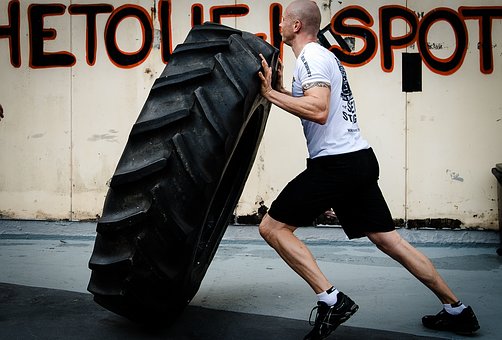
    For me, a high-power pose happens when I get vertical and can raise an arm in the air.
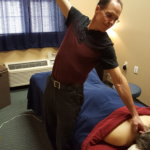
    That arm raising is not only a good stretch, it also feels strong and empowering to me.

    I typically hit a high-power pose 5 to 15 times during a full body massage.

    It’s such a habit for me that it feels unnatural not to do it.

    Jim Nearly Snapped My Shoulder

    Oh, about Jim, well, he “faked it” and the client loved the massage:-)

    A few weeks later, he nearly dislocated my shoulder when we high-fived to celebrate his first repeat client.

    As Jim accumulated more wins, his confidence grew and that little voice was put in it’s place:-)

    Here’s the recap.

    3 Steps to Massage Confidence

    (1) Find someone objective in the field of massage who will act in your best interest and give you reliable feedback about your massage, like a fellow MT, a friend (who gets massaged regularly), a teacher or a coach.

    (2) If you need to tweak your massage, go ahead, but make sure you have confidence in the tweaking plan and continue to massage as many people as you can.

    (3) If you feel an impostor moment coming on hit a high-power pose.

    It’s not rocket science.

    It’s body language science.

    Now that you’re confident with massage, let’s make sure you get confident with bringing in the business.

    Get my how to build a massage business course right here: Jumpstart

  • Advanced Dreaming: Did a Wheel Fall Off?

    Advanced Dreaming: Did a Wheel Fall Off?

    Is your dream slipping away?

    Just to be upfront, I’m not here to convince you to pursue your dream.

    I’m here to ask you a question: Did a wheel come off?

    Wheel?

    Yeah, if your life is a car, did a wheel fall off?

    In other words, did something in life throw you for a loop?

    Like did you lose a job?

    Get hit with a big, unexpected bill?

    End a relationship?

    It’s an important question to ask, especially in regards to your dream because losing a wheel can stop a dream dead in its tracks.

    The Double Whammy

    Do you know what makes losing a wheel even worse?

    Seeing someone who never loses a wheel.

    But here’s the thing, everyone loses a wheel at some time.

    The person who look like she has it all together all the time just doesn’t know when a wheel has come off.

    My wife, Lisa, and I have a friend, Felicia.

    Felicia’s an executive and is used to making big decisions that impact lots of people

    Her husband, Jose, only 62-years-old, was rapidly declining with a rare form of dementia. And when Jose started to become a threat to his paid companions and himself, Felicia decided to institutionalize him.

    She also sold her house and started to build a smaller one so that she could handle long-term care if Jose needed it.

    Basically, Felicia had a checklist and she methodically ticked off the next item to be done to ensure that she did everything she could to take care of her husband.

    When Lisa and I went to visit Jose on New Year’s Eve in the nursing home, he was slumped over in his wheelchair. He had moments of lucidness but the majority of the time it just seemed like he was existing.

    In the TV room next to Jose sat four women. It was unclear if they were actually watching TV or just existing, too.

    Yep, this is where the old people (and now Jose) go to die.

    Lisa and I had this overwhelming urge to throw Jose over our shoulders and run out of the nursing home with him.

    Bulletproof Felicia

    Felicia showed up a little later. She had brought non-alcoholic champagne to have an early celebration of the New Year.

    As we were drinking the bubbly and gathered around Jose bent over in his wheelchair, Felicia went on in detail about Jose’s precipitous drop in health.

    Then she stroked his back as she calmly explained how this was the best place for him in his condition.

    So, contrast Lisa and me wanting to break Jose out of the nursing home and Felicia, his wife, completely together, calm as a cucumber.

    Well, there’s more to the story.

    When Felicia toasted The New Year with us she didn’t have non-alcoholic champagne in her travel mug.

    She had cranberry juice and vodka.

    It’s her drug of choice that she uses day in and day out to numb the pain so that she can pretend a wheel hasn’t come off.

    Hot Mess

    When I was 28 all my wheels came off, like “bouncing down the road” off.

    I wrote dark and depressing prose.

    I did self-destructive things.

    And Lisa, my girlfriend at the time, had a suicide watch on me.

    (I guess this would be a bad time for me to pitch my coaching service, huh? Lol.)

    It was a horrible period in my life, but I learned something valuable about when a wheel or two or three or four fall off.

    You can put them back on.

    And when you do, anything is possible again

    This realization has become my recipe for not giving up on my dreams.

    The recipe goes as follows: This time in my life sucks and at the moment I see no possible way of fulfilling my dream BUT this is temporary situation because I’m dealing with stuff that’s clouding my vision and once I take care of business, I’ll be back on track to pursing my dream.

    Or the quick recipe: It’s the wheel that’s the problem, not the dream.

    So, as you may have guessed by now, I lied.

    I AM trying to persuade you to stay on course with your dreams.

    Which brings me to this question: What’s stopping you from pursuing your dream right now?

    Is it actually a wheel that’s off?

    All your time is spent taking care of your kids or your parents.

    You injured your neck.

    You had to remortgage your house.

    The person you had thought you were going to spend the rest of your life with is no longer there.

    Things hurt more because you’re older.

    You got in a relationship you don’t want to be in.

    Remember a wheel off doesn’t mean forever.

    And it certainly doesn’t mean The End.

    Start to put that wheel back on.

    And whoomp there that dream is.

    Still having trouble dreaming click here.

    And if you dream is to have your own massage business, sign up for my free massage business crash course: Jumpstart. We’ll get ‘er done:-)

  • How to Do 8 Hours of Massage in a Day

    How to Do 8 Hours of Massage in a Day

    Why would you want to do an 8 hour massage day?

    Here are some damn good reasons.

    Bills are due.

    You’re trying to build a massage business.

    You have a massage business but want to take it to the next level.

    You need to double your annual income.

    But isn’t that a recipe for burnout and injury, Mark?

    If you did an 8 hour massage day every day, yes.

    But if you’re using 8 hour massage days strategically, as part of a plan, then an 8 hour massage day once a month, once a week or even twice a week is not going to hurt you.

    Why am I so confident that you can handle this without getting hurt?

    Two words.

    Massage tools.

    Well, two words and a sentence: When you know how to hold a massage tool without hurting your hands, you can deliver light, medium or deep pressure (static or gliding) effortlessly.

    Come on, Mark, effortlessly?

    Yes, effortlessly.

    But before I show you how to use a massage tool effortlessly, let’s lay down some ground rules for an 8 hour massage day.

    8 Hour Massage Day Ground Rules

    1. Be strategic about saving your body starting with the first massage of the day.

    When you start your 8 hour massage day your fresh and you feel good.

    So what happens during massages one and two of the day?

    You press your thumbs into everything.

    Don’t.

    Use massage tools from the get-go so that you’re thumbs and other body parts don’t ache at the end of the day.

    Here’s another example of being strategic. If you stood at every moment during a massage in an 8 hour massage day your legs would probably rebel somewhere around hour 4 and your form would get sloppy.

    Preempt fatigue by resting your legs starting with the first massage of the day by leaning into the table or grabbing a seat on a stool whenever you can.

    2. Stay fueled.

    The time you make mental mistakes happens when your brain glucose is low.

    And by mental mistake I don’t mean you don’t know if you’ve worked your client’s right quad and have to go back and check for oil residue.

    I mean you stop getting in the best position to deliver pressure because you have no energy. Or you forget to use massage tools because your thinking is cloudy.

    How do you solve brain glucose lows?

    Eat complex carbohydrate snacks between clients.

    I wrote this article for Spirituality & Health about the effects of low brain glucose and how to avoid it.

    Okay, now we have the ground rules down for an 8 massage day. The next thing to do is to become competent with massage tools.

    I’m going to give you the most practical primer I can.

    Ready?

    Massage Tool Primer

    1. Hold a massage tool so that it doesn’t hurt your hand.

    This is how I was taught to hold a T-bar in NMT school.

    See how my finger tips are squeezing the end.

    Can you guess what my fingers felt like at the end of the massage with a T-bar?

    Exactly.

    They felt like crap.

    Here’s one way I hold the T-bar without gripping.

    Fingers are relaxed and happy here, right?

    In this article I show you the basics for holding without gripping.

    Once you get the hold down, then you need to…

    2. Press with a massage tool while leaning.

    Why leaning?

    Because it’s an efficient way to deliver pressure with minimal impact on your upper body.

    Leaning is not difficult.

    It just takes practice.

    Here’s how you do that.

    [embedyt] https://www.youtube.com/watch?v=LE9P3BOdxAM[/embedyt]

    Now there’s only one more thing you need to be able to do:

    3. Glide with a massage tool while leaning.

    Gliding with a massage tool is essential to know if you want to incorporate massage tools into all aspects of your relaxation massage.

    Again, it’s not hard to learn, but you do need to get your reps in.

    Here’s how you glide with a massage tool.

    Okay, let’s put this all together.

    8 Hour Massage Day Playbook

    Before you actually start the day have your physical and mental preparation done.

    1. Pack snacks to eat in between clients.
    2. Think about how you can save your body (rest body parts) when working.

    Speaking of saving your body, don’t wait for massage #3 to break out the massage tools. Break out the massage tools at the very beginning of the day. Use them whenever you can.

    To become competent with massage tools you need to learn how to (1) hold a massage tool, (2) press with a massage tool and (3) glide with a a massage tool.

    Bam.

    The 8 hour massage day is yours:-)

    Want to learn more about massage tools and saving your body?

    I have online, home-study CEU classes.

    This one will get you competent with using a massage tool: How to Use a Massage Tool (Fearlessly and Effectively), 2.5 CEU.

    Also, to get my latest weekly information, sign up below.

    It’s free:-)

  • The Question That Will Save Your Body

    The Question That Will Save Your Body

    If you’re not asking yourself this question – How can I do massage without being in pain?– then you’re probably in pain (and/or have a massage injury).

    Pain from doing massage is a big. hairy deal.

    Pain = loss of income.

    Pain = potential massage injury.

    Pain = an uncertain work future.

    My Massage Injury Story

    In June of 2013 I was in pain from my neck to my fingers.

    The orthopedist said that I had an unstable shoulder joint, cervical radiculopathy and cubital tunnel syndrome.

    He also told me to quit massage.  And part of me agreed with him. A future of working with increasing pain was not sustainable.

    But then part of me was like: Hey, buddy, you’ve gotten through a low back massage injury and plenty of pain issues before without having to hang up your hands. Figure it out.

    As you may have guessed, I went with plan B–figure it out.

    Working Plan B to Heal My Massage Injury

    At first I wasn’t optimistic because the pain didn’t budge. But as time went on, I saw small improvements. The small improvements added up and I started to see that I was making progress towards making my massage injury and pain syndromes non-issues.

    What was the catalyst for improvement?

    You guessed it. Before and during each massage I’d ask myself “How do I get the job done without causing or increasing the pain?”.

    Sounds a little obsessive, I know. But until you know what causes or exacerbates pain during a massage, you can’t fix it.

    And by asking the question you’re setting yourself up to experiment with new strategies and techniques. By the way, when you experiment some of your old massage rules will be broken.  That’s a good thing! Because they were causing you pain. (If you’re nervous about breaking massage rules read this.)

    Here are two rules that I permanently broke: I always have to release the traps by squeezing AND I always have to do my signature effleurage stroke down the entire back.

    (Warning: Your brain is going to rebel at the thought of changing some of the things that make your massage you BUT the return is “no pain”. And the new things you do will soon become your new signature moves.)

    It took me about a year for me to answer the question “How do I do a good job without being in pain?”.

    And after that year I could do more massages in a day without being in pain at 50 than I could at 30.

    Needless to say, the way I do massage has forever changed–and continues to be changed as I ask that important question during each massage.

    Why We Stay in Pain

    The reason why most of us stay in pain when doing massage is not because our mothers were mean to us. By the way, my mom was the nicest mom ever. (She reads my blog.)

    It’s actually quite simple: We’re comfortable with doing massage a certain way. And once we’re in the habit of doing massage a certain way, it’s hard to break that habit.

    [bctt tweet=”We (MTs) stay in pain because we don’t change the massage habits that hurt us.” username=”Mark LiskeyMarkLiskey”]

    But because of my dire situation, I was forced to look at my massage habits. This is what I discovered.

    How I Eliminated Neck, Shoulder, and Arm Pain

    There was a song in the 1970s by Bill Withers called Lean on Me. The famous chorus line is: Lean on me when you’re not strong.

    In massage, I found the opposite to be true: Lean on the client when you ARE strong. The more you lean, the stronger you will stay.

    I discovered this when I started to pay close attention to my neck and shoulder pain while massaging. First, I noticed that using my left elbow/forearm made my arm pain worse. So I stopped using my elbows/forearms for deep pressure. This meant I was left with knuckles and fists to generate deep pressure.

    At my normal table height, knuckles and fists were killing my neck and shoulders. And I would stand on my tip-toes to get more leverage. That led me to experiment with lowering my table. And that’s when the magic began. The more pressure I could generate from simply leaning instead of pressing with my shoulders and arms, the better my upper-body felt.

    Here are the keys that I learned for leaning:

    1. Have your table low enough so that you’re generating pressure from your lean, not your shoulders and arms.
    2. Stack your joints over top each other.
    3. Keep your work below, in front of and close to you.

    In this video, I show how I lean to generate pressure.

    The good news was that my upper body pain went away because of my lower table height. The bad news was that my lower back was now starting to feel a little funky. Ruh roh…

    Getting Rid of Lower Back Pain

    I didn’t want to give up the tremendous gains I had main for my upper-body because my table was now lower. So I experimented with potential back-saving techniques at a low table height. Eventually, I found that I could eliminate lower-back pain if I followed these 2 keys:

    1. When doing medium to deep pressure, maintain 2 to 4 points of contact with the table/client.

    An example of 2 points of contact could be a leg against the table and a hand on the client. Three points of contact could be a leg against the table and 2 hands on the client. Four points of contact could be 2 legs against the table and 1 hand on the client and one on the table.

    When you lean against the table/client, you’re back is doing less work to keep you upright. In this supported position, you can then relax your lower back into a neutral (not flexed or extended) position.

    In addition, when I lean against the table, I can easily regulate my pressure with my legs. When I shift my weight to my toes (table and client), I generate more pressure. And I when lean back towards my heals, I generate less pressure.

    2. Bend your legs to support your weight when doing light pressure.

    Light pressure requires minimal (if any) leaning. So that means you can’t let all or most of your body weight rest on the client/table. Without the support, you’re back muscles are working hard again and it will be difficult to keep your lower back in a neutral position.

    However, if you bend your knees you can center your weight and maintain a neutral back. Check out this video, Low and High in the Saddle, to see what I mean. I call the lean stance for medium to deep pressure  “high in the saddle” and the bent knee stance for light pressure “low in the saddle”.

    Kicking Hand, Wrist and Forearm Pain To The Curb

    Since I started using my knuckles and fists for deep pressure, I worried that I was going to burn out my hands, specifically my thumbs and middle knuckles.

    So I asked myself: what else could I use in muscle attachments, like the levator scapular attachment, besides my go-to thumb?

    When I gave myself time to experiment, the answer was mind blowing. Ready?

    T-bar and Thumb Combo

    My non-dominant thumb, two thumbs barred together, a knuckle on my dominant hand, a knuckle on my non-dominant hand, a knuckle and thumb together, the other knuckle and thumb together, dominant elbow, non-dominant elbow, an L-bar (my favorite massage tool), a T-bar (my second favorite massage tool), an L-bar and my middle finger, an L-bar and my other middle finger, a T-bar and a thumb, T-bar and the other thumb, an L-bar and a knuckle…believe it or not, there are more.

    Having as many pressing options allowed me to rotate body parts so that I wasn’t wearing one out.

    In addition, squeezing by pressing between massage tools, hands and/or fingers is another great way to save your hands. Here’s a squeeze by pressing video: Trap Release Using a T-bar.

    Heal Your Massage Injury and Eliminate Pain

    The way to having a happy body starts with the question: How can I do a good massage without beating up my body?

    By asking that question you establish the mindset to experiment with different strategies and techniques.

    Once you find a move that bothers your body, you can than begin to find different ways to get the job done.

    Here are some strategies and techniques that have worked for me:

    Hand, Wrist and Forearm Pain

    To eliminate hand, wrist and forearm pain think  non-dominant fingers, thumb and elbow/forearm. Use combination tools, e.g, knuckle and thumb together. And instead of squeezing with one hand, try pressing between both hands.

    Lower Back Pain

    To knock out lower back pain: for medium to deep pressure, lean into the client and table. Having 2 or more points of contact on the client/table, make it easier on your back. For light pressure, bend your legs.

    Neck, Shoulder and Arm Pain

    To stop neck, shoulder, and arm pain: keep your work below, in front of and near you.

    Once you start feeling better, you’ll never go back to the old way of doing massage. And if you do backslide, you won’t stay there for long.

    Need help with your massage injury or pain issue?

    Take the massage-pain free quiz and get an instant recommendation on what you should do next.’

    PAIN QUIZ