Category: Accelerate Massage Business (30K – 60K+)

  • How to Get Good at Pain Relief Massage

    How to Get Good at Pain Relief Massage

    I don’t like hype, but what I’m about to say is gonna sound hype-y. Ready?  Want to be a hit with pain relief massage? Then get good at using moderate pressure.

    I say this for two reasons: my experience and a research study.

    Let’s start with the study.

    Massage Pressure and Pain Relief

    In 2010, Tiffany Field, PhD, director of the Touch Research Institute at the University of Miami School of Medicine, published a  study about massage pressure and how it relates to relieving pain in the International Journal of Neuroscience.

    Field had this to say about the study: “The critical thing is using moderate pressure. Light pressure, just touching the surface of the skin or brushing it superficially, is not getting at those pressure receptors. Light pressure can be stimulating, not relaxing.” (Source: Arthritis Foundation)

    The heck with light pressure, Mark, what about deep pressure? I have clients that I need to pound with everything I got.

    Me, too! (By the way, here’s how to pound clients without hurting yourself.)

    That said, I believe that the deep pressure clients are not the norm.

    Why?

    For one, the client who needs deep pressure for pain relief will stand out in your memory (then get labeled as the norm) because he’s harder to work on than everyone else.

    And two, if you get a reputation for deep pressure, you’re going to attract deep pressure clients. And suddenly it’ll seem like everyone who wants pain relief also wants deep pressure.

    Moderate Pressure

    So let’s talk about moderate pressure. What is it?

    Well, I can tell you what it’s not. Moderate pressure is not when you pet or bruise the client—the only two types of pressure I knew how to do when I first started massage.

    “Hey, Mark, can you go deeper?”
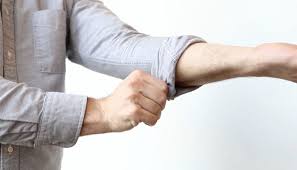
    Picture source: birchbox.com

    “Sure!” I’d say as I rolled up my sleeves, then pressed with my forearm until the client couldn’t breathe.

    Neuromuscular Pain Scale

    I did improve over time, but things didn’t really start to click until I studied neuromuscular therapy (NMT). With my NMT training, I learned how to communicate with the client via a pain scale.

    Here’s how it works. Imagine a pain scale from 1 to 10. One means a little pain, ten means a lot of pain.

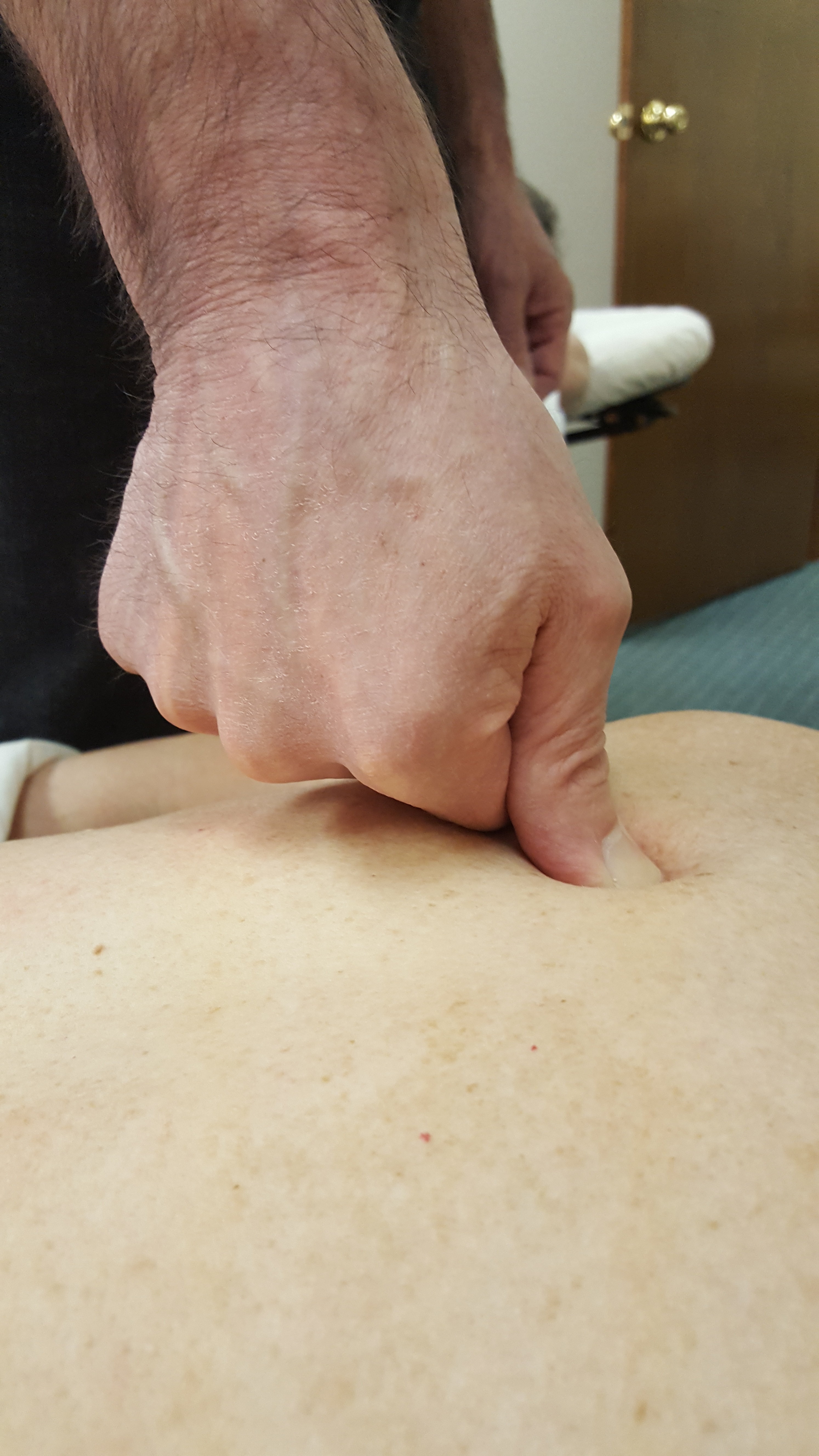
    For pain relief, the goal was to operate in a 4 to 5. So, the MT would press a tight or tender area until she elicited a 4 or 5 from her client. Then she’d hold the spot for less than 10 seconds.

    If the pain lessened during that time, great, she successfully reduced the pain. If not, she’d revisit the spot a little later, but with less pressure.

    I demonstrate how to do that in this video.

    Moderate Pressure = Firm Pressure

    What I like about the pain scale is that it’s based on the client’s experience of pain.

    So, if Aria’s 5 is Benjamin’s 10, no biggie. Since the value of each number on the scale (1-10) is determined by each client’s experience, I would never be in danger of making Benjamin jump off the table by using Aria’s idea of moderate pressure on him.

    As time went on, I started to see that not only did most of my pain-relief clients want moderate pressure, so did my relaxation clients.

    But my relaxation clients had a different name for moderate pressure. They called it firm pressure.

    Tying everything together, in general, this what moderate pressure looks like in my mind: moderate = firm = 4 or 5 on the pain scale.

    How to Nail Moderate/Medium Pressure

    If you want to perfect moderate pressure, do this:

    1. Use the pain scale technique.

    If you’re worried about the flow of the massage, just use the pain scale technique once at the beginning of the massage. That way you won’t interrupt flow and you’ll get enough info to calibrate your medium pressure for the rest of the massage.

    1. Ask for feedback.

    I would ask for feedback with non-paying customers.

    1. Get a massage.

    A great time to work on your pressure delivery is during a workshop or CE class. During the exchange, it’s easier to picture yourself applying the same pressure as your partner if you’re both doing the same technique.

    Feeling Competent with Pain Relief Massage

    You’re going to feel confident with pain relief massage once you become competent with moderate pressure.

    It’s not hard to do, you just need to get your reps in.

    Refer back to this video to get the pressure scale technique down.

    And if you’re thinking about getting really serious with pain relief massage, then check out this article: Build a Practice with Pain Relief Massage.

    If you want more info about pain relief massage and (fill in the blank), join my email group. I’ll let you know when I have new tutorials, articles and videos out.

    My email group is free and you can unsubscribe anytime.

    Sign up here:-)
  • A Business Lesson That Hurt: How NOT to Fool Yourself

    A Business Lesson That Hurt: How NOT to Fool Yourself

    I wanted to start an on-site, hotel massage business. I had a business mentor, Dave, and he gave me my first task to do.

    I did it, but then I made a critical mistake.

    I didn’t have him check my work—and it cost me big-time.

    Massage and Other On-Site Services

    Not knowing that I had made a critical mistake from the get-go, my wife, Lisa, and I took the initial idea of an on-site, hotel massage business and expanded it. We decided to offer a full range of on-site services.

    I have to admit that our bigger business idea was pretty, freakin’ cool.

    We hooked up with a local chef, and we offered a package where customers could get a couples massage and a gourmet meal at their house or in their hotel room.


    One downside to massaging when a gourmet meal is being prepared in the room next to you is the mouth-watering aromas wafting your way.

    It will take me 5 minutes to clean up. Save me a seat!

    And There’s More…

    We also connected with a salon so that we could offer on-site hair, manicures and pedicures.

    We even experimented with professional dinner guests. Okay, that needs some explaining.

    A professional guest needed to be an expert in an interesting topic and also needed to be entertaining.

    For instance, we recruited a local, retired, history teacher who was an expert in the U.S Civil War. He was really good at making history come alive.

    Putting on the Ritz

    So this is how an evening might look with our services:

    Bev, a bazillionaire, is having a small dinner party.

    She hires us to do chair massage for her guests before dinner. She uses our on-site chef for the meal. After dinner, our Civil War expert does an informal presentation about Civil War songs. (By the way, he was great at getting people to sing along.)

    Oh, and anyone could get a Brazilian wax in between the massage, food and singing. Joking about that one.

    Back to how I screwed up…

    So, as wonderful as our on-site massage business sounded, there was a giant problem. The market for our core, money-making service—on-site, hotel massage—wasn’t big enough.

    My Business Mentor Tried

    This was not my mentor’s fault. Dave first instructed me to do a survey to see if there was a market for on-site massage at local hotels.

    I did.

    I called all the hotels within a 15 mile radius of our offices and asked the front-desk staff how often guests inquired about massage.

    Once I finished surveying all the hotels, I did a happy dance.

    Here’s why: (One to two massages per week per hotel) X (2o to 30 hotels) = 80 to 240 massages per month.

    I gave Dave the good news.

    When he started to ask me questions about the survey itself, I assured him that the numbers were solid.

    Not a Good Idea

    But as you may have guessed by now, my survey was severely flawed.

    First, I had only asked front-desk people about the number of massage requests per week. In retrospect, I should’ve asked Sales Directors and GMs, too.

    Next, some front-desk people had initially reacted as if massage at a hotel was something new to them. That made me wonder if they might be pulling their “massage request” numbers from their butts.

    Also, later on I had learned that there’s a high turn-over with front-desk staff at hotels. And newbie, front-desk personnel wouldn’t have been around long enough to provide accurate information.

    And lastly, I realized that I had asked leading questions when the front-desk person didn’t have an exact number, like: “Would you say 1 or 2 a week…a month?”

    Damage That Was Done

    So, because of this flawed survey, I pushed forward believing that the number of on-site, hotel massages needed to grow our business was there.

    In essence, I spent money and lost time trying to build a full-time business with employees that was doomed to fail.

    If I had accurate data from the survey, I would’ve approached hotel massage as a part-time gig to pick up extra money for me and one or two part-time employees.

    By the way, if you’re looking to do on-site, hotel massage for extra money, this should help you out: Hotel Massage: How to Make Extra Money.

    Going Forward

    The physicist Richard Feynman once said: “The first principle is that you must not fool yourself and you are the easiest person to fool.”

    This is how I fooled myself then: I saw disaffirming information while conducting the survey, like the front-desk people who really were out of touch with the request for massage at their hotels.

    But my desire to make on-site, hotel massage a full-time business got in my way, which resulted in me “hiding” my work from my business mentor.

    This is how I prevent “fooling myself” now–I have someone I trust review my work.

    [bctt tweet=”When you’re too attached: It was the best biz idea ever even though it bankrupted me. ” username=”Mark LiskeyMarkLiskey”]

    Get an Extra Set of Eyeballs (Friend, Business Mentor, Coach)

    If you have a big, business decision coming up or are finishing a crucial step in a business plan, here’s how you can get another set of eyeballs on your work:

    1. SCORE is nonprofit organization that offers free, business mentoring.
    2. Find a business mentor within your network of contacts, like a client with a strong business background.
    3. Hire a coach.

    The potential advantage of a coach is that she’s got skin in the game (her rep and livelihood). So, she’s motivated to go the extra mile to make sure that you reach your goals.

    Just downright confused? Let me know what’s going on. Email me anytime.

    P.S. Hey, in case you didn’t know, I also have a free email group. Once you sign-up, I’ll notify you when my latest information is out, and you can opt out anytime:-)

  • Start a Massage Business: Connect with the Right Physical Therapist

    Start a Massage Business: Connect with the Right Physical Therapist

    About 20 years ago, when I was about to start a massage business, I went on a quest to find a physical therapist. I wanted to build a professional relationship with a PT who was approachable, would answer my questions and collaborate with me when treating certain clients.

    Guess what?

    I finally found one!

    Don’t get me wrong, there are a lot of great PTs out there. That wasn’t the problem. Finding the one who was willing to take the time to discuss a client’s case in depth was the hard part.

    Interview with a Unique Physical Therapist

    In this vlog-ish post, I interview Dr. Charlie Johnson. He’s a Doctor of Physical Therapy and he has a lot to say about PTs and finding the right PT to work with and/or refer to. I’ll think you’ll welcome his fresh perspective and you might even be a little surprised as to what he has to say about the PT world.

    In the Start a Massage Business show notes that proceed the video, I list the PT resource that Charlie mentions during the interview as well as Charlie’s contact information.

    Start A Massage Business: Connect with the Right Physical Therapist Show Notes

    Thanks for watching! Here’s the resource that Charlie had mentioned during the show:

    Where to find a Physical Therapy Specialist:

    www.abpts.org

    Charlie’s contact info:

    Charlie Johnson, PT, DPT, OCS

    Email: charliejohnsondpt@gmail.com

    Website: www.physicaltherapyjohnson.com 

    Compiling Your A-Team of Health Practitioners

    Here are some final thoughts regarding recommending other health practitioners to your clients.

    When you start a massage business, you’re going to get some clients that don’t respond to massage. (If you’ve been doing massage for a while, I’m not telling you anything knew.)

    What you do next, is as important, and in some cases, more important than the actual massage.

    And it boils down to one question: Do I have a recommendation that could help my client?

    This is when you need an A-team of health practitioners to refer to.

    Compiling an A-team comes at a cost. You have to invest time and energy. But here’s the thing, once you do, it will completely change how you practice massage.

    Here’s Why Recommendations Are a Must When You Start a Massage Business:

    1. When massage isn’t working for a client you may still be able to help her by pointing her to someone who may have an answer.


    In my arsenal of health/fitness practitioners to refer to are acupuncturists, podiatrists, MDs, orthopedists, physical therapists, exercise physiologists, personal trainers, chiropractors, running coaches, and psychologists.

    2. You can stay in the loop when your client is seeing the person you’ve recommended (if she gives you permission).


    Staying in the loop is like coming out of the massage room into a bright lobby. At first you squint and can’t really see anything. Then after a few seconds, you see the desk and chairs and, oh, hey there’s your next client, Steve, and everything comes into focus.

    When you start referring out and are in the loop, you start to see the bigger world of how you can help someone out. And once you experience helping someone out in the bigger world, you’ll never be content to keep things in your massage room again.

    3. Clients appreciate, hope and sometimes expect that you can help beyond massage.


    And we can. I’m not saying that we’re the gatekeepers. I’m saying let’s take our recommendations as serious as we take massage so that we can provide our clients with vetted health and wellness options when appropriate.

    4. From your efforts to do right by your clients you’re building trust with your clients and other health practitioners.


    Through these actions and interactions with your clients and other health practitioners you’re establishing your reputation in the health world. And your reputation will serve as your advertisement for the rest of your career.

    5. There are some health practitioners who’ll be a perfect match with you both in helping people and growing your business. These will be the practitioners who will send referrals your way.


    For more about finding the health practitioners who are a perfect fit both professionally and as a referral source, check out How to Get Massage Clients: Referrals.

    P.S. If you’re about to start a massage business or are trying to pick up clients, jump on my email list to get the latest video, tutorial and article about how to get a steady flow of new clients. The email group is free and you can unsubscribe anytime:-)


  • How to Palpate Like a Chiropractor

    How to Palpate Like a Chiropractor

    Early on in my massage career I cut my massage teeth in chiropractors’ offices. Over the years, chiros have become colleagues, and I’ve learned two very important things from them: 1. Don’t be afraid to work the muscles/ligaments on and around the spine, 2. Palpate the spine (and around the spine) for tight and tender areas. Now I palpate like a chiropractor but with a different purpose in mind.

    Squirting Massage Lotion

    There are differences between how MTs approach a body and how chiros approach a body. Once when taking a neuromuscular seminar I partnered up with a chiroprctor during the practice sessions. When it was his turn to work on me, he literally took the bottle of massage lotion, held it above my back and squeezed, as if he were squirting ketchup on a bun.

    Granted, most chiros wouldn’t squirt massage lotion on a patient. However, this example does illustrate that massage clients and chiropractic patients have different therapeutic touch expectations.

    A chiro can get away with being abrupt and mechanical with her touch because the expectation is primarily about correcting an issue, not relaxing the body. However, we need to maintain a sensitive touch and keep connectivity with the client in order to fulfill an expectation of relaxation.

    Though different in some ways, we’re similar in other ways. A big one is that we both deal with back pain. That means that both chiros and MTs need to know how to palpate back muscles and the spine.

    How to Palpate Like a Chiropractor

    Lesson #1: Don’t be afraid of the spine.

    The first hurdle to palpating the spine is to understand that we’re not going to hurt someone if we touch their spinuous processes. Chiros do it all the time. In fact, they are experts at palpating the spine.

    Becoming comfortable with palpating the spine simply comes down to getting reps in. I’ll show you how to do that in a minute.

    Lesson #2: Palpate the spine (and around the spine) for tight/tender areas.

    Palpating the spine can give us clues as to where we might want to work. For example, if I’m palpating the spinous processes and one is tender or seems off center from the spinous process above and below it, I would investigate for tenderness and/or tightness in the paraspinal muscles on either side of the misaligned and/or sensitive spinous process.

    When I investigate, I often find tight or tender spots in the paraspinal muscles, and in my experience, clients get pain relief when I work these areas.

    Two Ways to Palpate Like a Chiropractor

    Here are two ways that I palpate like a chiropractor but in a relaxing way. One is with fingers on top of the spinous processes and the other is with fingers around the spinous processes.

    You don’t need to apply a lot of pressure with either technique, just enough to feel the spinous processes. When I apply pressure I also do a gentle and relaxing back and forth (perpendicular to the spine) motion.

    If I find a spinous process that is “off” and an area to either side of the spine that is tight and/or tender, I will apply focused and appropriate pressure. Check out this pain scale video for establishing appropriate pressure.

    I’ll use combination body parts (barred thumbs, thumb and fist of same hand, knuckle and thumb) and massage tools (specifically the T-bar and L-bar) to apply pressure.

    In this video I demonstrate the 2 spine palpation techniques: Massage Palpation Techniques for the Spine. (My massage model got sick. So the camera person is on the table and I’m filming myself doing the massage palpation techniques—so it’s a little shaky.)

    Small and Big Picture 

    Palpating the spine can give you a big picture and a detailed view of the client’s back. Go up and down the spine for a big picture view (e.g., reveal a scoliotic pattern) and when you find a spinous process irregularity, zero in on that area. By working the paraspinal muscles near the irregularity, you might just address that one area that has never been worked before. And you might give your client greater pain relief.

    How do you build a massage business with pain-relief clients?

    Go here: Jumpstart.

    Jumpstart is a free course that has everything you need to get to 30K a year working for yourself.

    Need to take a meh massage business to a dream massage business?

    Go here: Accelerator.

    This is how I took my 40K business to 80K+.