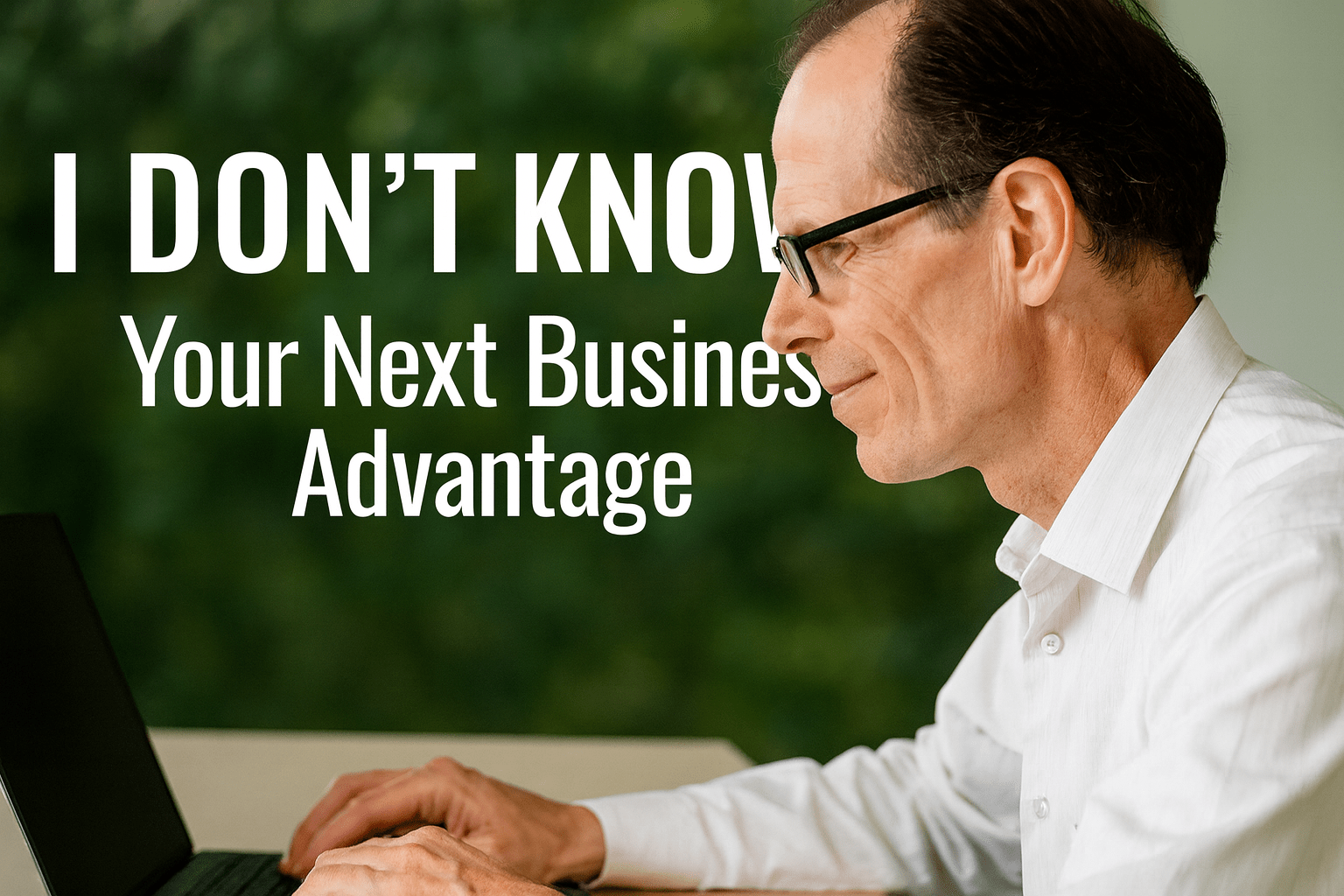
The Power of “I Don’t Know” in Business Growth
I stared at the numbers on my screen. We were expanding our massage business, bringing in more therapists to grow our business. The math was simple and terrifying: to support these new team members, I needed to double our client intake rate. Double. I had successfully grown the business to its current size, but this felt daunting.
“How do I double our client base?” I asked myself. The answer came immediately, with uncomfortable honesty: “I don’t know.”
The Power of Three Words
Most of us have been conditioned to view “I don’t know” as professional suicide. In boardrooms and classrooms, on sales calls and job interviews, admitting ignorance feels like waving a white flag. We equate knowledge with competence, and uncertainty with incompetence. This conditioning creates a false choice: either know everything or face inevitable failure.
But what if we’ve got it backwards?
Reframing the Moment of Not Knowing
“I don’t know” isn’t an ending—it’s a beginning. There’s a profound difference between willful ignorance and acknowledged gaps in knowledge. When we honestly assess what we don’t understand, we’re not admitting defeat; we’re demonstrating wisdom and self-awareness.
The moment I acknowledged my uncertainty about doubling our client base, something shifted. Instead of pretending I had all the answers or spiraling into panic, I had created space for actual problem-solving to begin.
From Defeat to Discovery
Our brains are wired to interpret uncertainty as danger. When faced with the unknown, we experience what feels like doom, despair, or defeat. But this discomfort doesn’t have to be a stop sign—it can be a growth signal.
Just as physical discomfort during exercise indicates muscles adapting and strengthening, intellectual and emotional discomfort often signals we’re approaching a breakthrough.
The key is to recognize “I don’t know” as an inflection point. This is where growth happens because forward movement requires us to figure something out. We can’t coast on existing knowledge; we must expand our capabilities.
The Seeker’s Advantage
When I admitted I didn’t know how to double our client base, something unexpected happened: I felt liberated. The pressure to be the all-knowing expert lifted, replaced by permission to become a unabashed seeker and discoverer.
This shift in identity carries real advantages. Experts often become trapped by their existing knowledge, filtering new information through old frameworks. Seekers, however, approach problems with beginner’s mind—curious, open, and unencumbered by assumptions about what will or won’t work.
Business coaches have told me that curiosity often beats out credentials. While expertise has its place, the ability to learn, adapt, and discover provides a competitive edge in our rapidly changing world.
Building Your “Not Knowing” Muscle
That first honest admission—”I don’t know how to double our client base”—became my reference point. Instead of wallowing in uncertainty, I got to work:
First, I focused on the big rocks—the marketing activities that would have the greatest impact. No more scattered efforts across dozens of small tactics.
Second, I created a concrete plan with specific timelines and measurable outcomes.
Third, I built in regular evaluation periods to assess what was working and what needed adjustment.
Fourth, I got serious about knowing my numbers, developing key performance indicators (KPIs) that would guide decision-making.
Each step forward built confidence for the next moment of uncertainty. I was creating a personal reference bank: proof that not knowing something didn’t have to derail progress.
Did I Succeed?
To be determined.
Sorry. I’m still in the throes of doubling our business. However, the numbers show we are moving in the right direction—and we have a plan that we can test and tweak as we go along, all born from the words “I don’t know”.
Will you succeed?
I don’t know.
No one knows when they try to start, grow or build something. It’s just part of the deal of moving into a new space.
So, say it out loud: “I don’t know.”
It’s okay—it’s reality.
Now, figure it out. 😊
P.S. If you need help, grab a SCORE mentor. There is no cost. If you want to throw a question my way, I’m here: mark@makethemostofmassage.com.
FAQ Section
Q: Is saying “I don’t know” bad for business?
A: Not if it’s followed by a plan to find the answer—it can actually build trust and lead to innovation.
Q: How can I use uncertainty to grow my business?
A: Treat uncertainty as an opportunity to learn, adapt, and explore new strategies.
About Mark Liskey:
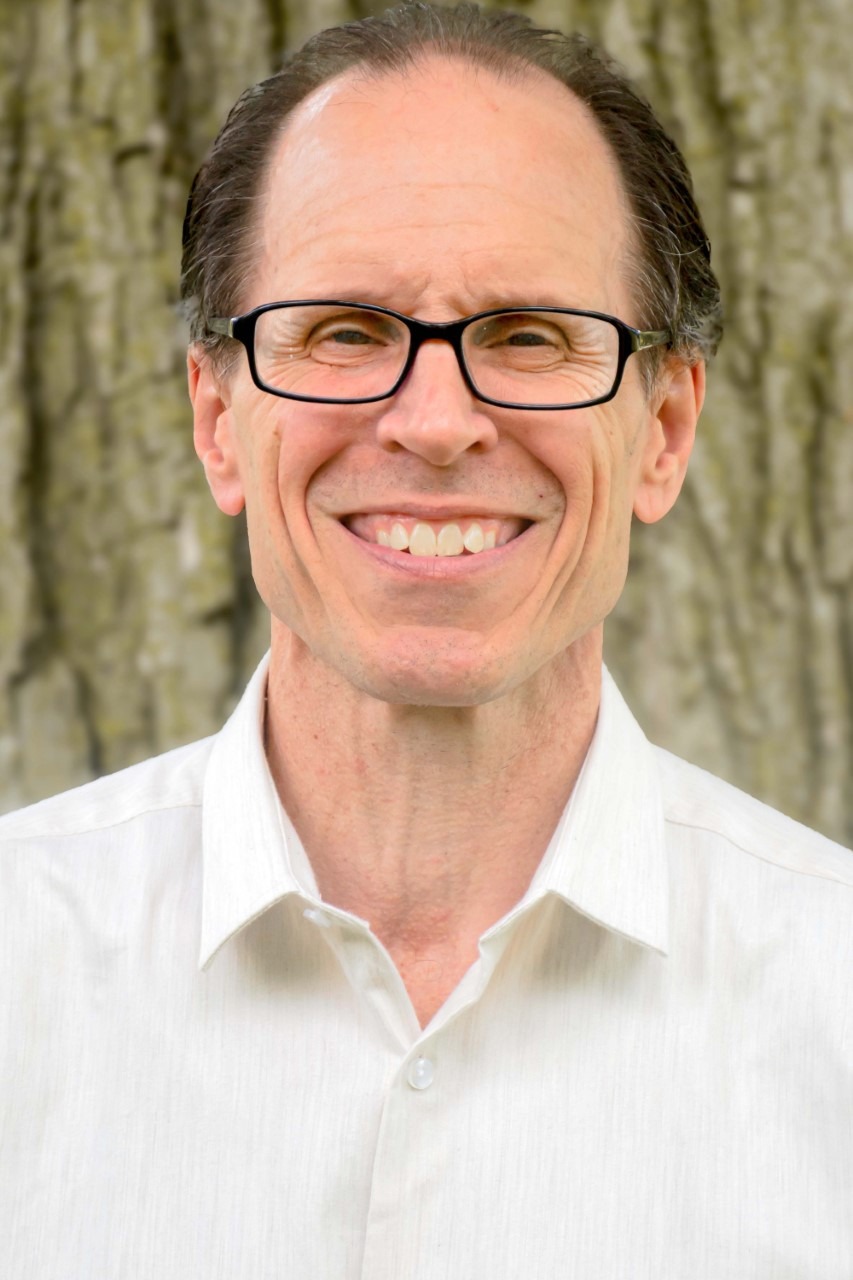 Mark is not a bot. He is a business owner, neuromuscular massage therapist of 30+ years, teacher, writer and blogger. In this blog, he shares best practices for inexpensively growing a business. You can also find Mark’s articles here: Massage Magazine and Massage & Bodywork Journal. Mark loves working in his massage businesses – PressurePerfect Massage and Pain-Free Massage Therapist.