Category: Uncategorized

  • How to Get A Client Out of Pain: A Key Question

    How to Get A Client Out of Pain: A Key Question

    There’s a massage skill that has nothing to do with your hands, but is really important when treating a client in pain. The skill is to ask the right massage intake question.

    Of all the questions (excluding medical history and contraindications), there’s one question that could vastly improve your chances of helping someone in pain.

    No more suspense.

    It is: What has worked to relieve your pain before?

    Oxycontin and vodka.

    Okay, I’m not talking about drugs and booze.

    I’m talking about what kinds of musculoskeletal treatments (physical therapy, chiropractic, massage therapy, yoga therapy, Pilates, etc) have helped with the pain in the past.

    Once you have that information, drill down and find out what specifically about the treatments worked.

    Then, if possible, incorporate the things that worked into your massage.

    Here’s an example of how you might ask this important massage intake question.

    Asha came in with neck and shoulder pain. She was a medevac nurse and speculated that having to carry heavy equipment and wear night vision goggles was the cause of cervical condition.

    To relieve the pain she had tried lots of treatments. The cortisone route didn’t really help. Chiropractic had helped some. Bill helped the most.

    Who was Bill?

    He was a physical therapist who did hands on work with her.

    Hmm…I asked her what he did.

    She explained that he did some massage and stretching.

    Then I asked her if he did manual traction on her neck as part of the stretching? And, if so, did that help?

    The answers were yes and yes.

    Next I asked if Bill ever tested her neck flexion, extension and rotation.

    He had. Flexion and extension–no pain. Some pain in rotation.

    Lastly, I asked about Bill’s massage pressure.

    Firm pressure relieved the pain.

    So, at that point I knew my treatment starting point would include specific work in the cervical erectors with firm pressure. I would also stretch her neck and do manual traction.

    At the end of the session, Asha was a happy camper.

    A companion massage-intake question to what makes a pain condition better is: What makes a pain condition worse or simply doesn’t help?

    Maria came in with sciatica. The pain was in her right buttock and down her leg, but not below her  knee.

    She had been dealing with the condition for a month and half, but it had improved. And she rated herself as being 60% better.

    Here’s how my questioning went with her.

    Have you had massage before?

    Yes, I get shiatsu from time to time. I really like it. I feel so much better afterwards.

    (Maria had won a GC to see me. That’s why she wasn’t going to her Shiatsu person.)

    Oh, did you ever get shiatsu when you had sciatica?

    Yes. It was very helpful.

    Now I had an idea of how I was going to treat Maria’s back problem—using a lot of static pressure.

    Next the companion question: What makes it worse?

    Maria told me that sitting makes her sciatica worse.

    Okay, how about lying face down?

    I’m good, she said.

    I worked on Maria supine, fairly confident that I wasn’t going to aggravate her back condition.

    I used static pressure on tight/tender areas in her spinal erectors. That was very relaxing and pain relieving for her.

    When I got to her glutes, I knew I was going to back off on my pressure because sitting bothered here which could mean that the nerves in her gluteal area were fired up.

    And they were.

    I used oblique angles of approach when working the glutes and piriformis so that I wouldn’t be pressing down onto angry nerves, and used a pain scale technique to make sure that the pain was lessening as we worked.

    Maria had significant pain reduction when we were done.

    Here’s the key massage intake question and companion question recap:

    “What has helped?” led me to using static pressure.

    “What made it worse?” led me to using a pain scale, oblique angles of approach and lighter pressure in the gluteal area.

    Why I’m So Adamant About This Massage Intake Question

    Asking the right questions was hammered home with me after sitting in on many intakes with a PT friend.

    I noticed that he was always coming back to identifying what is making a condition worse and what is making it better or, at the very least, not making it worse.

    Once he had an idea of the parameters he should initially work within he then had an idea of how he could address the pain without making it worse. Once he got the pain down, he could start to test the parameters.

    It takes time to ask the right questions.

    I give and an extra 30 minutes for new clients. (You can download our intake here: [download id=”618″]).

    During that time, I ask the important massage intake question: What treatments/techniques have lessened the pain in the past.

    Then I incorporate the techniques that had worked (and I’m competent with) into my massage.

    And I avoid the techniques that had been a bust or had made things worse.

    Need more help? 

    Join my email group.

    I send you my latest everything weekly.

    It’s free.

    Sign up below:-)



  • How to Get Your Massage Into Mainstream Medicine

    How to Get Your Massage Into Mainstream Medicine

    Mainstream massage will be connected to mainstream medicine.

    And if you’re not moving in that direction, I think you’re going to miss out an opportunity.

    I’m not talking about getting hired by an orthopedist or physical therapist to do medical massage.

    I’m talking about aligning your massage business with mainstream medicine to serve your clients better and to develop a network of connections and potential referral sources.

    Where Should You Start?

    Not with MDs and DOs.

    They have zero time and little motivation to respond to you. That’s not a slight against them. That’s just their reality.

    The place to start is with PTs.

    Why?

    Because there’s a new, PT business model in town—finally.

    This new business model accepts insurance patients but also accommodates cash patients.

    It has after-care programs for patients who have finished PT and want more help, and it offers a monthly membership for patients who want to continue to use the facility to exercise.

    The PTs here don’t use the word “discharge” when a patient completes a PT program because they want the patient to come back for other wellness needs, like customized exercise training programs and nutritional counseling.

    The business philosophy of these PT wellness centers is 100% patient (customer) care.

    They compete with conveyor-belt, PT businesses where the therapist walks away and lets you do the exercises by yourself.

    Bye-bye conveyor-belt, PT businesses.

    Win/Win for Mainstream Massage Businesses and Clients

    This is obviously good for patients, but it’s good for us, MTs, too.

    Why?

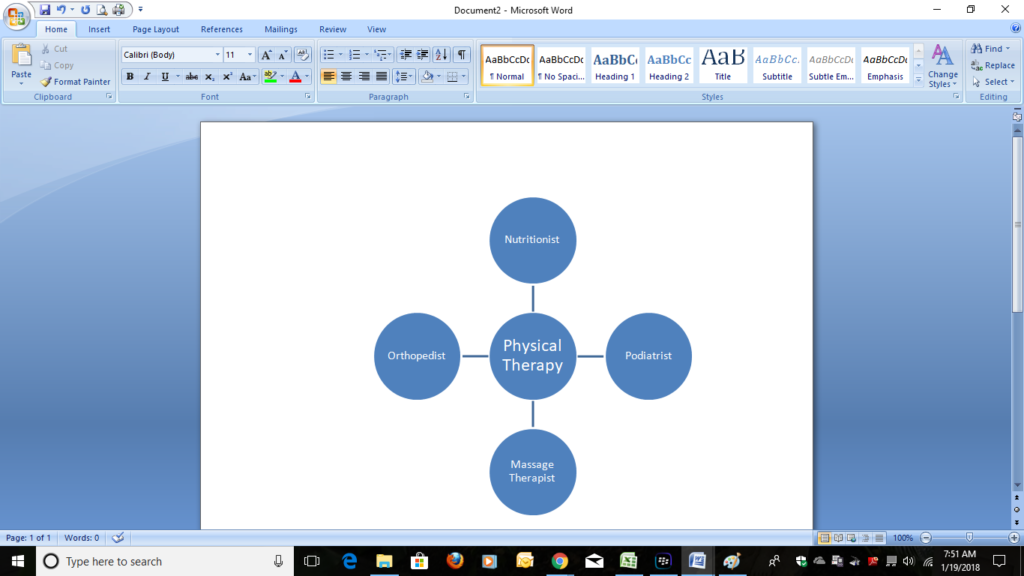
    Picture a PT wellness business as a wheel with spokes.

    At the center of the wheel is the actual business of doing physical therapy.

    The spokes are all the things that PTs need to be connected with in order to be a concierge wellness service, like orthopedists, podiatrists, nutritionists…and, yes, massage therapists.

    (Closest I could get to a wheel.)

    Come on, Mark, mainstream medicine doesn’t want us!

    Maybe not all mainstream medicine, but a wellness-based PT business does.

    For one, some of the their patients request us.

    Two, we’re in a position of “gate keeping”.

    What I mean by this is that some of the people who come to see us need physical therapy and ask us for recommendations.

    Mainstream Massage “Gate Keeping”

    Let’s say Ira injuries his shoulder. And he doesn’t want to go to the orthopedist for host of reasons, including he doesn’t think his shoulder warrants an X-ray or MRI, he doesn’t want to shell out a $60 copay and he doesn’t take pain killers or muscle relaxers.

    So who’s Ira going to call?

    Not ghost busters.

    He’s going to call the massage therapist that his best friend Trudy uses.

    You.

    Ira comes into your office. You do your eval, identify the pain area, follow your protocol and treat him.

    He doesn’t show improvement so you tell him it’s time to get a diagnosis and more help.

    By the way, Ira doesn’t need to go to an orthopedist for a diagnosis any longer.

    Doctors of PT can diagnose, too.

    Do you think PTs are starting to prick up their ears?

    I do.

    Soon it will become apparent to many PTs that we’re on the front-line of people who may need PT care.

    Our PT Wellness Experience

    Recently, my wife and I met with a wellness-based PT business.

    It was a very productive meeting.

    They wanted to understand what we do and how they could help us.

    Who would have ever thought, right?

    The most import thing about this meeting was that we’re all on the same page because we all believe that if we take care of the client/patient, business will take care of itself.

    Right on!

    This is the company we want to grow with.

    Getting Your Mainstream Massage Business Connected

    If you think like we do and want to connect with people in mainstream medicine who share your values, here’s what I would do:

    1. Initiate contact with PTs through your clients.

    Here’s how you do that: How to Advertise Better than Massage Envy.

    1. Pick the PT business that matches your client care and business philosophies.

    For us, a wellness-based PT business was the answer.

    1. Go above and beyond.

    Figure out a way that you can add value to their business. An example would be to offer free self-massage demos to their patients.

    As we forge ahead with this new PT relationship, I’ll let you know how it goes.

    And don’t forget, if you need more help, sign up for my email group.

    I’ll send you the latest information on making more money, building a massage business and staying out of pain.

    And it’s free.

    Sign up is below:-)

  • How to Eliminate Pain When Massaging: Adaptation

    How to Eliminate Pain When Massaging: Adaptation

    Pause that hand stretch video! There are reasons why your body hurts when doing massage. One might be because you’re not adapting in an effective way.

    I know this sounds a little theoretical, but it’s not.

    I’m talking about making adjustments when working through a massage challenge.

    #1 Trying to Use all Your Body Weight to Lean When Your Table is too High

    You need to increase the pressure and your table is high. How do you adjust?

    You push using your upper body, right? (Been there, done that.)

    Besides being an inefficient way to get the job done, pushing with your upper-body stresses arms, shoulders and neck.

    Low Table Adaptation Response

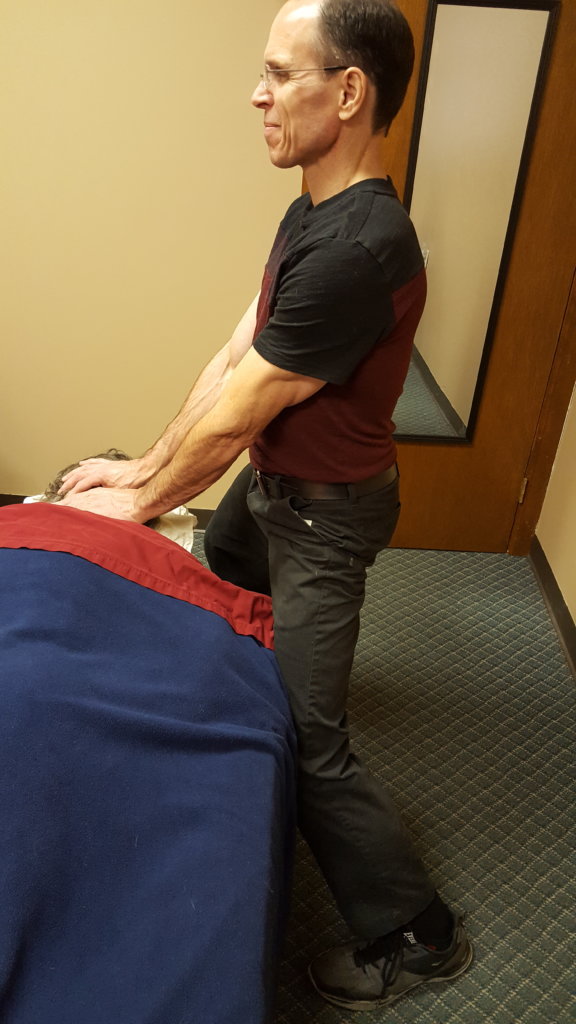
    If you want to maximize using your body weight to generate force, lower your table.

    The challenge with a low table is with light pressure, primarily because you can’t lean your body weight into the client. This means you’ll have to be more upright, and to get your hands on your client you’ll need to bend.

    Can I get an order of back pain to go, please?

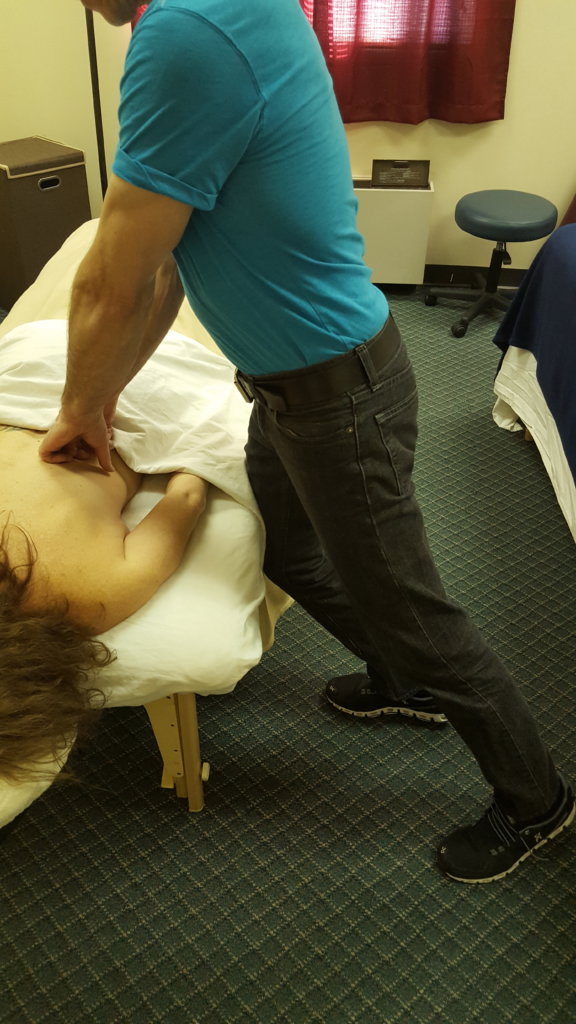
    However, there’s another way to adapt instead of bending from your back. It’s “bend your legs”.

    My back is pretty much neutral in the pic, right? You can also sit and lean. That’s easy on the back, too.

    Don’t Need Fancy

    By the way, you don’t need an expensive table to maximize adaptation. I can do 1000 massages on an expensive table, then 1000 on an inexpensive one and I’m not going to lose a client as long as my massage is consistent.

    #2: Adapting to the T-bar

    Massage tools also require adaptation responses if you’re going to stay pain-free and improve massage efficiency.

    In the video below, I’m purposely using a long T-bar in areas of the body I’d normally use a shorter T-bar.

    The simplicity of the T-bar allows me to adapt to different situations in limitless ways. Specifically, I’m talking about the many ways I can hold the T-bar. Have a look:

    How to Experiment with Adaptation

    In massage, successful adaptation boils down to this:

    1. Use the strategy that allows for the best adaptation response.

    Here’s how I determine if the adaption was a success. As I’m adapting, I ask myself:

    1. Am I pain-free?
    2. Is it now easier to get the job done?

    Two yeses equals success.

    If your body hurts when doing massage and you want to dig deeper into the table height strategy, start here: Table Height Is Everything.

    Massage Pain-Free Online CEU Class

    And if you want to cut to the chase and learn how to massage pain-free while getting CEU credits, go here: How to Deliver Deep Pressure Without Hurting Yourself.