Category: Uncategorized

  • Advanced Massage Tools: Finger, Thumb & Elbow Substitutes

    Advanced Massage Tools: Finger, Thumb & Elbow Substitutes

    Do you have an elbow substitute?

    I do (it’s a massage tool), but that wasn’t always the case.

    I started my massage tool journey 25 years ago with one massage tool: The T-bar.

    The T-bar was awesome. It allowed me to easily work deep muscles, like the rotatores and multifidus in the lamina groove.

    The diameter of the tip was also perfect for arches of feet, shins, calves, hamstrings, TFLs, IT bands, forearms, rhomboids and traps.

    BUT the diameter of the tip was too big for areas like the cervical erectors and too small for bigger muscles like the glutes.

    Over the years I had developed some hacks for using the T-bar in areas where it was too small or too big. But it was never quite the same as having the best diameter-sized tool for the job.

    Finger, Thumb, and Elbow Substitutes

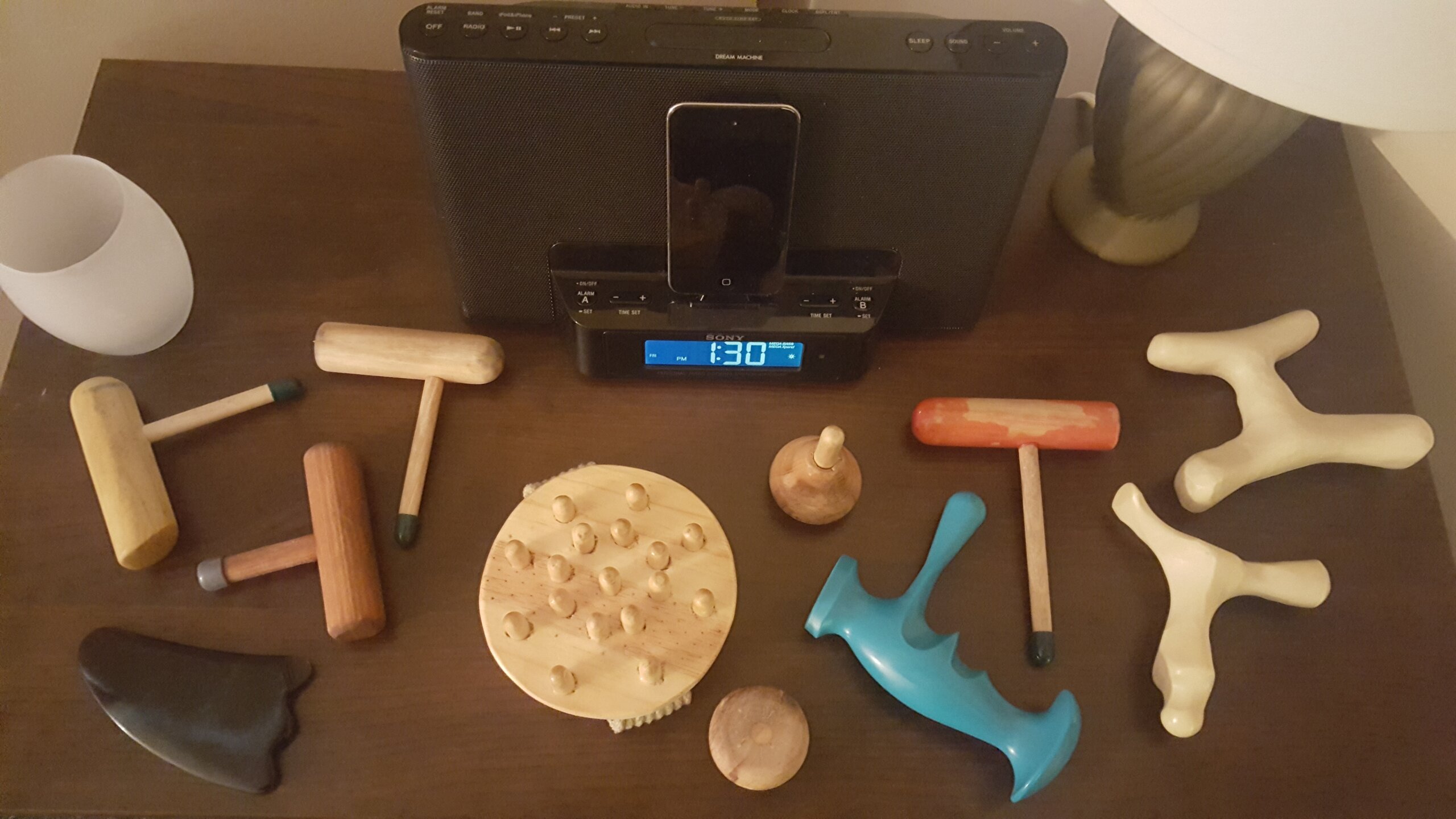
    There are 3 pressing tools with different diameter tips that go with me into the massage room every day.

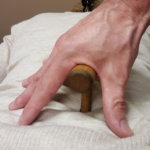
    The L-bar has the smallest diameter.
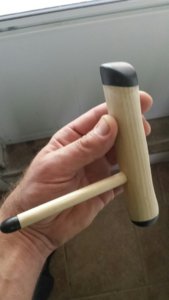
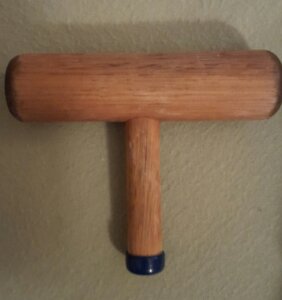
    The T-bar is in the middle.
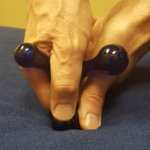
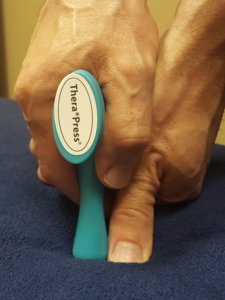
    And a Round-Tip Bar or TheraPress Trigger Point has the biggest tip.
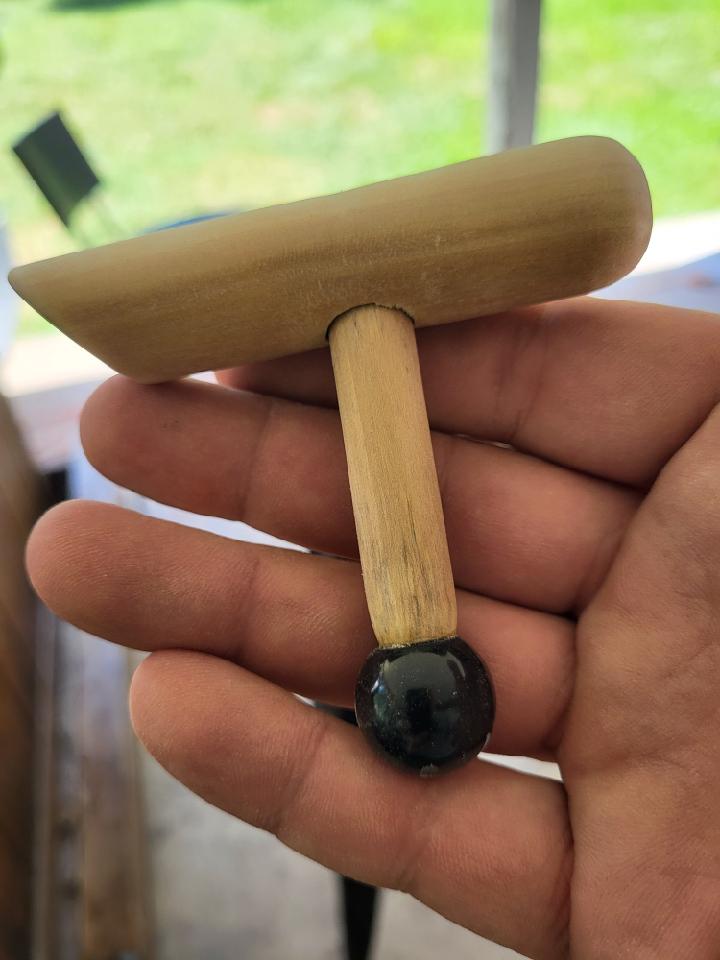
    I think of these 3 massage tools as body parts substitutes.

    The L-bar is an extra finger.

    The T-bar is an extra thumb.

    And the Round-Tip bar or TheraPress is an extra elbow.

    Finger Substitute

    Now I bet you’re thinking, okay, Mark, I can see how the T-bar can be an extra thumb, but how can the L-bar (smallest diameter) be an extra finger?

    Here’s how: When the client is prone and you’re working the cervical erectors, try using an L-bar instead of a finger.

    Elbow Substitute

    Here Sarah is using the Round-Tip Bar as an elbow substitute:

    Here’s a TheraPress used like an elbow:

    Also, if I’m doing a two-handed hold with the Round-Tip Bar or TheraPress, I make additional contact around the tip of the tool. To the client this makes the tool tip feel broader than it is.
    Below I’ve made a list of my favorite ways to use the different diameter tools.

    Finger

    (L-bar)

    Thumb

    (T-bar)

    Elbow

    (Round Tip Bar or TheraPress )

    Cervical erectors Thoracic erectors Hamstring attachments
    Levator scapular Lumbar erectors Gluteus maximus, medius, minimus
    TFL Upper trapezius Hip rotators
    Forearms Foot flexors IT band
    Thumb adductor IT band Calves
    TFL
    Forearms

    Do you need all 3 tools to save your hands?

    No.

    But it’s nice to have all the substitute options, especially if you’re doing a lot of massage or  if you’re having a busy day.

    Okay, one more time. Try using these tools for body part substitutes:

    1. Finger substitute: L-bar.

    2. Thumb substitute: T-bar.

    3. Elbow substitute: Round-Tip Bar or TheraPress.

    Check out the videos in this article to get competent with these massage tools. If you’re new to massage tools, start here.

    If you are looking to purchase a custom-made, wooden massage tool, I can make that happen.

    Round-Tip T-bar with Contoured Edge – $20 plus shipping

    T-Bar with Contoured Edge – $20 + shipping

    T-Bar Small Tip with Contoured Edge – $20 plus shipping
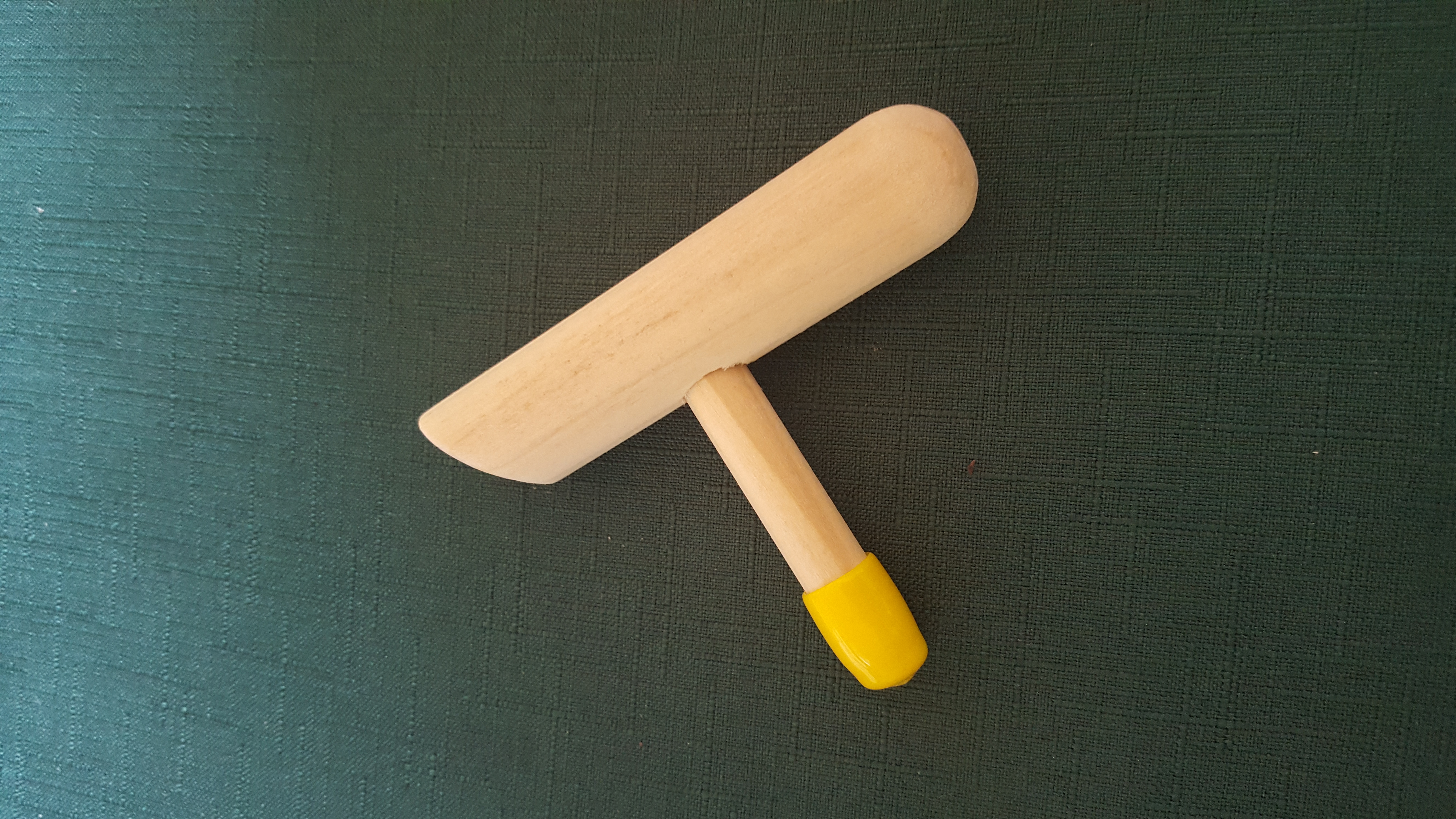
     

    All three for $45 plus shipping.

    Just email me to order or if you have questions: mark@makethemostofmassage.com

    Massage Tools Online, Home-Study CEU Classes

    Massage tools have extended my massage career and increased my massage productivity. Specifically, I do more massages in a day/week/month/year in 50s than I did in my 30s.

    I’ve spent years developing and teaching the massage tools techniques and strategies that have allowed me to effectively incorporate massage tools into any massage, from relaxation to deep tissue. Now, I’ve taken the lives classes and turned them into online, home-study classes with lots of videos and guides.

    If you’re new to massage tools and want to be able to incorporate them into your massage quickly, I recommend: How to Use Massage Tools (Fearlessly and Effectively), 2.5 CEUs.

    And if you’re familiar with using massage tools, but want to take your massage tool skill level up to the point where you not only save your body but also brand yourself as a massage therapist who is an expert with precise massage, check out this course: Advanced Massage Tools, 2.5 CEUs.


  • Two Hands on a Massage Tool

    Two Hands on a Massage Tool

    A massage tool will kill your hand. I agree with statement—said Mark 20 years ago because he didn’t know how to hold a massage tool. And he definitely didn’t know anything about two-handed holds.

    I can’t blame myself entirely for thinking massage tools did more harm than good because no one that I knew back then was drilling down on how to hold a massage tool without hurting yourself.

    Truthfully, I don’t think a lot has changed. Getting the job done still takes precedence over getting the job done without hurting yourself.

    The reality is if you want to practice massage for more than a couple of years you need to know how to take care of your body while doing massage.

    Enter massage tools.

    They will save your hands (and your body) IF you know how to hold them in ways that won’t strain your hands.

    How to Hold a Massage Tool Cheat Sheet

    First, don’t think of your massage tool as a screwdriver that you have to hold tighter and tighter the harder you work.

    Think of your massage tool as an egg that you have to keep from falling over, but if you squeeze it too hard, it will break.

    You probably thinking there’s a big, fat contradiction here. If you’re pressing harder with a massage tool AND relaxing your hold (trying not to break the egg), at some point, in order to stabilize the tool in your hand, you have to tighten your grip.

    That’s what I used to think, too.

    But I found three ways to stabilize a massage tool without having to tighten up on the grip.

    1. Pin the tool between your hand and the muscle.
    2. Add a guide finger from the non-tool-holding hand.
    3. Use two hands.

    Pin the Massage Tool

    If you want to hurt your hands fast use a massage tool for medium to deep pressure without pinning the massage tool.

    What do I mean by pinning the massage tool?

    I mean this.

    The massage tool is pinned between your hand and the muscle you’re working on.

    Leaning (transferring your body onto the massage tool) is what does the pinning.

    Here’s how you pin a massage tool:

    [embedyt] https://www.youtube.com/watch?v=LE9P3BOdxAM[/embedyt]

    Add a Guide Finger

    Once you feel okay with pinning it’s time to add a guide finger(s). Besides giving you more “feel” with the tool, the guide finger/hand helps support the tool.

    Pinning and a guide finger together act as highly effective stabilizing forces so that you can loosen your hold on the massage tool.

    Here’s how to add a guide finger: Why You’re Not Using Your Massage Tool.

    I have one more trick for stabilizing a massage tool: Two-handed holds.

    Two-Handed Holds

    The advantage of two handed holds from a “relaxing your hand” standpoint is that you can spread the workload (holding the massage tool) out over two hands instead of one. Combine that with leaning and you’ve got some really relaxed hands.

    The disadvantage to holding a massage tool with two hands is that there’s a potential to lose your “feel” for what’s underneath your fingers because your guide finger is not down BUT that lose of sensitivity can be overcome in 2 ways.

    1. Do exploratory strokes without massage tools to determine where tight spots and trigger points are so you know where to use more or less pressure with your massage tool.
    2. Use two-handed holds that keep parts of your hand in contact with the tissue you’re working on.

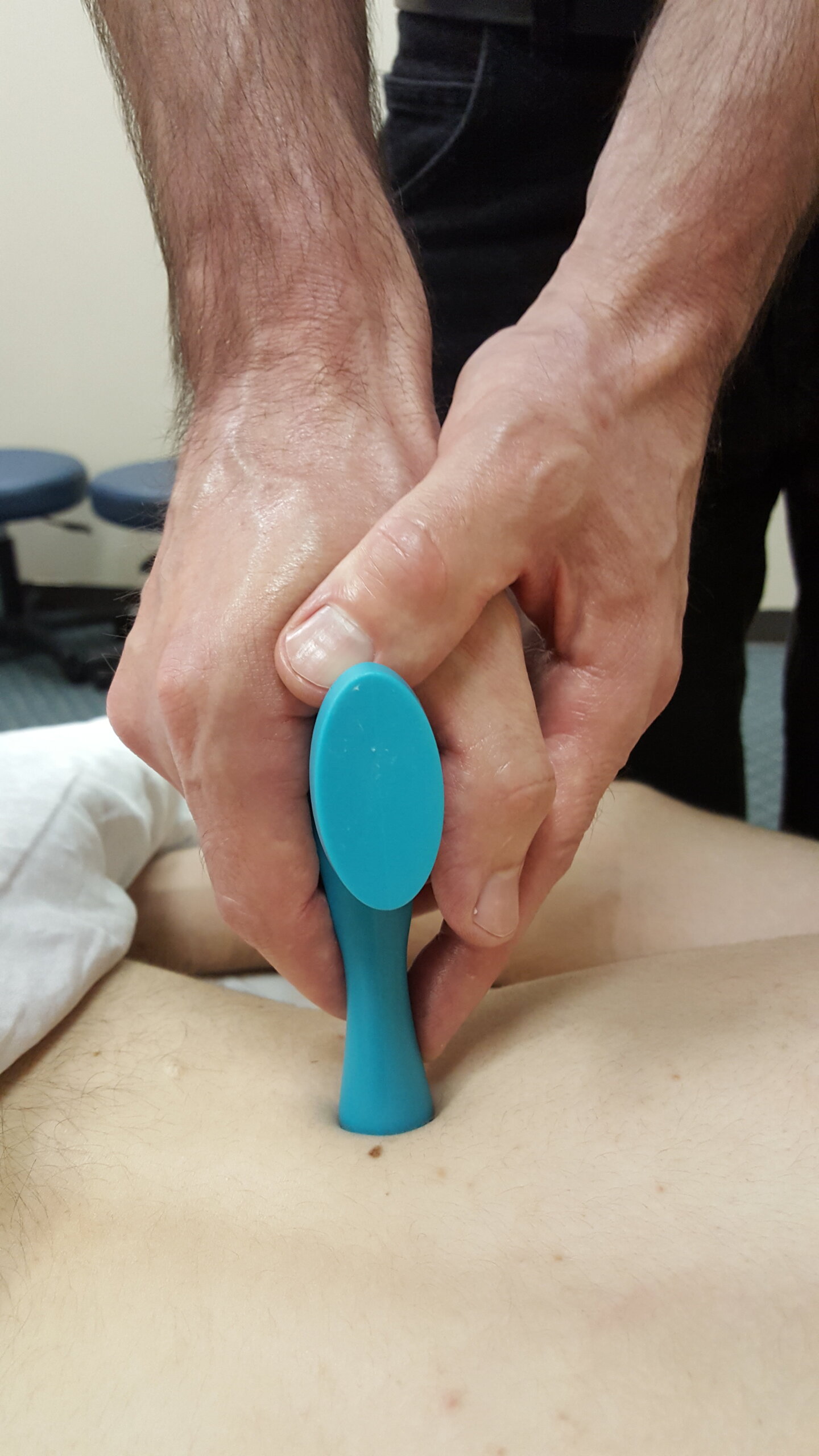
    Here’s an example of what that looks like:

    See how my knuckles and fingers are contacting the clients back?

    Now look even closer. My left index finger and my right index knuckle are next to the massage tool tip. In addition to being tool stabilizers, they’re also sensors which allow me to palpate the tissue where the tool tip will be placed next.

    There are tons of different ways to do two-handed holds.

    Here I’m stabilizing a T-bar with my fingers wrapped around the top of the foot.

    There is zero strain on my hands.

    I could hold this position forever.

    In this picture I’m using two hands to hold a TheraPress massage tool.

    My finger tips on my left hand are making contact with the client’s back.

    Again, there is no strain to my hands or body.

    Best Two-Handed Holds

    So, what are the best two-handed holds? The ones that makes your hands feel good.

    That means you’re going to have to experiment. Here are my suggestions for experimenting.

    1. Pick a tool that feels comfortable in your hands.
    2. Figure out where that tool works best. (A tool that’s great for the feet because it has a broader tip may be too big for the neck.)
    3. Pin the tool with one hand and then bring the other hand on the tool for support.

    Allow you hands to move and experiment with different positions.
    Eventually, you’ll discover the two-handed holds that are easy on your hands.

    Don’t forget to lean when generating medium to deep pressure.

    By the way, leaning is not just for standing.

    You can lean when you sit, too.

    Want to learn more about how to hold a massage tool (and how to get more massage clients)? Join my email group and get my weekly articles. It’s free:-)

    Massage Tools Online Course

    If you’re ready to jump into massage tools, I have an online, home-study course that will teach you how to fearlessly and effectively use massage tools. 


    It’s called, surprisingly, How to Use Massage Tools (Fearlessly and Effectively). It’s a 2.5 CEU course, NCBTMB approved. Check it out here.


  • How Indian Clubs Make Me a Better Therapist

    How Indian Clubs Make Me a Better Therapist

    Ever heard of Indian clubs?

    It’s a new type of percussive, deep pressure massage tool…joking…

    Indian clubs were used by the Persians in the 19th century to practice sword and shield movements.

    So, what’s the connection between Indian clubs and massage, Mark?

    Indian clubs can be used for neck rehab.

    No joke.

    And I actually have a video to show you.

    But that’s not why I’m talking about Indian clubs today.

    I’m talking about Indian clubs today because they were the vehicle through which I made an important connection with Joe.

    Joe is a chiropractor and a certified strength and conditioning specialist. He’s evidence-based, a straight-shooter, accessible, nice, takes a multi-disciplinary treatment approach and cares a whole lot about his patients.

    By connecting with Joe I’ve amplified my ability to help my clients because I can tap into Joe’s knowledge base (talk to him) and utilize his skills (refer to him).

    To me, this is where making money and doing my job the way I want to do my job merge seamlessly.

    Let me put this another way: I don’t care if Joe ever refers a client to me.

    By knowing Joe, I can help my clients better than I could before I knew him. And the byproduct of having more ways to help my clients is that clients appreciate the above-and-beyond work that I do.

    From a warm fuzzy standpoint, that’s a lot of warm fuzzies.

    From a business standpoint, I don’t think any marketer will ever argue that having people say good things about you is a bad thing.

    Need a Joe in your client care network?

    Here’s how to find one.

    First do this:

    1. Contact health practitioners that your clients use.

    Let’s say your client, Ankur, is using an acupuncturist for back pain. Ask Ankur if you can share notes with his acupuncturist. By the way, that’s how we ended up opening up our third office—through sharing notes with a physical therapist.

    1. Target groups of practitioners.

    If you want to connect with a chiropractor, research chiros near where you work. Call them and set up a time to visit. This article will help you with that: Why Can’t I Get More Massage Clients?

    When you start meeting and collaborating with other health practitioners you’re on your way to finding a Joe (a health practitioner you shares your core values). And once you find your first Joe, more Joes start to show up.

    Well, I guess I need to fess up at this point: Joe was not my first Joe.

    Gayland was actually my first Joe.

    Gayland is a running coach and manages a local running store.

    We hit it off immediately. Not so long ago he said you have to meet Joe. And the rest is history.

    Which brings us back to Joe and his Indian club swinging video for neck pain.

    Here it is:

    Joe has more videos on his website.

    You can also follow him on YouTube and Instagram.

    And this September Joe is going to do a demo class at our Phoenixville office, so I’ll get more videos up after that.

    Speaking of videos, if you want to add a video to your website, here’s how you can do it with Weebly and WordPress.

    If you don’t use but want to use Weebly or WordPress, check out my DIY Website Guide.

    Need more help?

    Join my email group.

    I’ll send you my latest everything weekly.

    Sign up below.

    And it’s free:-)


  • How to Do a Great Massage at the End of the Day

    How to Do a Great Massage at the End of the Day

    You have 8 hours of massage to do. And your last 3 are deep tissue. How do you make the last massage as good as the first? You get hyper-efficient with how you do your work (hyper-efficient massage).

    But before you can do hyper-efficient massage, we need to talk about just doing massage efficiently.

    I use two categories to explain massage efficiency: (1) work and (2) rest/recovery.

    And you’re probably thinking resting while doing massage is called napping, Mark.

    Well, resting while doing massage is close to napping, but not quite. We’ll get into that in a minute.

    Let’s start with working efficiently.

    Working Efficiently

    Working efficiently means that you’re maximizing your productivity with minimum wasted effort.

    Here’s how I do the work part of massage effortlessly:

    1. Lean for medium to deep pressure.

    I use a lock, stack and lean technique for medium to deep pressure. You can read more about that here.

    1. Keep the feet moving.

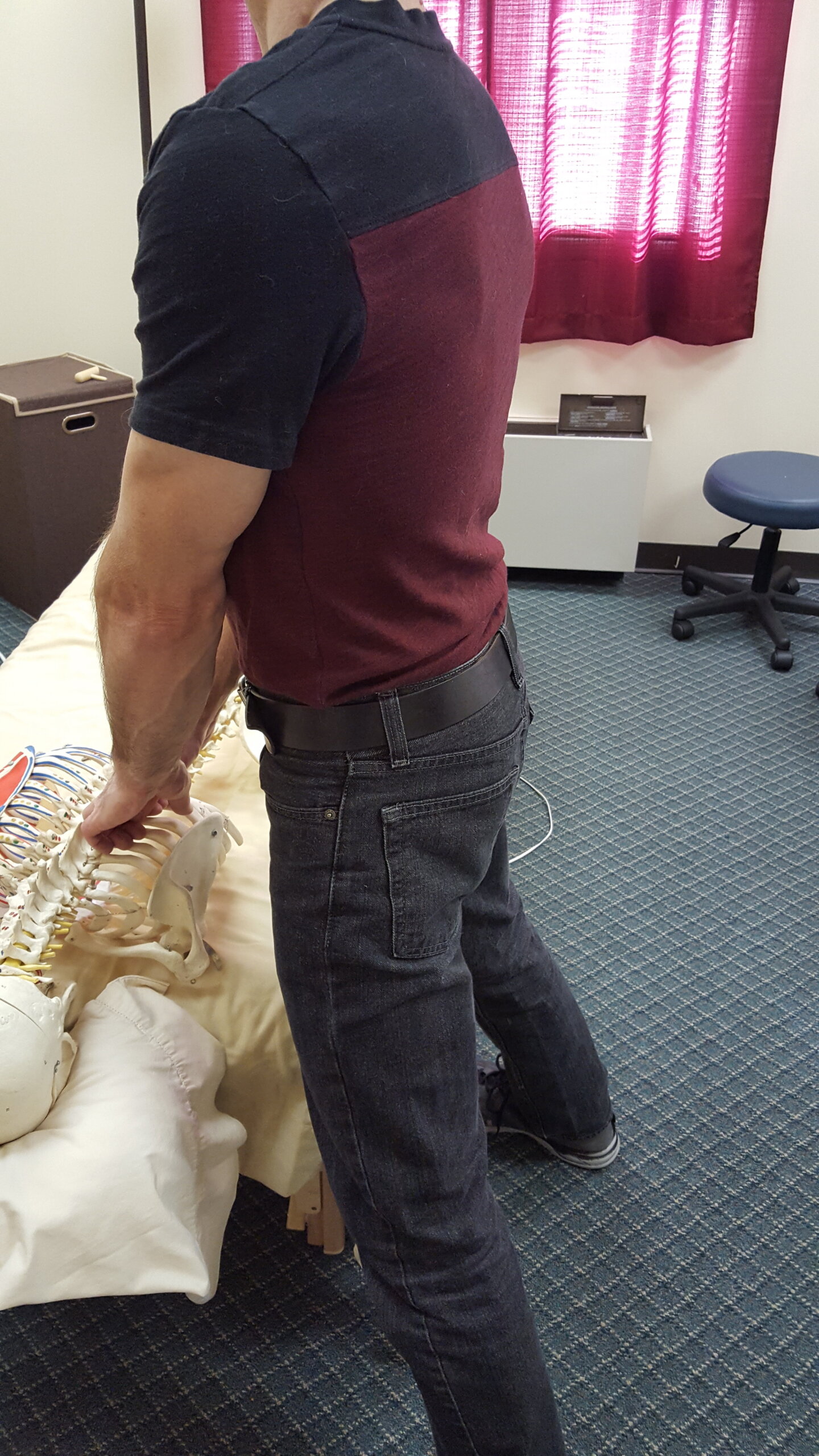
    If you’re not moving your feet to get into the proper position to lean, your work will become harder because you won’t be able to efficiently transfer your body weight onto the client. Here’s how I move my feet:

    [embedyt] https://www.youtube.com/watch?v=omwk-NyVjZU[/embedyt]

    There’s more, but if you do these 2 things–lean and move your feet–you’re gonna be pretty efficient.

    And that will get you through the first 5 massages of your 8-hour massage day.

    Then walks in Hour 6, and Hour 6 wants a deep tissue massage.

    What usually happens next?

    Your brain hurts and your body is tired and your form starts slipping, right?

    But this is precisely the time that you can’t give into fatigue. You must get hyper-efficient (be even more efficient than you were for the first 5 hours).

    Working Hyper-Efficiently

    How’s that going to happen when I’m ready to fall on my face, Mark?

    You’re going to talk yourself into hyper-efficiency.

    “Move your feet, buddy.”

    “Come on now, stop reaching.”

    “You got this…fifteen more minutes to go…relax your shoulders….”

    As you talk to yourself you start to become acutely aware of every move you make. With this  new, laser focus on form you can correct any sloppiness that has occurred because of fatigue and you can take it a step further by removing all inefficiencies that were getting past your radar when you were less tired (massages 1 – 5 of the day).

    Now the work gets easier again and you can fight off the droopy feeling.

    But that’s only half of what you’ll need to know to be 100% hyper-efficient.

    Here’s the first step of the other half: You need to be efficient at resting/recovering while doing a massage.

    Resting Efficiently

    How do you rest during a massage?

    1. Take a seat.
    2. Rest your arms on your legs when sitting.
    3. Relax (instead of tightening up) into the lean.

    And you can give your overworked postural muscles a break by doing this;

    1. Get upright.
    2. Lean against the table.

    Do these things to get through the first 5 massages.

    Then become hyper-efficient with relaxing to conquer hours 6, 7 and 8.

    Resting Hyper-Efficiently

    How?

    Turn “resting” up a notch.

    Look for every opportunity where you can sit, lean into the table and get vertical. 

    When you do, you’ll find more opportunities than you had thought were available. Jump on these opportunities and you’re body and brain will thank you.

    Here’s the short version.

    Hyper-Efficient Massage in a Nutshell

    Massage hours 1 -5:  Be efficient with work and rest.

    Hours 6 – 8: Be hyper-efficient with work and rest.

    When fatigue moves in, talk yourself into hyper-efficiency.

    Then you’ll start to see when body mechanic errors are creeping in and when you’re missing resting opportunities.

    Make the corrections and rest like you’ve never rested before.

    Being hyper-efficient will not only make your last massage as good as your first, it will also make you realize that you can handle much more than you had thought:-)

    Want to make sure that you can do a lot of massage and not be in pain?

    Check out Delivering Deep Pressure Without Hurting Yourself.

    It’s a 3 CEU, online, home-study course. It has all the strategies and techniques that allow me to work 6 to 8 hour days.