Author: Mark Liskey

  • The Pain-Free Massage Therapist Book Release

    On the Radical RMT podcast, host/creator Krista Dicks asked me why it’s important to know how to massage pain-free. The obvious answer is that a lot of pain will send you to an early retirement. The less obvious and more life-force-sucking answer is that any amount of pain could limit you from reaching your full potential as a massage therapist.

    Don’t take my word for it. Ask yourself what happens when you massage in pain, and I think you’ll get an answer similar to this: You avoid deep pressure clients and seek out light pressure ones. You struggle to keep your head in the game because each massage hurts you—literally. And your dream of building a massage business or making more money evaporates because pain limits the number of massages you can do in a day/week/year.

    Unfortunately, it’s worse than that because the physical pain you feel in the massage room just doesn’t stay in the massage room. You take it with you, and life activities that increase your pain get nixed. In the worst-case, pain scenario, life becomes a job of not exacerbating your pain.

    I get it.

    Pain limited me for a good part of my massage career. Finally, when my body said enough is enough, I had to make a decision—quit massage or fix the pain.

    I chose the latter.

    In this book I share with you all the strategies and techniques that eliminated my pain in the massage room and allowed me to increase my massage productivity so that I could create the massage business that I wanted.

    By the way, this book is designed to get results fast. With some pain-free massage techniques you’ll immediately be able to try out on paying customers, no matter if you’re new to massage or a seasoned practitioner, like me. With other techniques you’ll have to put in some practice time on friends, colleagues and/or non-paying clients. Also, I want to mention that I provide links in the chapters to instructional videos so that you can see how I do the specific techniques and strategies that I teach.

    Lastly, it’s my goal to help you build a massage lifestyle without limitations, starting with not sacrificing your body in the massage room, and I think this book is the foundation for that.

    For the paperback edition ($19.99), go here: Amazon.

    For the e-book version ($12.99), go here: Pain-Free Massage Therapist.

    If you want to get my latest “how to massage pain-free” information, sign up below:-)

  • Why You’re Not Using Your Massage Tool

    Why You’re Not Using Your Massage Tool

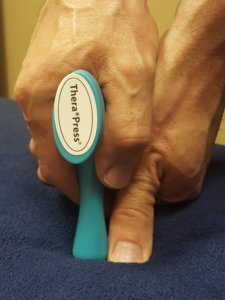
    Are you using your massage tool? Hmm…let me guess why you’re not.  Maybe it’s because that hunk of wood or piece of twisted plastic doesn’t let you feel anything, and you have no idea how hard you’re pressing. I hear ya, but hold on, there’s a way around these problems. Use a guide finger next to the tip of the massage tool.

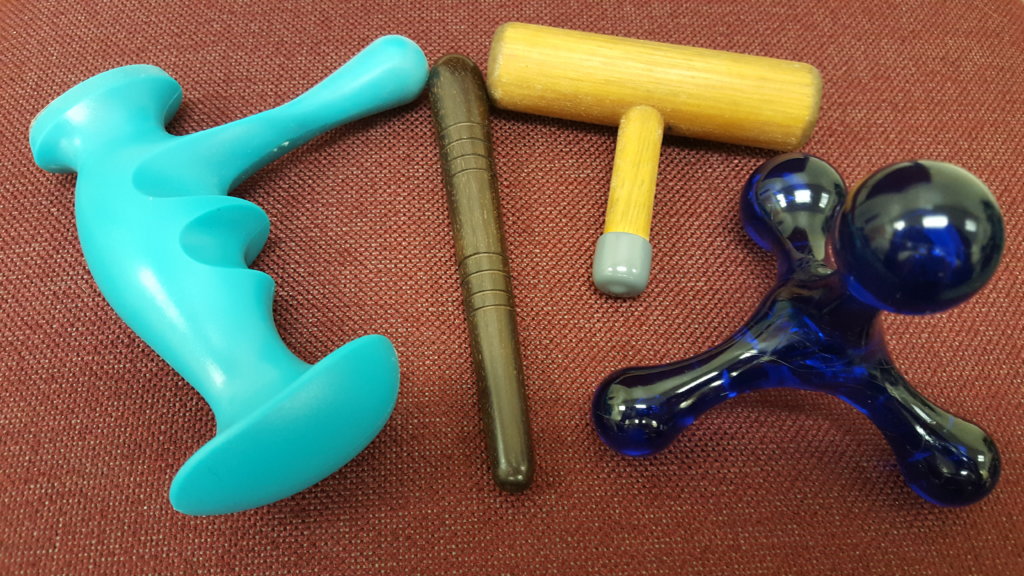
    Before I get into the how, let me introduce four pressing tools that are dying to have a guide finger next to them.

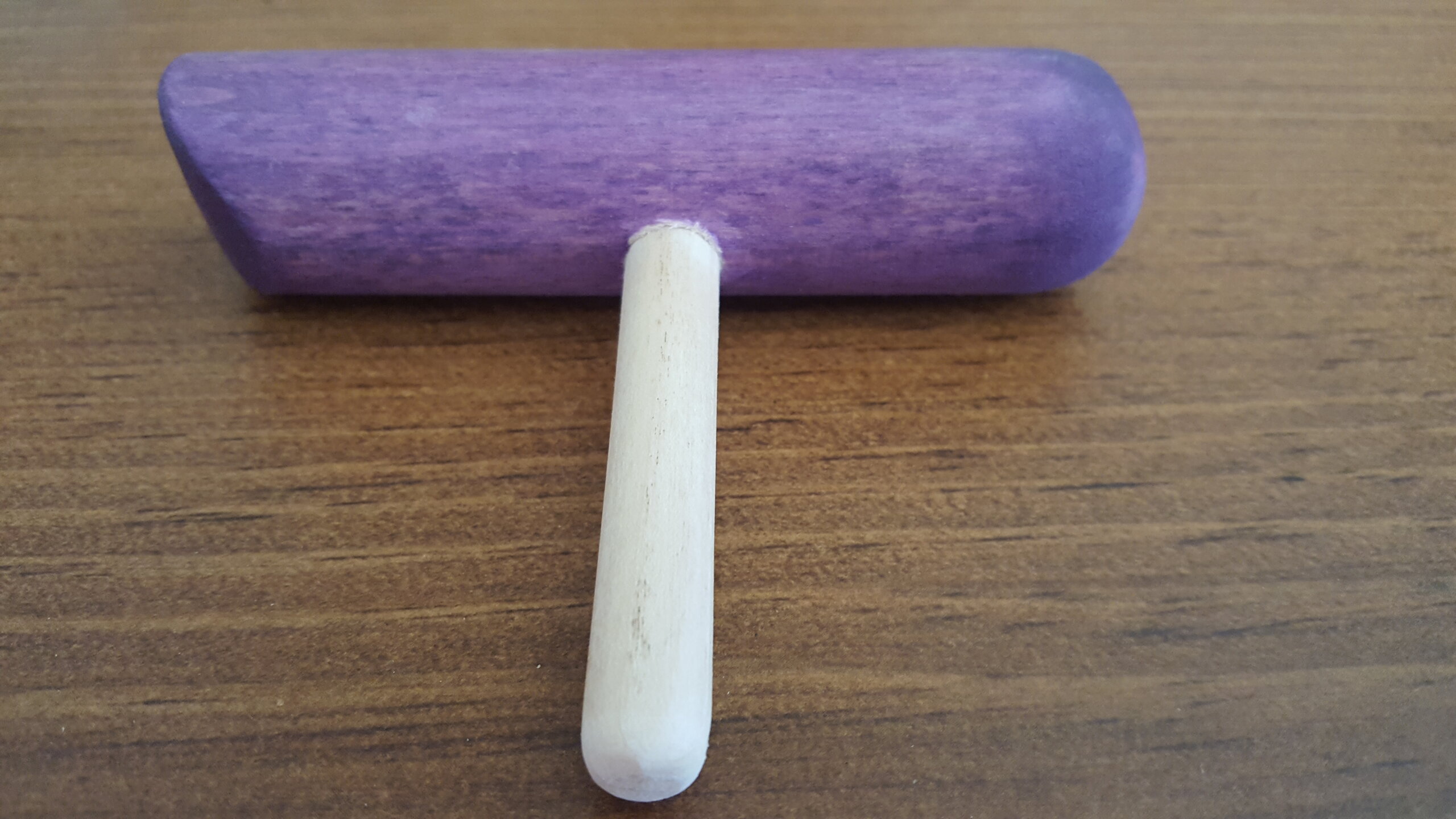
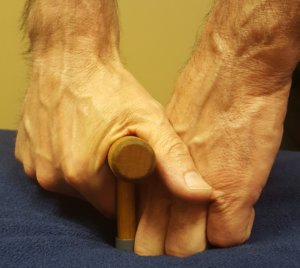
    Starting at the left and going to the right we have TheraPress, massage stick (Mu-Xing Pointer), T-bar (my massage therapist friend, Matt, makes T-bars–I’ll have more details soon) and Jacknobber II. Here’s how I use a guide finger with each of them:

    How to Use a Guide Finger

    1. With your guide finger palpate to find the area you want to work.
    2. Once you find the area press to determine the pressure you want to apply.
    3. Now you’re ready to press the massage tool into that area.
    4. After you’ve pressed that area with the massage tool, put your guide finger back on the area to re-establish sensitivity and recalibrate for the next press with the massage tool.

    Alright, let’s take these tools out for a spin.

    What a Guide Finger Looks Like in Action

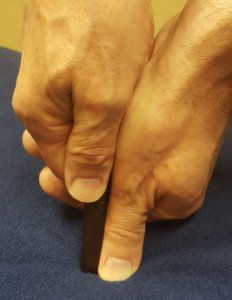
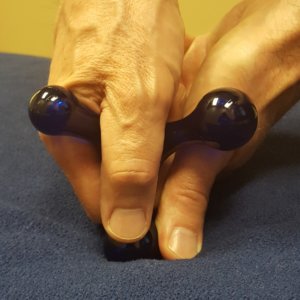
    Here are some action shots of a guide finger next to the massage tool.

    Mu-Xing Pointer


    Jacknobber II


    Thera*Press

    T-bar

    You’re guide finger could be a knuckle.

    Or it could be a bunch of fingers, bent, also known as a fist.

    Essentially, any part of the hand that’s not holding the massage tool can be a “guide” for the massage tool.

    Okay, that’s a wrap…not quite…

    The Little Bit Extra

    There’s a process here that you’ll need to refine. You remember that the guide finger finds the tight spot and figures out the pressure that needs to be applied, then in comes the massage tool, right?

    Well, there’s a little more to it. To a large extent you can sense how much pressure you were exerting with your guide finger and then try to match that with the tool in the other hand. But you do have an object in your hand that’s not neurologically wired to your brain. Some guessing is required.

    You’re going to make up that guessing gap by getting feedback from non-paying and paying clients when you’re practicing with the massage tools.

    For paying clients, the feedback will come in the form of reactions, like the verbal “Wow, that feels good” or the more subtle fidget because something is off.

    Also, with paying customers use the massage tool in short spurts in case your pressure is off.

    Lastly, have someone work on you with the massage tool so that you get a firsthand feel. This way of learning works best for me.

    Don’t Sacrifice Your Thumbs

    If you’ve come this far in the article, you’re probably in pain or sick of sacrificing your thumbs to the massage gods.

    If you’re ready to make a change, it’s time to break out that massage tool. Get comfortable with it by using a guide thumb, finger, or hand. Get you reps in by using it in every massage (30 seconds or more). Remember to:

    1. Use the guide finger to find the tight spot.
    2. Establish pressure with the guide finger.
    3. Press the massage tool into the tight spot.
    4. Re-establish pressure and sensitivity with the guide finger.

    If you’re new to massage tools, I would do this:

    1. Learn the fundamentals: Massage Tools will Save Your Hands
    2. Tweak the fundamentals: How to do very Precise Pressure
    3. Tweak some more: Massage Tools—Working in Light to Medium Pressure


    Massage Tools Online CEU Course

    If you want to be able to use a massage tool with every massage so that you can save your hands and deliver focused pressure like nobody else can, this online course will get you there.

    I taught it live for many years and now I’ve made the online version, There are lots of videos and if you have any questions while you’re taking the course, you can always ask me (mark@makethemostofmassage.com).

    Check it our here: How to Use Massage Tools (Fearlessly and Effectively).


  • How to Sell Massage without Talking – Do Nice Things

    How to Sell Massage without Talking – Do Nice Things

    How do you sell massage without talking?

    It’s simple.

    You just “do” nice things.

    The great thing about doing nice things is that you’re probably already doing nice things now.

    And to make doing nice things bring in more clients you just need to be strategic with your doing nice things.

    Alright, I’m going to stop saying doing nice things every other word soon, but first I need to make sure your doing nice things and my doing nice things are the same before we tackle strategy.

    The Power of Doing Nice Things

    By doing nice things, I mean do things for clients, businesses and health care professionals that provide value (and extra value in certain cases).

    I’m not talking about pet-sitting your client’s cats.

    I’m talking about doing nice things as it relates to massage.

    Clients Sell Massage For You

    For example, at our office here’s what we do to make sure each client gets an extra dose of value.

    We (1) do extra research about a client’s problem and reach out to other health professionals on our client’s behalf, (2) take the time to listen to a client who is having a bad day and not count that time as part of the massage, and (3), follow up with a new client 2 to 3 days after the massage to see how he’s doing.

    You’re probably wondering how all this “doing” translates into selling massage.

    It’s pretty simple.

    By doing these nice things, we create very loyal clients. A percentage of these clients naturally talk us up. In essence, they become our sales force.

    We motivate our sales force by continuing to do things that benefit them. If you want to dive deeper into having a customer sales force, check out: How to Get Someone Sell Your Massage.

    The same is true with businesses connections.

    Businesses Sell Massage for You

    Have you ever been to a luncheon where the sole purpose is to schmooze with other business owners/reps?

    Can you say “pass me the hemlock, please”?

    But connecting to other business for marketing and referral purposes is important.

    Here’s what doers of nice things can do: We can cast a wide net by doing something for other businesses, like demo massages for free.

    When we do, we’ll really connect with a few of these businesses. With those few, we go deep by doing more (providing even more value).

    Doing more could be providing them with more free demo massages, supporting their business events with chair massage, providing coupons and gift certificates for special events they’re doing, and/or providing discounts to their customers.

    Like with our clients, the businesses we really connect with become our sales force.

    Doers of Nice Things Warning

    Before you go “doing” all over the place, you need to know 2 more things about doing.

    One, doing needs to be tied into your marketing.

    And “extra doing” needs to be strategic.

    Doing Nice Things in a Marketing Plan

    The reason you want “doing nice things” tied into your marketing plan is so that you actually make more money without burning out.

    Here’s “doing nice things” without a marketing plan.

    You do free demo massages for any business who is nice to you or anyone who asks you to because you can’t say no.

    Been there, done that.

    Here’s what “doing nice things” looks like in a marketing plan.

    You offer free demo massages to 3 personal training studios, 1 chiropractor (who don’t do massage), 2 bicycle shops, 1 rock climbing gym and 1 one running store.

    Now you can gauge progress over time.

    Let’s say you really connected with a chiro and a personal training studio.

    Now it’s time to be strategic.

    Strategic Doing Nice Things

    Being strategic is important because the cost for “doing” is time.

    This is what you want to avoid: A lot of time invested for a tiny return.

    This is what you want to achieve: A lot of time invested for a big return.

    Back to the example, let’s say that the personal training studio is giving you more referrals than the chiropractor.

    Go all in with the personal training studio and put the chiropractor on maintenance mode.

    Multiple Platform Marketing

    Now, you have the time to give the personal training studio some extra value.

    And you’re in a position to leverage your “doing nice things” efforts into other marketing platforms with the personal training studio.

    For instance, you could add a resources page to your website, explain why you like this personal training studio and have a link to their website on this page.

    You could then ask the personal training studio if they’d link to your webpage.

    When they link to you (backlink), you’re improving your website SEO which means you could be driving more traffic to your website.

    Also, when the personal training studio puts your website link on their website, you’re getting an endorsement and free advertising.

    Not bad for never having to sell massage, huh?

    Doing-Nice-Things Success Story

    Here’s a recent doing-nice-things success story of mine.

    Destiny had a neck issue and was seeing a physical therapist when she came to my office.

    After my first session with Destiny I contacted her physical therapist, Alison, to see how I could support Alison’s work.

    Then I continued seeing Destiny on a regular basis working on the areas that Alison asked me to address.

    Around week number three Laniece, Destiny’s PTA, came in to see me, but didn’t tell me that she was Destiny’s PTA until the second time she had an appointment with me. Then she told me that Destiny had talked me up at the PT office and that she came in to test me out.

    At that point, Laniece became a referral machine for me!

    And the only extra doing that I did was to reach out to Alison on a clinical basis. 

    By the way, this example is common for me.

    Do extra for the client by contacting her  __________ (PT, doctor, chiropractor, personal trainer…the list goes on) and referral machines are created.

    Okay, time to get out there and do nice things–strategically.

    Here’s a quick recap.

    Selling Massage for Doers of Nice Things Recap

    If you’re doer of nice things, do things that add value to your client’s experience and do things that add value to business relationships.

    When building business relationships, be strategic. In other words, don’t be “doing” if you’re not getting enough return (referrals) from your time investment.

    And make sure your “doing nice things” is part of a marketing plan.

    You don’t have to get fancy with this.

    You just need to keep in mind that your primary goal for business relationships is to effectively and efficiently market your business.

    A marketing plan will help keep your “doing nice things” on track to reaching that goal.

    And once you find your number one business buddy have some fun because they will sell massage for you!

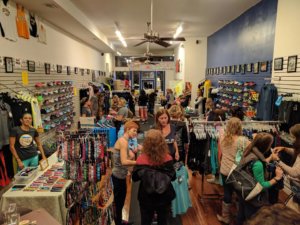
    Ladies Night at All Kinds of Fast. I’m in the far left corner setting up to do massage in the picture window. I love my peeps (employees, runners, everybody) at All Kinds of Fast! We’re family:-)

    Need more help with your bringing clients in when selling doesn’t come easy?

    I have a free course that will jumpstart your massage business: Jumpstart Course.

    And if you want my latest information join my email group.

    It’s free too and you can unsubscribe anytime you want:-)

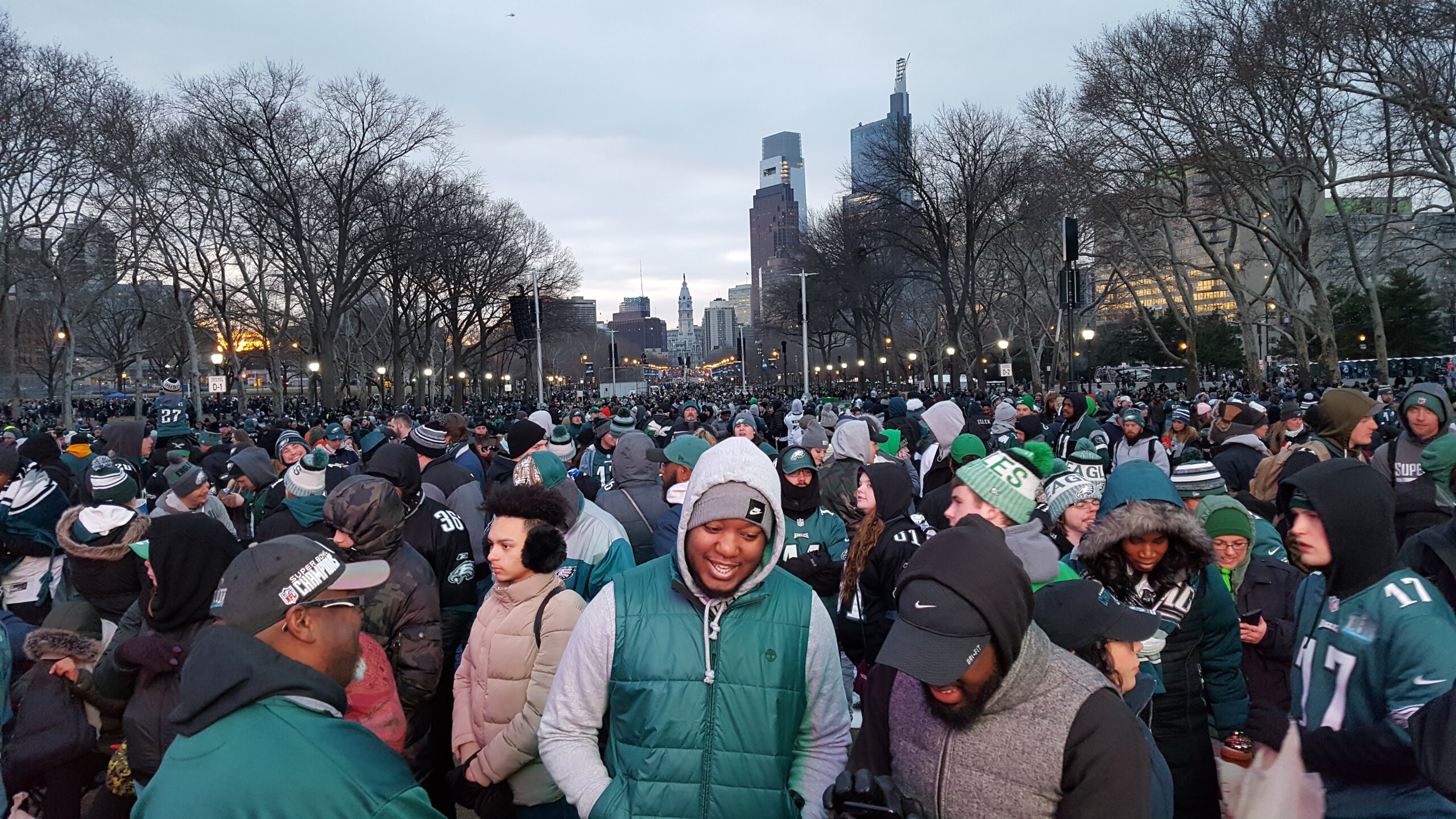
  • Advanced Dreaming: Live in Philly Philly

    Advanced Dreaming: Live in Philly Philly

    I live in Philly Philly.

    Bet you’re thinking: Uh, another typo there, Mark.

    But Philly Philly is not a typo.

    It’s not a place.

    It’s not the name of a new band.

    And it’s not a discount website.

    In fact, it wasn’t anything until February 4, 2018.

    That’s when during the Super Bowl, Nick Foles, quarterback for the Philadelphia Eagles, asked his coach, Doug Pederson, if he wanted to run Philly Philly (aka Philly Special), a trick play, on 4th and goal.

    “Yeah, let’s do it,” Pederson said.

    They did.

    And they scored.

    But scoring on a trick play isn’t what Philly Philly is either.

    To understand Philly Philly we have to backtrack some.

    The Eagles started out the 2017 season smoking hot, but during the third game they lost Darren Sproles, one of their clutch running backs to an Achilles injury.

    Sproles wasn’t the only key player they’d lose during the season.

    Next to fall was special teams captain Chris Maragos.

    Then All-Pro tackle Jason Peters and ace linebacker Jordan Hicks were both side-lined with season-ending injuries.

    But here’s the thing, even through all these injuries, the Eagles continued to win.

    How?

    They filled some holes with new players.

    And back-up players stepped up.

    It was as if the more adversity these guys faced, the stronger they got.

    Strong enough to win a Super Bowl?

    Yes.

    We started to believe…

    …until game #13, the day when  Eagles’ star quarterback, Carson Wentz, blew out his knee.

    We gasped.

    The Eagles did manage to win the next two games with back-up QB Nick Foles, but their play was deteriorating.

    And after the last game of the season, the Eagles did not look like a team that was ready for the post-season.

    They’re toast, analysts said.

    Yep, agreed Vegas oddsmakers. And they picked the Falcons over the Eagles by 3  for NFC Divisional playoff game.

    When the Eagles started the game it didn’t seem like a question of whether they were going to be toast, but rather what kind of toast they were going to be.

    Simply burnt toast or the kind of charred toast you have to dig out of the toaster with a knife?

    But the Eagles settled down as the game went on.

    And to everyone’s surprise, they pulled it off.

    They beat the Falcons.

    But fairy tale endings only happen in movies, not on spreadsheets, right?

    Vegas knew that. And for the NFC Championship game they picked the Vikings by 3.

    Again, the Eagles started the game like how everyone expected them to–as a team destined to lose.

    But that didn’t last long and the guys in green went on to rout the Vikings 38 – 7.

    Huh…

    Vegas thought really hard about the upcoming Super Bowl with the Eagles and the Patriots, but it was Brady, and the Pats had been to the Super Bowl a bazillion times, come on, and Vegas made the only reasonable prediction they could: The dreamers’ luck stops here.

    Believing in a dream is a weird.

    It’s hard to tease apart why you’re dreaming.

    It could be escapism.

    One day I’ll be out of this crappy job and I’ll be basking in the Key West sun.

    Or avoidance.

    Yeah, I’ll apply for that better paying job soon…hmm, wonder what the weather is like in Key West?

    But there’s another part of dreaming that’s any of that.

    It has to do with hope.

    Hope, as in if I push on, if I continue to do what I need to do, I’ll make my dream come true.

    Nothing about pushing on is easy.

    The self-doubt is relentless.

    I’m wasting my time again.

    I’m out of time.

    I wasn’t meant to succeed.

    I should’ve never have dreamed.

    But the catch is that it’s only through pushing on that you stand a chance at accomplishing your dream.

    It’s deep in the second quarter of Super Bowl LII. The game is tight. The Patriots have just scored and the Eagles lead has been cut to 3 points.

    It’s 4th and goal for the Eagles. The safe decision would be for Eagles to kick a field goal. That would give them a 6 point lead.

    But it’s becoming apparent that the game is gonna be a shoot-out. And the Eagles need points to keep pace with the Patriots. A lot of them!

    Pederson makes the call to go for it and that’s when Foles asks him: “You want Philly Philly?”

    Not only is Philly Philly a high risk play—the ball exchanges hands 3 times—it has to be perfectly executed for it to work.

    And this is what happened: A rookie running back pitches the ball to a third string tight-end who throws the ball to a backup quarterback. (Modified quote from here.)

    Touchdown!

    And the Dreamers go on to win the Super Bowl.

    But just like scoring a touchdown, winning the Super Bowl isn’t Philly Philly either.

    What is Philly Philly?

    It’s not the Lombardi trophy.

    It’s not the Super Bowl ring.

    It’s not the beginning.

    It’s not the end.

    Philly Philly happens during the in-between.

    You know the in-between.

    The dream seems real, then it seems ridiculous because everyone is telling you to stay down, give up, go home, you’re too old, you’re too young, you’re a dreamer.

    Unfortunately, just wanting it really bad won’t keep you in the game.

    Don’t get me wrong, wanting it is important, but that’s not going to carry you through the tough times of dreaming.

    You stay in the game because after you make a mistake,

    you make another mistake and another,

    but just before you’re about to quit

    something clicks,

    and you jump through the flames,

    only to find a razor wire fence now in your way.

    But this time is different.

    Your palms are not sweaty.

    Your heart’s not racing.

    In fact, you’re  a little pissed.

    Because there are no magic thoughts swirling in your brain anymore.

    No pixie dust in your pockets.

    The land of make believe from where you dreamed is long gone.

    You are day in, day out.

    Get up.

    Take a step.

    Get up.

    Figure it out.

    God damn it, get up!

    Take a step.

    Another.

    And another.

    Until you stand at the door.

    It opens.

    You leap.

    And it looks like you were born for the moment.

    Philly Philly is not for sale.

    And it’s not reserved for the elite.

    It favors no race or gender.

    And no one can steal it from you.

    Ever.

    Philly Philly is ugly.

    Is hard.

    Is beautiful.

    Is life-giving.

    Can you feel that?

    I can.

    That’s Philly Philly.

    And that’s how dreams come true.

    Hey, it’s Mark. Thanks for reading my blog post. I write articles about how I apply the philosophy of conscious capitalism to growing a small business, use bootstrap marketing  to keep start-up costs down and make my business a reflection of who I am and strive to be.

    If you want to read more of my work, just sign up for my email group. It’s free. Thanks for stopping by!