Author: Mark Liskey

  • How to Use Your 11th & 12th Fingers

    How to Use Your 11th & 12th Fingers


    How do you save your thumbs as a massage therapist?

    Add more thumbs to you hand by incorporating massage tools.

    But not just any massage tool.

    I’m specifically talking about massage tools that have a handle and a stem.

    Why?

    Because a handle makes the tool easy to hold, and a stem does a fantastic job of simulating a thumb.

    Here what tools with handles look like:
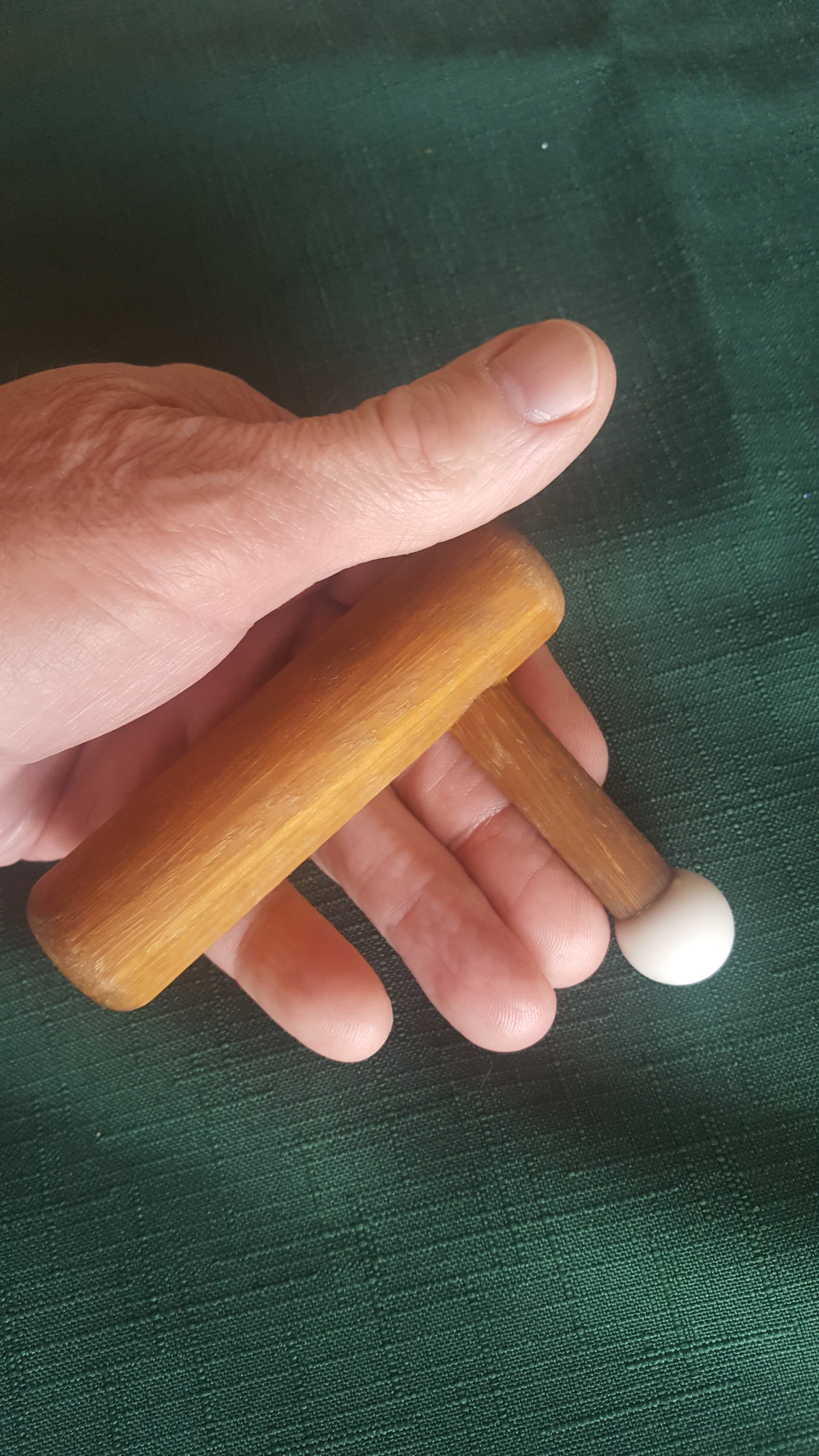
    That’s a round tip L-bar.

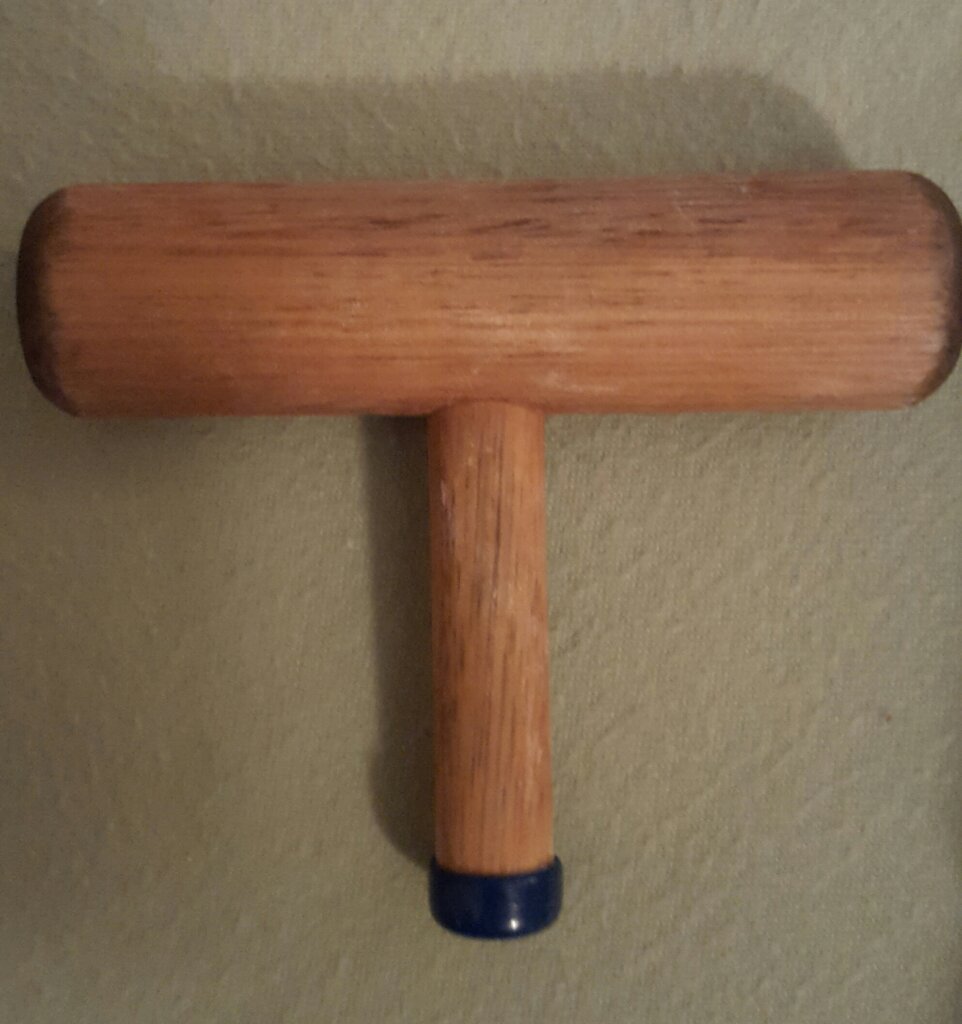
    Here’s a T-bar:
    And here’s a long stem L-bar:
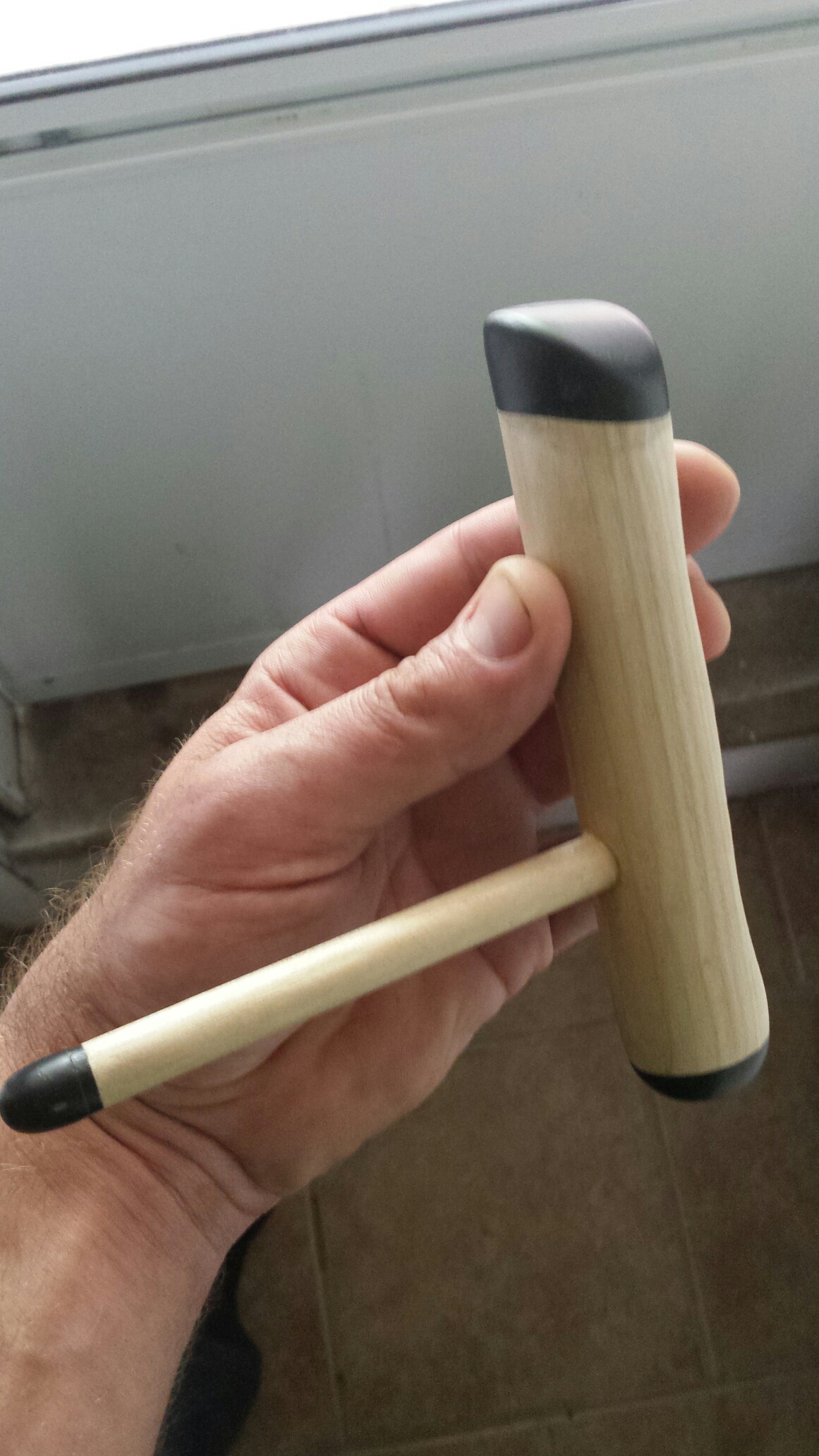
    (Thank you Matt Johnson for designing and making these T-bars and L-bars tools!)

    The T-bar stem is in the middle of the handle and the L-bar stem is offset.

    Having the stem in the middle of the handle or as an offset provides different options to access muscles and muscle attachments that are tough to reach.

    More about stems later. Let’s jump back to handles.

    The Importance of a Handle

    At the beginning of the post I had said that a handle makes it easy to hold a massage tool. Now I need to do some explaining because I’m not talking about holding a handle in the traditional sense–wrapping your hand around the handle and gripping.

    I’m talking about using the handle to support your body weight. Think of parallel bars or push-up stands where you’re simply supporting your body weight on an apparatus. 

    Holding a Massage Tool

    With a massage tool you are directing some of your body weight onto the handle of the tool.

    If the massage tool is pinned between your hand and the tissue you’re working on, you can loosen your grip.

    And if you add a guide finger/thumb next to the end of the stem of the massage tool, you can actually relax your “holding” hand.

    Here’s what that looks like:
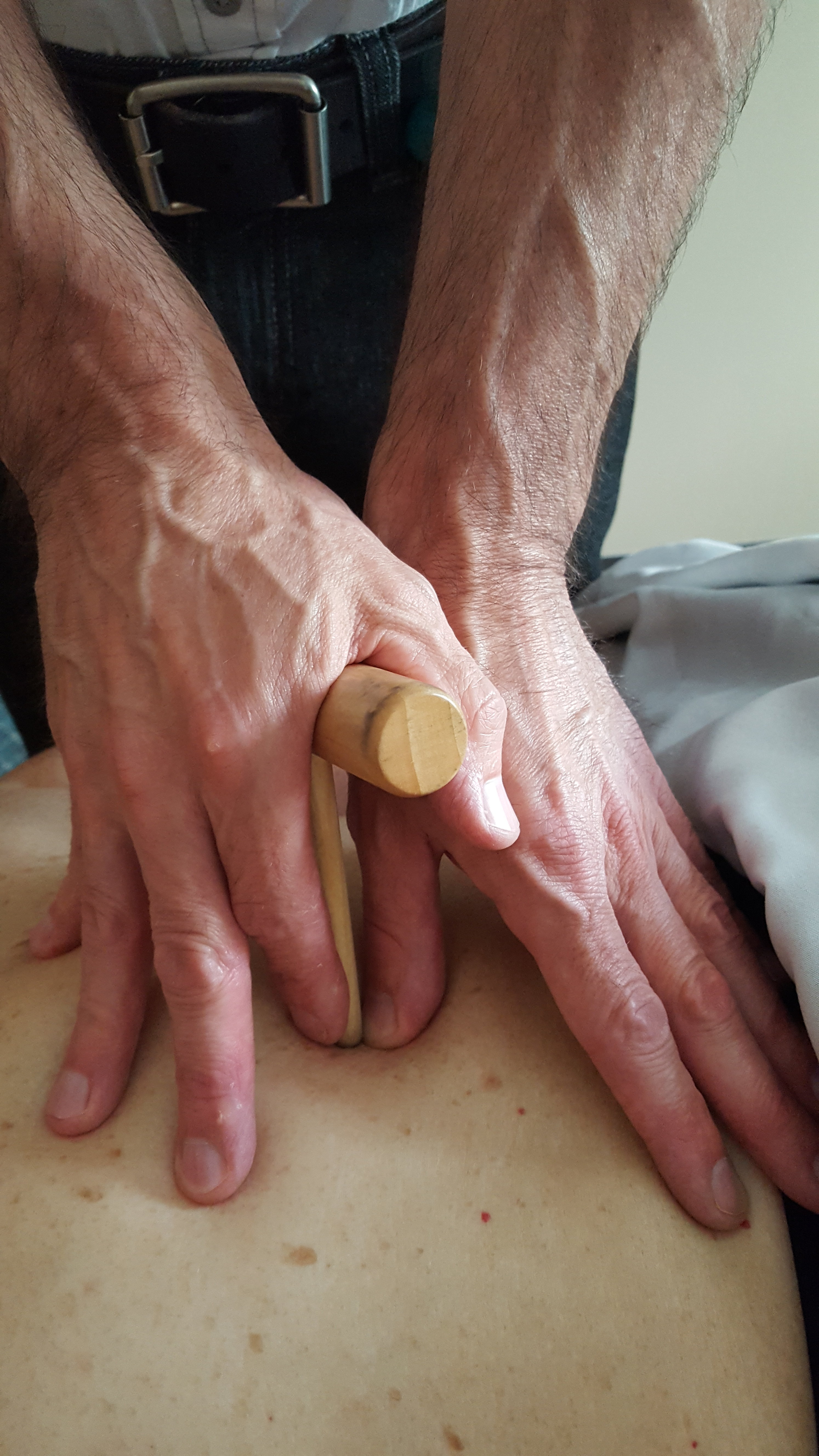
    See how relaxed my hands are?

    My guide fingers is helping to stabilize the tool. I’m also sensing how much pressure I am applying with my guide finger.

    This all looks great, right? But when you actually go and try to hold a T-bar or L-bar without gripping you’re going to say–Mark, you’re a freakin’ liar–because it’s not going to work.

    Why isn’t it going to work?

    Because your table won’t be low enough. And that means you’re not going to be able to lean onto the massage tool handle with enough pressure to keep the tool upright without gripping.

    This will help you figure out your table height.

    Okay, I’ve hammered away about the handle thing enough.

    Now, let’s bounce back L-bar and T-bar stems.

    T-bar and L-bar Stems

    Stems come in varying lengths and diameters.

    They can simulate wide thumbs or small fingers.

    The stems and end tips are what makes these tools extra fingers because if you use these tool you won’t have to use your own fingers to do precise detail work.

    One afternoon I really jammed my middle finger.
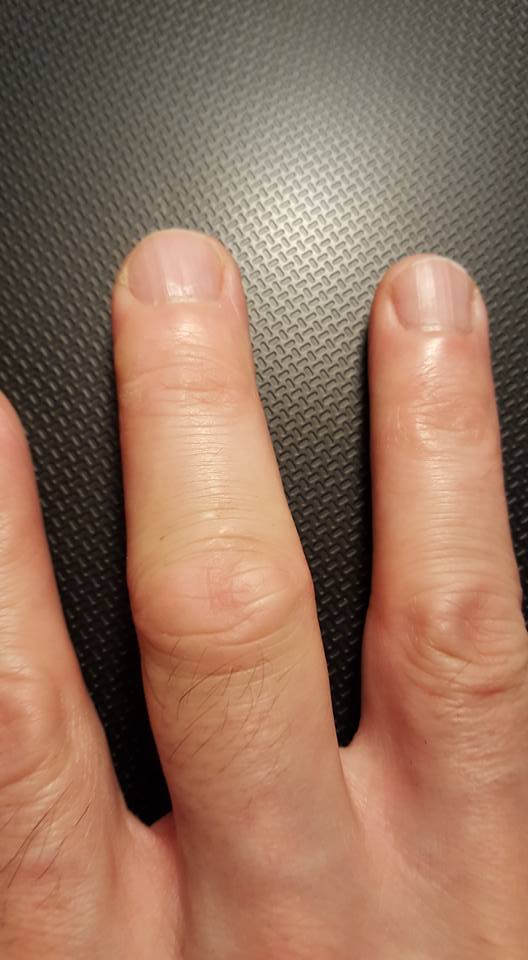
    But I worked the next morning because I used a very long T-bar for detail work and it allowed me to keep my injured finger straight. 
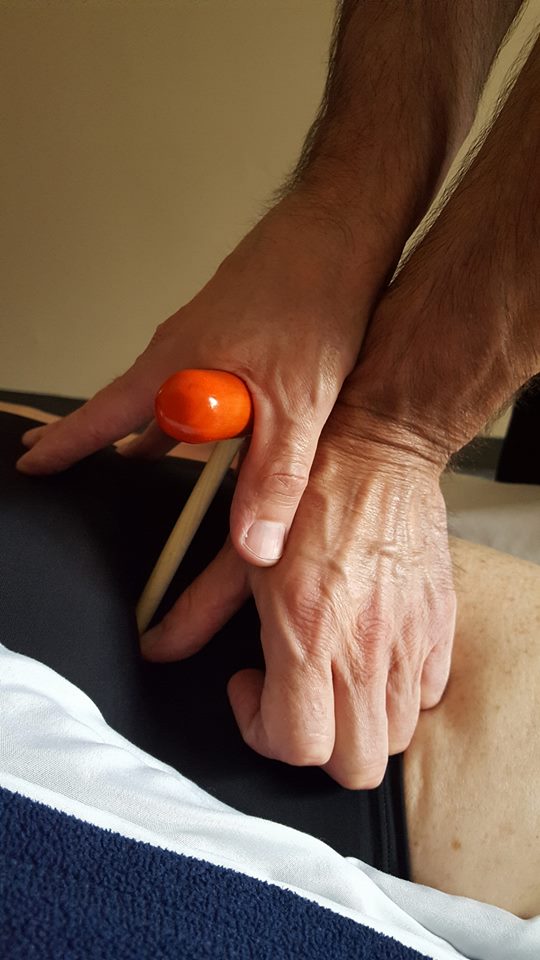
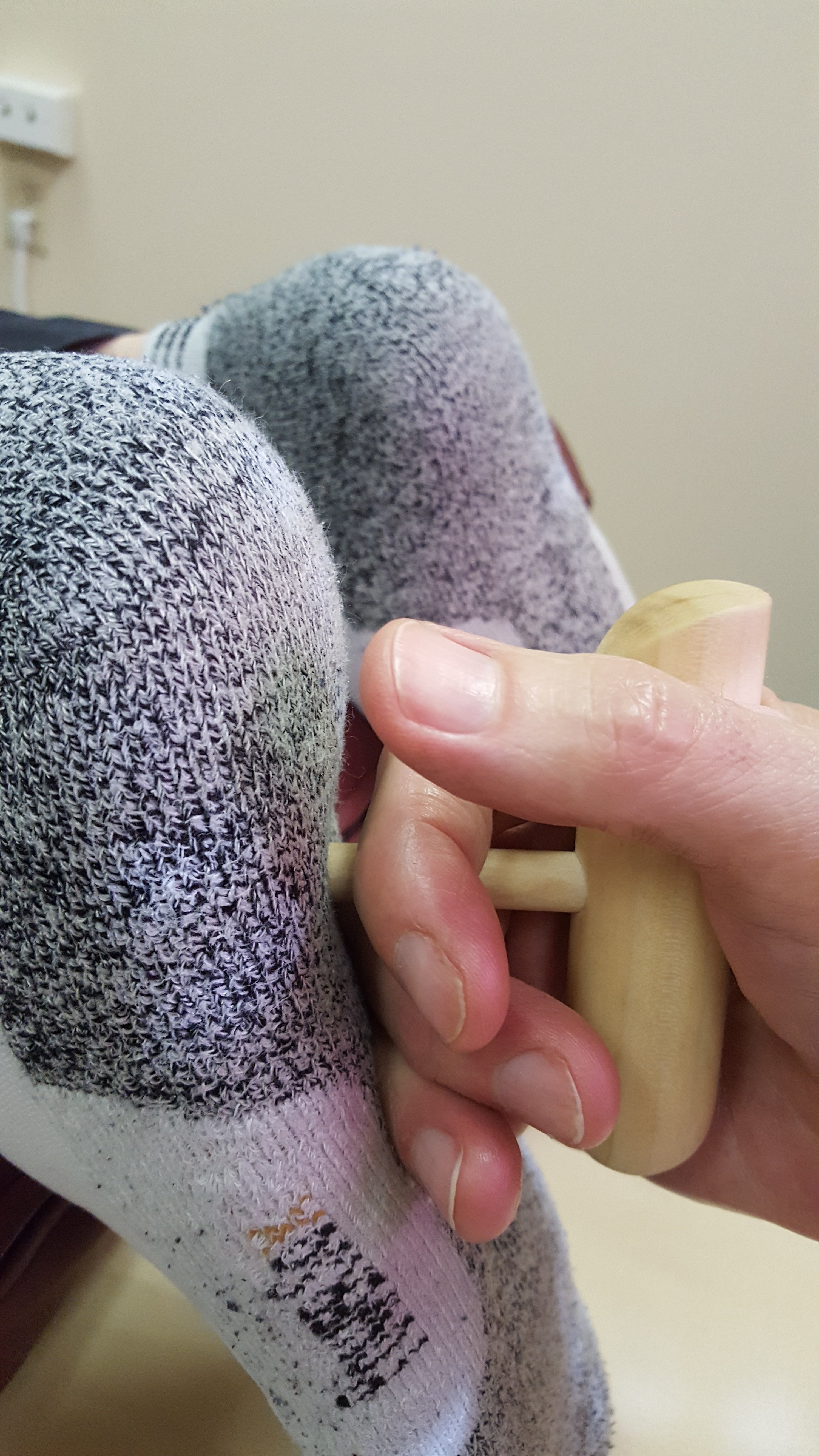
    Short stems work great in areas where it’s easy to access muscles, like feet…
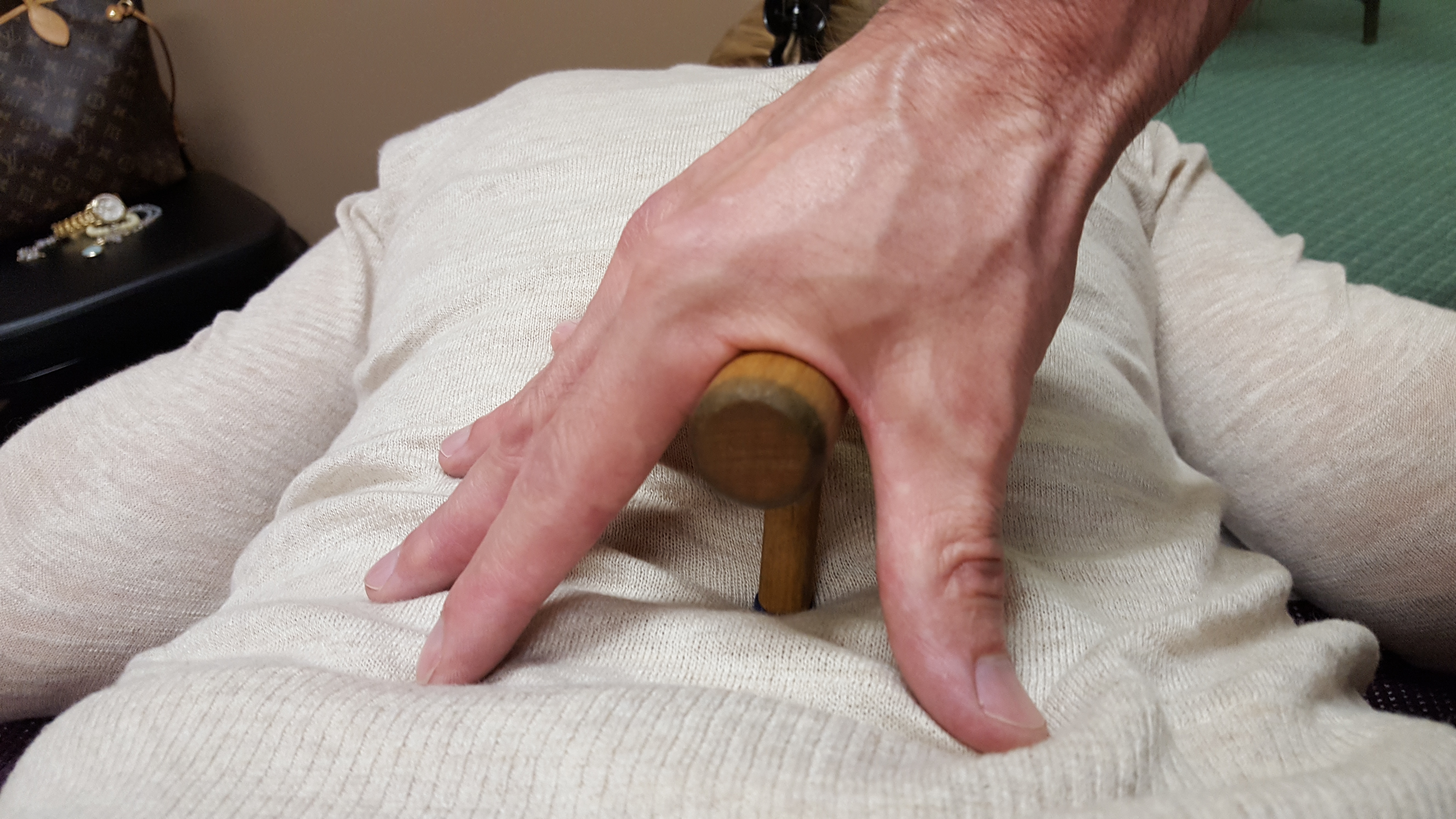
    …or multifidus and rotatores.
    6 Finger Pic

    I have tons of massage tools with stems lengths that range from shorter than my thumb to longer than my 3rd finger.

    Mark Liskey

    But understand, I am a massage tool addict.

    You don’t need a thousand massage tools.

    Just using one will be a game changer.

    If you not sure which one, email me.

    By the way, Matt Johnson will make you anything you want and it won’t cost you an arm and a leg. Let me know and I’ll put you in touch with Matt.

    How to Save Your Thumbs as a Massage Therapist Quick Sketch

    (1) Select a massage tool with a handle and a stem.

    (2) Lean into the massage tool so that you can pin it between your hand and the tissue you’re working on.

    (3) Relax your hand.

    (4) Add a guide finger/thumb to help stabilize the tool and regulate pressure.

    (5) Experiment with stems of different lengths and diameters.

    Once you start using tools for detail work, you’ll never go back to burning out your thumbs and fingers:-)

    Oh, and I have an email group. It’s free. Just sign up below.


  • Write Articles for Extra Income (and More)

    Write Articles for Extra Income (and More)

    Writing articles is more than just a way to supplement massage income. It can actually lead to other massage-related revenue, like developing and teaching massage CE courses and/or creating a blog.

    I know, you’re not quite sure if writing articles is for you. Well, let’s look at some of the things that may be making you nervous about writing articles. I’m going to start with:

    (1) I’m not an expert.

    You don’t need to be an expert to write a good article. Instead of being the expert, you just need to find the experts and/or the research to support your piece.

    For example, years ago I wrote a series of articles for runners. The premise was: if I’m running and have pain, how do I know when I should stop running?

    I wasn’t a runner, so I chose 3 experts to interview. One was an orthopedist (not a runner), the other was a podiatrist (marathoner), and the last was a sports researcher (ultramarathoner).

    Basically, the orthopedist said to stop running if pain occurs as you run. The marathoner said to check in with the pain and if it starts to get worse during the run, consider stopping. The ultramarathoner said you can definitely run through some pain as long as you understand the potential damage being done.

    The three opinions, taken together, served as a what-should-I-do-when-running-in-pain “gauge”. The orthopedist and ultramarathoner were on opposite ends of the gauge and the marathoner was in the middle. The reader could then determine where on the gauge she felt most comfortable.

    Here is the link to the article series: Running with Pain articles.

    Onto the next objection:

    (2) I can’t write.

    Confession: I was a horrible writer 25 years ago. My grammar was in the hopper and I couldn’t organize my ideas.

    At the time, I hired a middle-school, English teacher to tutor me, I paid for professional editors to help me, and I always had my wife go over my articles in great detail before I submitted them.

    I was an extreme case. You’re probably not. Just start writing regularly. Once you do, you’ll be able to identify your struggles. Then pull up a couple of YouTube videos to help with dangling participles or verb tense agreement and boom, you’re in business.

    Here’s another barrier to writing articles:

    (3) I don’t know who to contact.

    Years ago, a lot of writers would use writersmarket.com to find out about submission guidelines for magazines. But now you don’t need to pay to find out how to submit an article. Just go to the magazine’s website and look for the article submission instructions. Sometimes you’ll submit your query letter or article on the magazine’s website. Other times you will be instructed to email an editor.

    Next one:

    (4) I don’t have the discipline.

    What is it that you want out of writing? That will be the driver to help you to establish the discipline to do it. At one time, I needed article writing to help pay the bills. Money was my driver then.

    Now my article writing is about me saying what I want to say and me doing what I want to do. That’s how this blog came about. That makes me happy:-)   

    Okay, last fear:

    (5) I’m scared to put myself out there.

    I get that. Back in the day, as much as I wanted to have a voice, I was terrified to put myself out there.

    What if someone didn’t like me?!

    Well, it happened. Years ago I wrote an op-ed piece about the rising cost of veterinary care. Let’s just say that not everyone agreed with me. This experience upset me so much that I basically didn’t write for a year.

    The reality is that not everyone is going to agree with you. And they shouldn’t. The person that disagreed with me had some valid points—even though I would still stand behind the op-ed piece 100%. Most of the time, people are not going to go after you. And if you don’t want the heat, just stay away from controversial topics.

    How to Get Started Writing Articles

    Here’s what I would do to get started:

    (1) Identify a writing market to pursue.

    Believe it or not, the first writing market I pursued was wellness, not massage. Why? Because I wasn’t an expert in massage! Soon after I added massage and fitness. Op-eds came later.

    (2) Pick a specific topic in that market.

    If you’re counting on money from writing as part of your income, sometimes you may have to write about something that doesn’t really move you. When this happens, it can be hard to stay motivated. So when you’re first starting out, save yourself the extra stress of working to stay engaged and pick a topic that lights you up.

    (3) Pick some magazines where your topic would be a good fit.

    It’s a good idea to read some articles in the magazines that you think might be a good fit for your topic. Once you find them, study the writer’s guidelines. The guidelines will give you the important information about what the editors want and don’t want in an article. Think of the magazine editor as your massage client, you want to give the magazine editor (massage client) the article (massage) that she wants.

    (4) Start writing.

    I pitch articles before I write them when I’m working with an editor who knows me. But when you’re first starting out, I would recommend writing the article first. For one, you won’t have the pressure of having to produce your first article under the gun of an editor’s deadline. And, two, you’ll have more confidence after you have an article ready to be shopped around.

    Becoming a Writer

    You don’t need to be an expert to be a writer, and once you start getting your reps in (writing regularly), your confidence will grow.


    To get started:

    1. Pick a market to work in, like massage.
    2. Pick a specific topic in that market that interests you.
    3. Identify the magazines where that topic would be a good fit.
    4. As you write the article keep in mind the magazine’s submission requirements.

    If you need a little push. I’m here. Just use Facebook Messenger to the lower right on your screen or email me:-)

  • How to Add Video to Your Massage Website

    How to Add Video to Your Massage Website

    How do you get your massage business website in front of potential clients without being an SEO expert or spending $500 to $2500 to have an expert build your website?

    You make your website relevant by creating content that engages viewers and answers viewers’ questions.

    A massage video is a great way to engage viewers and Google rewards you for engagement.

    But I’m crappy on camera, Mark.

    Hey, have you seen my videos? Not about to win an Emmy anytime soon here.

    Here’s the thing, if your content is solid, people will overlook your crappiness on the camera.

    By the way, if you really hate being on camera, you can get someone else to demonstrate what you’re explaining. You just do the narration.

    Or you can ask a health/wellness colleague if they would do a video that you could show on your website.

    For example, you could ask a PT or a personal trainer to demonstrate back stretching exercises.

    Which brings us to the next question: What should the video be about?

    Massage Video Content

    Here’s what it shouldn’t be about: You demonstrating your general massage.

    It will be a yawn, trust me.

    And nothing about what the client on the table is experiencing at the moment will be conveyed to the viewer.

    So, no massage video on my massage business website, Mark?

    Do a massage video. But answer a massage question that your viewer may have.

    In other words, give the viewer information that can help her out right now.

    Here’s a question that I get often: How do I massage my shoulder/neck area?

    This was my video response:

    [embedyt] https://www.youtube.com/watch?v=F9iLpapL4BY[/embedyt]

    If you work with cyclists you might want to do a short video on self-massage for quads and IT bands.

    If you focus on relaxation clients you could do a video on self-massage for the head and jaw muscles before bed.

    Or you could demonstrate how to use relaxing essential oils.

    When you’re coming up with a question to answer just make sure it’s relevant to clients who would use your massage services.

    Don’t do a video on tibialis posterior self-massage if you focus on relaxation massage.

    Once you have your question, the next step is to answer the question in a concise (2 to 4 minutes) and informative way.

    Answering a Massage Question

    This step requires research, rehearsal and possibly a script.

    If you a pick a topic that you’re well-versed in you obviously cut out a lot of the research time.

    I find that writing out and practicing what I’m going to say helps me a lot when it comes time to doing the video.

    However, no matter how many times I practice in front of the mirror everything changes as soon as that cell phone camera starts rolling. (Yeah, you don’t need a fancy video recorder.)

    My voice constricts. I suddenly move like the tin man. And I’m positive that 7.6 billion people are watching me through Rob’s cell phone camera.

    So, be prepared to do re-takes.

    Once you have a video that you don’t hate, upload it to YouTube.

    Uploading Your Video to YouTube

    If you haven’t put a video on YouTube, here’s what you do (steps are from WikiHow):

    1. Save the video to your computer.
    2. Sign into YouTube. (If you don’t have a YouTube account, you’ll have to create one.)
    3. Click the Upload button.
    4. Select a video file.
    5. Click Open.
    6. Enter a title and description.
    7. Adjust additional settings.
    8. Click Save Changes.

    Then you’ll simply copy the URL address of your YouTube video into your website.

    Here’s how I do it for my massage business website on Weebly.

    Weebly Massage Business Website

    [embedyt] https://www.youtube.com/watch?v=KzARki2SH2E[/embedyt]

    Here’s how I do it on WordPress.

    WordPress Massage Business Website

    [embedyt] https://www.youtube.com/watch?v=5BNQzZNmayw[/embedyt]

    That’s it.

    Don’t over think it.

    Get that 1st video out there and pull those potential clients in!

    Need help with your website?

    Follow my DIY massage business website guide.

    A guide created by a massage therapist for massage therapists.

    It’s not hard to do. Promise.

  • Working for the Man/Woman vs. Working for Yourself

    Working for the Man/Woman vs. Working for Yourself

    So, I just finished a cruise, and I was expecting to have at least 3 or 4 YouTube videos to show you about the life of a massage therapist on a cruise ship, but I have nothing.

    Why?

    Because I’m dumb.

    I thought that I would get on the cruise ship, walk up to the spa and talk to a massage therapist.

    Boom.

    But, alas, I walked away boom-less.

    It didn’t dawn on me that my idea of interviewing a massage therapist on a cruise ship was like thinking I’d be able to interview Goofy at Disney World with no clearance from the corporate gods above.

    Hey there, Goofy, glad to meet you. What’s that? Minnie Mouse is fooling around with Donald Duck, and Pluto showed up trashed at the parade. Can you speak louder into the mic?

    Uh, that ain’t happening.

    Disney has a brand to protect.

    They can’t have an AWOL Goofy bad mouthing their shebang.

    And a cruise line is not going to risk having a disgruntled massage therapist airing out her frustrations on my YouTube channel, even though I promised to ask nice questions.

    So, the spa manager on the cruise ship basically “lost my paperwork” by saying she would check with corporate and that they’d get back to me if it was a go.

    Surprise, surprise, they never got back to me.

    By the way, if the interview had happened it would have been so watered down that it wouldn’t have been worth it–which brings me to this: If you haven’t guessed by now, I’m not a corporate kind of guy.

    Are You a Work for Yourself-er?

    I understand where they’re coming from. They have a lot of legal and image things to worry about.

    My objection about working for a big business comes from my gut, from who I am.

    I don’t want to wear a company shirt unless it’s my company shirt.

    I don’t want to park in an employee space unless it’s my company’s designated space.

    And I’m not going tell Sally that she has to pay extra for a deep pressure massage because for one, that’s an arbitrary distinction, and two, Sally’s deep pressure happened to equal my light pressure. (Not saying that happened when I was working for a massage spa.)

    The bottom-line is that I’m basically un-hirable.

    That means I better be ready to fend for myself.

    Fending for Yourself in Stages

    I’m not going to sugarcoat things, fending for yourself is scary. But I can make it less scary.

    How?

    By giving you this tip: Fend for yourself in stages.

    In other words, don’t go completely out on your own all at once. Do it in stages.

    Here’s what I did. First, I worked for a chiropractor.  Then I saw some clients on the side in my apartment as I continued to work for the chiropractor. About a year or so later I went out on my own and had my first office in a fitness center.

    Feeling a little better about where you’re at now?

    You’re not stuck; you’re in a stage.

    You’re not procrastinating; you’re being circumspective (and procrastinating a little…lol).

    When you work into “being on your own” in stages you have a chance to build solid referral sources which will keep your business cranking.

    By the way, here’s how you build referral sources: How to Build Referral Machines.

    Do More Than Just Massage

    Along with staging your way into working for yourself, here’s something else to consider: You don’t only have to be doing massage to be on your own.

    Once I was doing 70% “massage on my own” and 30% “personal training on my own”.

    Another time in my life I was doing 60% “massage on my own” and 40% “business development for a business that wasn’t mine”.

    The feeling I had in both situations was a feeling of independence–that I was calling the shots. In the 60/40 scenario, I knew that if the part-time business development gig didn’t work out, I’d simply have to get more clients or find another part-time job.

    Are you getting jacked?

    Then you’re probably not built to work for the man/woman.

    Are you jacked and nervous?

    Then you’re probably going to be a successful working-for-yourself-er as long as you accept that working for yourself comes in many flavors and is not always a straight line.

    Here’s one more thing you’ll need: A plan.