Author: Mark Liskey

  • How to Take My Massage Clients (And Potential Clients)

    How to Take My Massage Clients (And Potential Clients)

    Do you need more massage clients?

    I know what that’s like. Early on in my massage career I was barely making a living and it took me a long time to figure out that I needed to hone certain skills. But once I became competent with these skills, I found a good living at the end of the massage rainbow.

    What are these skills?

    They are (1) fostering therapeutic rapport/care, (2) applying appropriate pressure, (3) doing relaxation massage with focus work and (4) executing basic marketing.

    For those of you who are just starting out with massage, don’t freak out.

    You can compete with LMTs who have been doing massage as long as I have—25+ years. (I stopped counting when that number spoke more about my age than it did about my experience.)

    In fact, I think you can “add” 5 years of experience to your massage in a short period of time (6 months) IF you work my plan.

    Ready to try?

    First, repeat after me: I will channel all my energy into developing the following skills and won’t waste time with other less important skills.

    Now, let’s focus on these essential skills starting with therapeutic rapport/care.

    Four Essential Skills To Get More Massage Clients

    Skill #1: Therapeutic Rapport/Care

    You may have noticed that I didn’t say just “therapeutic rapport” or just “care”.

    Why?

    Well, to me “therapeutic rapport” is about caring for the client when she’s in the office.

    “Care” covers all the other times, like:

    Do you return clients’ calls quickly? Are you nice on the phone?

    Do you follow up with the client after the first massage to see how he’s doing?

    Does your advertising show that you care about clients and their needs?

    Caring goes a long way with getting and retaining clients and is easy to amplify since we, LMTs, are natural, caring people.

    So, go deep with caring.

    This article will help you out.

    What about hands-on massage skills?

    Yeah, they’re pretty important, too.

    Skill #2: Pressure

    A top one in my book is being able deliver the appropriate pressure.

    Hell, we even named our business PressurePerfect.

    The right pressure relaxes the client.

    The right pressure helps relieve pain.

    Want to make it so that your client will never leave you for another LMT?

    Then nail the pressure and have outstanding therapeutic rapport.

    This video will help you out with getting the pressure right.

    [embedyt] https://www.youtube.com/watch?v=ERhl08hkZi4[/embedyt]

    Skill #3: Relaxation Massage With Focus Work

    The last essential skill to cultivate is being competent at doing a relaxation massage with focus work.

    When you’re competent with this skill your client will get off your table feeling relaxed and in less pain/discomfort than when she came in. And that’s some major selling-your-massage-without-ever-saying-a-word. By the way, relaxation massage with focus work is my bread and butter massage.

    And no, you don’t need to know MFR, NMT, MAT or anything special to do good focus work.

    You just need to have a basic understanding of anatomy and be spot on with your pressure.

    Tight traps?

    No problem. Spend more time working the traps with the pressure that provides pain relief.

    Low back pain?

    No biggie.

    Focus on the QL and lower-back, spinal erectors nailing the pain relief pressure as you go.

    Taking My Potential Clients

    Now that you can snag my current clients with your souped-up skillset, you need to be able to take my potential clients, too.

    You’re going to do that by getting customers to walk through your door before they walk through my door.

    How do you do that?

    Step #4: Execute basic marketing.

    Here are two straight-forward strategies that will take care of basic marketing for you.

    The first one is: Get noticed on the Internet by making a website that is engaging and is optimized for a Local Google Search.

    A big, hairy deal?

    No.

    Some work required?

    Yes.

    But it’s upfront work.

    Your phone will continue to ring after the upfront work is done.

    In other words, once your website is good to go, you’ll reap the reward of new clients for many months to come without having to touch your website.

    Here’s how you build a website that makes you money: My Easy Massage Website Guide.

    The second marketing strategy is: Get noticed in your neighborhood by building referral sources.

    This is simple.

    Get your butt out there in your community and start making connections with people and businesses who can refer clients to you.

    But, Mark, I want to stay in my massage room and get more massage clients.

    Been there, done that.

    Psst…it doesn’t work.

    This is how you create referral machines: Get Referrals.

    More Massage Clients in a Nutshell

    Getting a little overwhelmed?

    Let’s break it down to make it easier.

    To take my clients hone these massage skills: (1) therapeutic rapport/care, (2) appropriate pressure and (3) relaxation massage with focus work.

    And as you’re fine-tuning your massage throw in some basic marketing.

    Start with your website or building referral sources in your community.

    Okay, now that you know how to take my current and potential clients, how about showing me a little love and leaving me a few:-)

    Need some more help?

    This is a DIY website, but sometimes you may need some more guidance.

    It’s a free class: How to Build a Massage Business Crash Course.

    Need even more help?

    Click here.

  • Common Sense Ways to Treat Sciatica

    Common Sense Ways to Treat Sciatica

    Good news! You don’t need to be certified in medical massage to treat sciatica. You don’t even need to know the latest myofascial technique.

    In fact, you can do a lot of good with sciatica if you just understand some basic physiological mechanisms and back research which surprisingly (or not) correlates to common sense.

    What is Sciatica Really?

    Sciatica is a symptom, not a condition. The symptoms are pain in buttock and/or down the leg. The cause is irritation of the sciatica nerve.

    We’ve been conditioned to think that most of the time nerve irritation has to do with the spine, like a herniated disc. To this day, I’m guilty of this.

    Aadila came in telling me that the doctor said she had sciatica. Her pain was in her buttock and half way down her hamstring.

    My first question was: Do you have back pain?

    No.

    Have you ever had back pain?

    Yes.

    Where?

    (She points to her mid-back.)

    I see…how about your lower-back?

    No, not that I can remember.

    Are you sure?

    Pretty sure.

    No stiffness?

    Nope.

    How about when you get up in the morning..?

    Well, on occasion…

    Aha!

    Hold on there, Wilbur! You’re proceeding as if sciatica is a condition—specifically, an impinged nerve at the spine.

    According to science writer Paul Ingraham, I’m actually barking up the wrong tree. He says most sciatica arises from muscle “knots” not nerves impinged by a disc or by the narrowing of a vertebral foramen.

    That’s fantastic—for us. If it’s not a nerve issues due to a spinal condition, we’ve a better shot at helping a client’s sciatica improve.

    Which brings us to good vibrations.

    Good Vibrations

    I have to tell you, I don’t always trust something that just “feels right.” Why? Because what “feels right” is usually influenced by experiences and knowledge. And those two things can seriously bias objectivity.

    Here’s an example of how trusting your gut can go really wrong.

    Scott Hornoff was a detective who like his fellow detectives trusted his gut. But then one day, his fellow detectives, trusting their guts, were convinced that Hornoff was the person who murdered a local woman.

    Hornoff was tried and found guilty. The problem was, he didn’t do it. And he spent 6 ½ years in jail before he was exonerated.

    Most unsettling is that the detectives’ gut feelings never changed. Hornoff became a free man only because the real murderer confessed!

    We’re still talking about massage here, right?

    Yep.

    When you have a muscle ache, you rub it back and forth. That feels like the right thing to do. But does this gut reaction actually help with the pain?

    Our survey says…

    It sure does!

    Vibrating a muscle causes proprioceptive confusion. Ingraham says:  “If you move or shake the body at random, the brain gets a deluge of nonsensical proprioceptive data. The nervous system, overwhelmed by the random stimuli, effectively “gives up” and stops resisting the movement: providing you with deep, muscle loosening relaxation!” You can read his article here.

    Here’s What I Do

    Here’s my technique for vibrating muscles when someone comes in experiencing sciatica.

    1. I locate a sciatica pain area.

    Next I need to know how much pressure to use.

    1. I press and hold the pain area.

    This is the tricky part. Too much pressure can cause more pain. I have safeguards for not pushing too hard. One is the client’s reaction.

    I’m looking for him to say “That feels good” or “The pain is lessening” as I press on the area.

    If I don’t get one of those answers, I revert to using the pain scale. The short version is: on a pain scale of 1 to 10, I want to press until the client says it’s a 3 (or 4 it’s not acute sciatica). Here’s the longer version: Pain Relief Massage Video: How to Find the Right Pressure.

    I hold the pain area until the pain starts to lessen. If it gets worse, I leave the pain area alone for awhile. Eventually, I circle back, but this time I’ll apply less pressure.

    Then there’s the piriformis…it can be very reactive because of the sciatica nerve going under it (or in some anomalous cases, through it).

    If the person feels zapping in the buttock or down the leg when I’m pressing the piriformis (or around it), I lighten the pressure. And if I’m using thumbs, I’ll try a broader body part, like fists.

    If direct pressure is just too painful, I’ll try skin rolling.

    Once I get the pressure down, then it’s on to…

    1. Vibrate the pain area.

    I gently pin the pain area and apply the appropriate pressure. Then I vibrate the pain area with a back-and-forth motion keeping my pressure consistent.

    For a client with raging sciatica I don’t apply deeper pressure as I’m vibrating like I normally would when working a tight spot. This is sometimes tough for me to control because by nature I’m smidge-deeper-pressure pusher.

    I vibrate the pain area long enough for it to feel good, but not so long that it feels annoying. I’ll cut it short when in doubt.

    If I really think a smidge deeper pressure might provide more pain relief, I’ll go back to the area and I’ll do the vibration at a smidge deeper level.

    And that’s it…well almost…

    More Common Sense 

    Heat is another low cost pain reliever. The heat acts a neurological sedative. When I worked for a chiropractor, we used heat packs from a hydrocollator. But you could simply use a heating pad.

    Education can also help. If you’re client is experiencing sciatica, share this research with her.

    It says that bed rest is no better than mindfully (pay attention to your back) going about your normal life. This tidbit of info could be HUGE for a person experiencing sciatica pain for the first time. For one, she can stop worrying about whether working is making her sciatica worse.

    Fired Up! Ready to Go!

    Don’t back down from sciatica.

    You have a lot of treatment tools to use like vibration and heat. Not medically sounding enough to compete with the chiro next door who is using spinal decompression (formerly known as spinal traction)?

    You can always say you’re using a proprioceptive confusion technique and a neurological sedative device, but you might be on shaky grounds when you whip out the $20 heating pad you had bought on Amazon.

    If you’re looking for more info on treating sciatica, I talk about how to NOT make sciatica worse in this article: Don’t Wear a Fancy Red Tie When Treating Sciatica. I learned the NOTs the hard way—by actually making sciatica worse in some of my clients.

    Hey, what can I say. There’s a learning curve.

    I’m here if you want to talk about a particular case or if you have some sciatica techniques you’d like to share.

    And if you want to know about new articles, videos, classes, etc., coming out, just enter your email below. You can unsubscribe whenever you want:-)

  • How to Work Around an Injury

    How to Work Around an Injury

    I’m going to scare you. Ready? Massage injury (or any injury that prevents you from doing massage).

    If you can’t work, you don’t get paid, right?

    The good news is that unless you really hurt yourself, like a broken arm, you can work through most injuries without worsening the injury or developing a compensatory injury.

    How?

    By finding a different way to get the job done.

    I know this is a really broad statement. So, let’s make it useful by applying it to specific examples.

    Massage Injury: Finger/Thumb 

    Here’s how you can get the job done without causing pain to an injured finger or thumb.

    1. Use the non-injured finger/thumb instead of the injured finger/thumb.

    But what if I injured my go-to thumb, Mark?

    Well, then, it’s time to learn how to press with your non-dominant thumb.

    It’s not crazy hard.

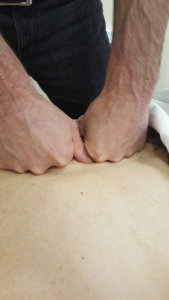
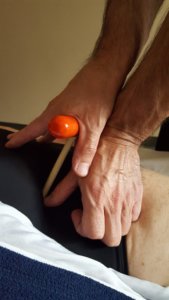
    And I have a way to expedite things: Combine two hands when pressing so that one hand acts as a guide, sensor and stabilizer.

    For example, say I’m left-handed and injured my left thumb.

    To use my non-dominant (right) thumb, I combine my hands when I press.

    Here’s how it might look:

    The fist of the dominant hand (left) is not only a stabilizer, it’s also assisting in applying pressure, making it easier for my right thumb to adapt to doing the work.

    The left thumb (hurt thumb) is just hanging out:-)

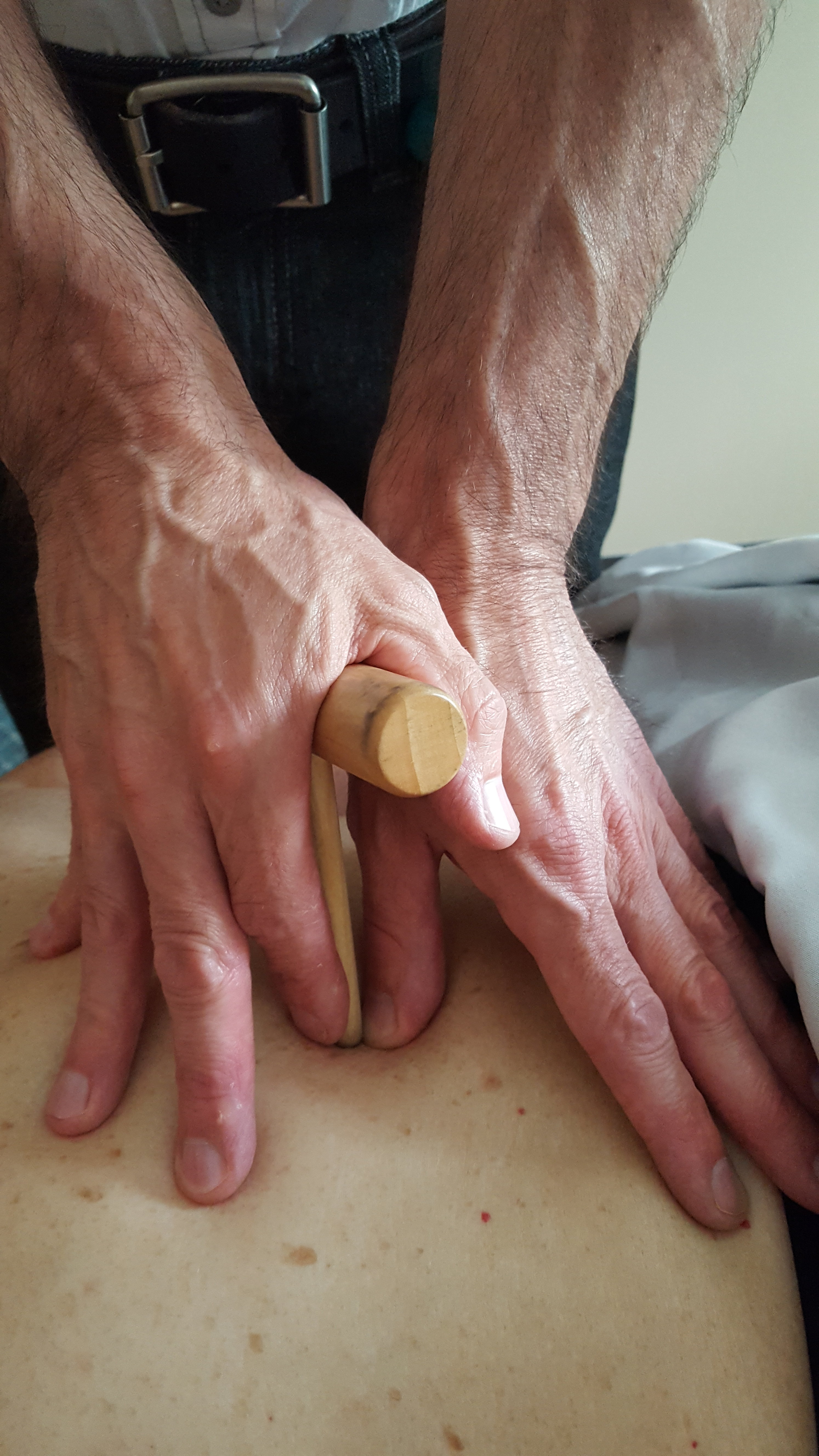
    2. Use a massage tool.

    A while back I jammed my middle finger.

    Sucked for me because I’m a middle-knuckle kind of massager.

    But it didn’t take me long to discover that a long T-bar was a perfect substitute for a knuckle.

    And I didn’t miss a day’s work with my jammed finger.

    What about finding a different way around a shoulder injury?

    Massage Injury: Shoulder 

    You can…

    1. Use the non-injured arm for the bulk of the work.

    If you injured your right shoulder and do a lot of deep work with your right forearm, use your left forearm.

    2. Experiment with table and stool height.

    I have left shoulder instability. When I lowered my table and used my fists and knuckles to deliver deep pressure instead of using my forearms, my shoulder pain went away.

    But my shoulder condition may not be the same as yours.

    So, experiment with different table and stool heights and find the mechanical advantage for delivering pressure with your particular shoulder condition.

    3. Sit or stand.

    Does your shoulder feel better when you sit and lean?

    Or does it feel better when you stand and lean?

    Relax your back.

    4. Stop doing moves that hurt you.

    Over-extension bothered my shoulder, especially at the end of a long stroke when I was applying firm pressure.

    So, why do long strokes?

    Good question.

    I shortened my strokes and no more over-extension. I do short stroke massage  all the time now.

    More than Meets the Eye

    Finding a different way to get the job done goes beyond just getting through an injury.

    It’s actually a way to extend your career and keep your body happy.

    The reasoning is the more ways you have to get the job done, the less likely you are to burn out one body part.

    For instance, I use massage tools more often now because of my jammed middle finger. And my fingers thank me for that.

    Now I do short stroke massage and fist massage because of my shoulder instability. Fist massage has led me to becoming more vertical during a massage. And my shoulders and back thank me for that.

    Healing While on the Job

    So, if you have a massage injury or condition that’s not incapacitating, here’s how you can work around it:

    1. Give the bulk of the workload to the uninjured side.
    2. Use massage tools.
    3. Experiment with table and stool height.
    4. Sit or stand.
    5. Stop doing moves that hurt you.

    If you need more help, check out: Table Height is Everything.

    Lastly, I have NCBTMB-approved, online courses that will help you figure out everything you need to do to massage pain-free. You can check them out here: Mark’s Pain-Free Massage classes.

  • How to do Fall and Catch Massage

    How to do Fall and Catch Massage

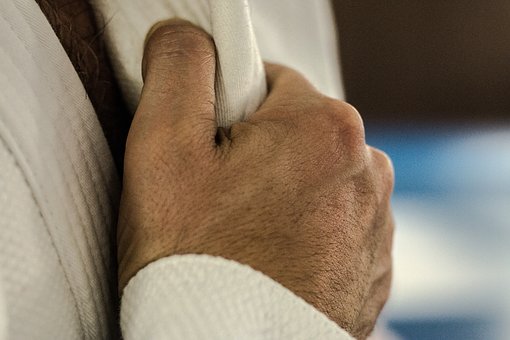
    Fall and catch massage sounds very judo-y. But I promise that you won’t have to make your client tap out.

    Fall and catch massage is a way to do massage without squeezing and pressing a client’s muscles with all your might.

    Instead you “fall” into the client, and the client’s body “catches” you.

    Your body weight provides the pressure. And with good body mechanics there’s minimal strain to your neck and shoulders.

    I should mention that we’re talking about controlled falling. No black and blue clients.

    Here’s what I mean by controlled falling.

    You’re going to…

    1. Initiate the fall with your feet.

    By simply shifting your weight from your heels to the balls of your feet you begin the fall.

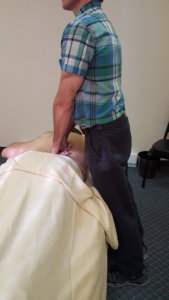
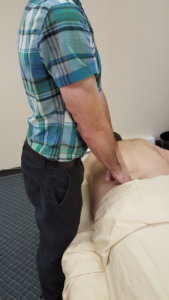
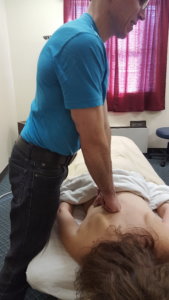
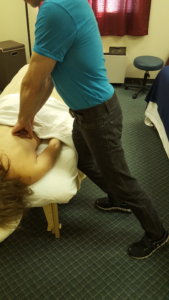
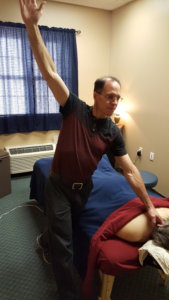
    In this pic I’m positioned to fall with my fists. My weight is towards my heels.

    Here I’ve fallen by shifting my weight to the balls of my feet.

    .

    2. Catch your weight on the table and/or client.

    The catching part is practically imperceptible because the body parts you’re massaging with (palms, fists, forearms, thumbs, or knuckles), should be in contact with the person.

    You’re simply transferring your body weight forward by shifting your weight from your heels to the balls of your feet.

    Light to Medium Pressure

    To do light to medium pressure, direct some of your body weight into the table as well as the client.

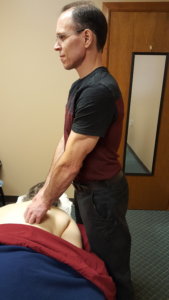
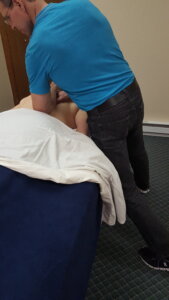
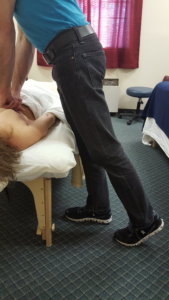
    See my leg leaning against the table in this pic? I’m primarily leaning into the table and exerting light pressure through my forearm. (80% into the table; 20% into the client).

    For deep pressure direct all of your body weight into the client.

    If you “fell” too deep, shift some of your weight back off the balls of your feet.

    Here are some other keys for deep pressure.

    Fall and Catch Massage Stances

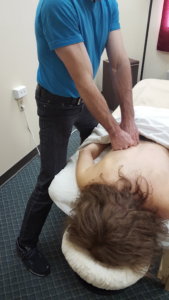
    When using fists, thumbs, palms and knuckles, a narrow stance will allow you to transfer all of your body weight onto the client.

    Whereas, a wider stance won’t.

    Also, in general, for deep pressure step farther away from the table.

    For light pressure, step closer.

    Advanced Falling

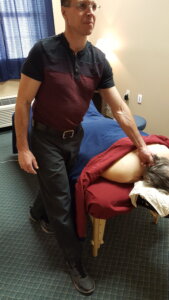
    You can also fall into your client with one hand.

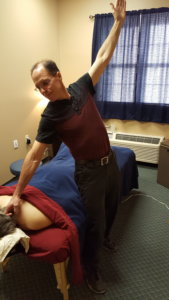
    Here’s a little fall.

    A bigger fall.

    You can see in the picture that my back heel has come up and I’ve shifted my weight to the front of my feet.

    And a client-wants-ridiculous-pressure fall.

    Here I’ve switched stances so that I can get directly over the area I want to lean into with my body weight.

    Falling Sounds Like Leaning

    At this point, if you’ve read my other articles, you get that I’m using “fall” and “lean” interchangeably.

    But there’s a reason I chose “fall” this time.

    To me, “fall” conveys the feeling of letting go.

    Watch out below! Here I come with my fists!

    Okay, I’m not talking about jumping out of a plane letting go.

    I’m talking about the more subtle letting go that happens when you’re in a good mental space.

    Here’s how it works for me with fall and catch massage.

    The Zen of Fall and Catch Massage

    Once I got a few reps in of falling, I got good at controlling the fall (and landing).

    In other words, I became competent with (1) transferring my weight on my feet, (2) being in the right stance to deliver the desired pressure, and (3) knowing how to direct my body weight into the table and/or client.

    The result was that massage suddenly became easier to do. I went from eyeballs-popping-out-of-their-sockets strain to effortless work.

    And when massage is that effortless to do, it’s almost impossible NOT to completely relax.

    Definitely a “wax on, wax off, grasshopper” moment.

    Pardon the mixed analogy, but fall and catch massage gets me stoked. Cuz it’s a little slice of zen while you’re on the clock.

    For a deeper dive into falling (leaning), check out Table Height is Everything. 

    And don’t forget, if you need to make more money, build a business or get out of pain, join my email group. I’ll send you all my latest stuff. It’s free and you can unsubscribe anytime. Sign up below:-)