Author: Mark Liskey

  • Massage Failure? Not. What You Did Wrong.

    Massage Failure? Not. What You Did Wrong.

    Understanding failure can lead to more massage money.

    I bet you think I’m talking about lessons learned from failing. I’m not. I’m talking about something more nuanced. Here’s what I mean.

    You’ve failed at something. I’ve failed. We’ve all failed.

    After the failure our brains add the current failure onto a list of failures. Nice brain… As the list grows, we start to think: Nope, not even going to try.

    But here’s the thing, when you “failed”, did you actually fail—try something and not succeed?

    Or did you just not show up?

    There’s a difference.

    Why You Didn’t Fail

    Think back to a “failure”.

    Oh-oh, me first!

    Once I had a side gig as a new business consultant for a fitness management company. My job was to get this fitness management company in the bid process for managing corporate fitness centers.

    I was pretty good at getting us in the bid process via reaching companies over the Internet. But when it came to developing local business relationships face-to-face, I didn’t deliver. In fact, I spent a year avoiding any of those face-to-face interactions because I hated schmoozing.

    Eventually, it was “Adios, Marcos.”
    I was replaced by someone who would do the face-to-face interactions.

    Added to my list of failures was new business consultant. But in retrospect, it can’t be any more obvious that it wasn’t a true failure because I literally hadn’t shown up to do half of my job.

    Showing Up = Chance for Success

    Recently, Kat, a client of mine, reminded me of what can be accomplished if you show up.

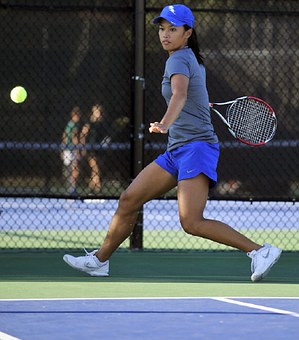
    Kat is currently ranked 12th in the nation in singles tennis in her age group. When I asked her about the key to her success, she smiled and said that are plenty of people better than her, they just don’t show up.

    If you don’t show up, you have no chance of succeeding. Period.

    2 Showing Up Keys 

    For me, showing up involves two key things:

    1. Recognition.

    You first have to recognize when you’re hiding. Then you need to start

    1. Self-negotiations.

    By self-negotiations I mean that you make the “showing up” less painful for yourself by giving yourself outs.

    For example, when my wife, Lisa, and I were doing an on-site massage business, I wanted to connect with local hotels, and there was a hotel association in our area that had a social every month.

    Yay…more schmoozing…

    But if I wanted to get to know the people in the industry, I had to schmooze, right?

    The socials happened at night when I was busy doing massage. This made it convenient for me not to go. And I did that for awhile until I recognized that I was hiding.

    Then I started to negotiate with myself: “I know you just got done work, but there’s an hour left to go at the social. Just go for 30 minutes.”

    So I went to my first social and when I got there, things were worse than I thought they’d be. The handful of people I knew weren’t there.

    I looked at my phone: 28 minutes and 22 seconds to go.

    “Okay, if you introduce yourself to 3 people, you can leave anytime you want.”

    I did and with 7 minutes and 13 seconds left, out the door I went!

    When the next monthly social rolled around, I had zero interest in going back.

    “Okay, Mark, just go to this one and you won’t have to go to amother one.”

    I pinky-locked on that one fast.

    This next social turned out to be easier, and when the third one rolled around, I went willingly, but I gave myself an out: If for whatever reason I want to stop going, I can.

    You can see where this is going. Though I never loved the socials, they got easier, and I never used my out.

    How to Make More Massage Money By Showing Up

    Here’s another way showing up has helped me make more massage money.

    By showing up to the marketing table (consistently working one marketing strategy) for a year, I nearly doubled my weekly income.

    Did I want to show up?

    Hells no.

    I had to negotiate with myself like crazy.

    “If you don’t get a referral after 3 months, you can stop.”

    How You Can Make More Massage Money: Show Up

    If you’re a little in the dumps because you think you’ve failed at marketing or starting a side business or taking your business to the next level or asking for a raise, think again. My guess is that your “failure” might be directly related to NOT showing up.

    Give yourself a chance.

    Recognize when you’re avoiding “showing up” and then try self-negotiations to stay on track.

    Let me know what I can do to help you.

    If you haven’t joined my email group, jump in.

    You don’t have to say anything or do anything.

    I send you links to my latest information. If you’re working on something specifically and want to let me know, I will send you links to material that can help you out.

    It’s free and you can sign up below:-)
  • How to Do More Massages: Ask Why

    How to Do More Massages: Ask Why

    Want to be able to do more massages and not be in pain?

    Then ask: Why am I doing this?

    Wait, not: Why am I doing massage?

    I’m talking about these “why(s)”:

    Why am I doing a particular technique every massage?

    Why am I using my palms to effleurage?

    Why do I use my thumbs to do focus work all the time?

    The “why am I doing this?” doesn’t always have a straightforward answer, and sometimes you may have to do some sleuthing in the recesses of your brain to find the whole answer.

    But once you start investigating “why”, how you do massage will forever change. And your body will thank you for that.

    Let’s start with thumbs.

    Why do you use your thumbs for detail work and trigger point therapy?

    One reason is that a thumb is the perfect size tool for precise work.

    But there’s a problem when you have a human tool that’s perfect for a job.

    It wears out.

    Okay, so I have the perfect tool for the job but it’s wearing out, is there anything else I could use to replace my thumbs? Why yes there is.

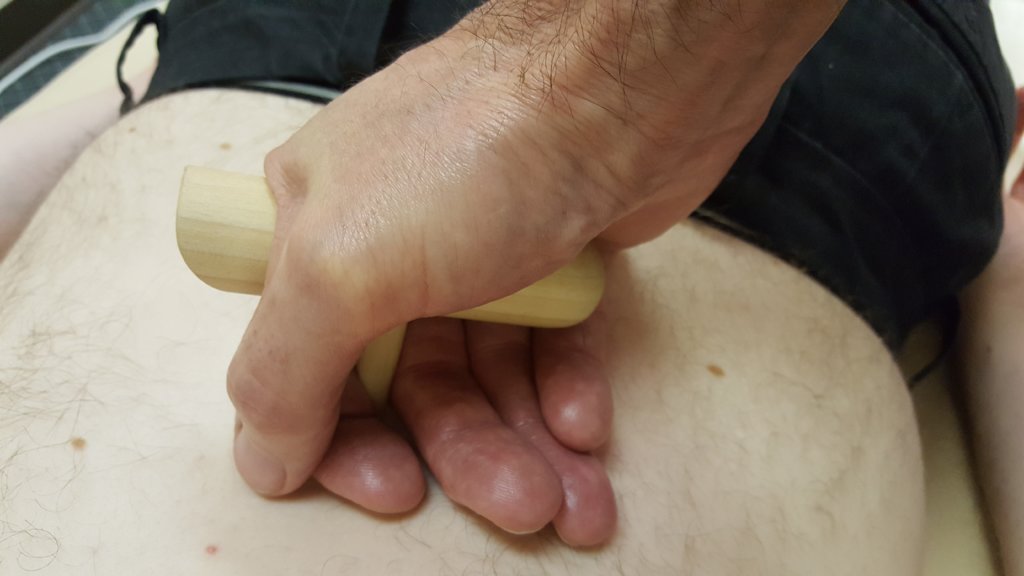
    A middle knuckle.

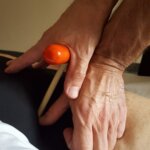
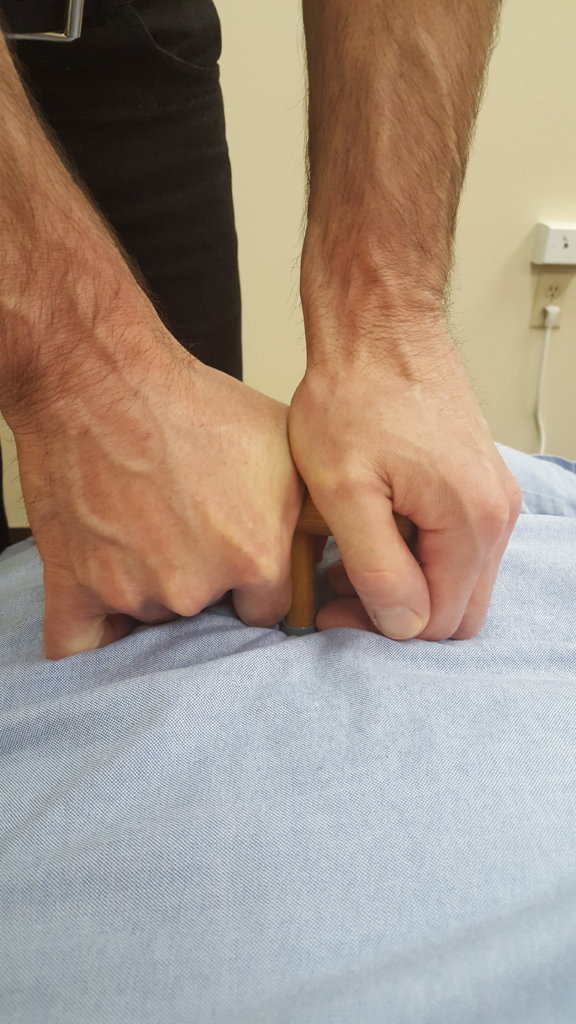
    In this picture the middle knuckle of my left hand is the thumb replacement.

    The companion knuckles support the middle knuckle and the fist of the other hand act as a stabilizer.

    I want to point out that I’m not directing my body weight into my thumb. My thumb is acting as my sensing device and telling me where to press.

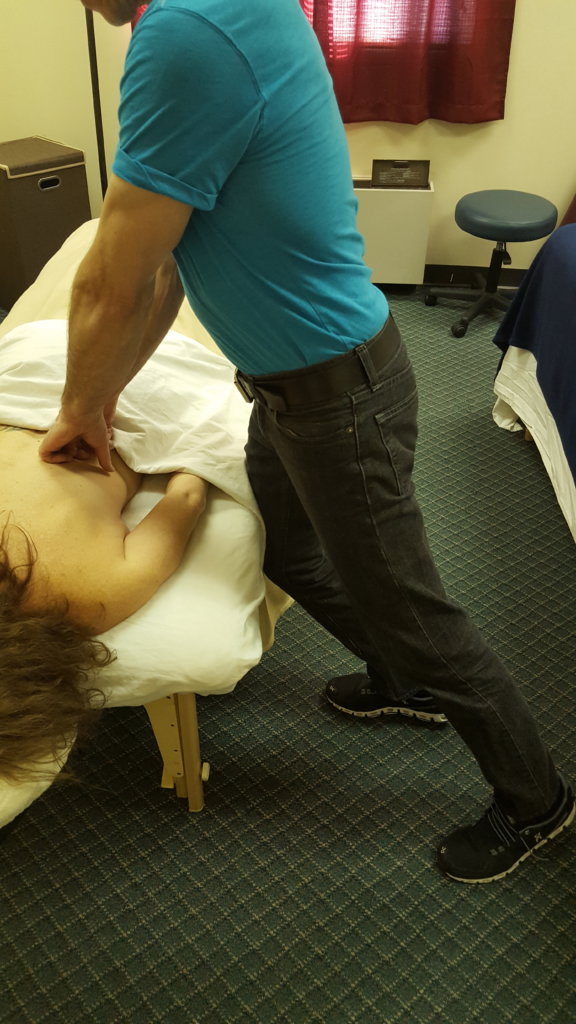
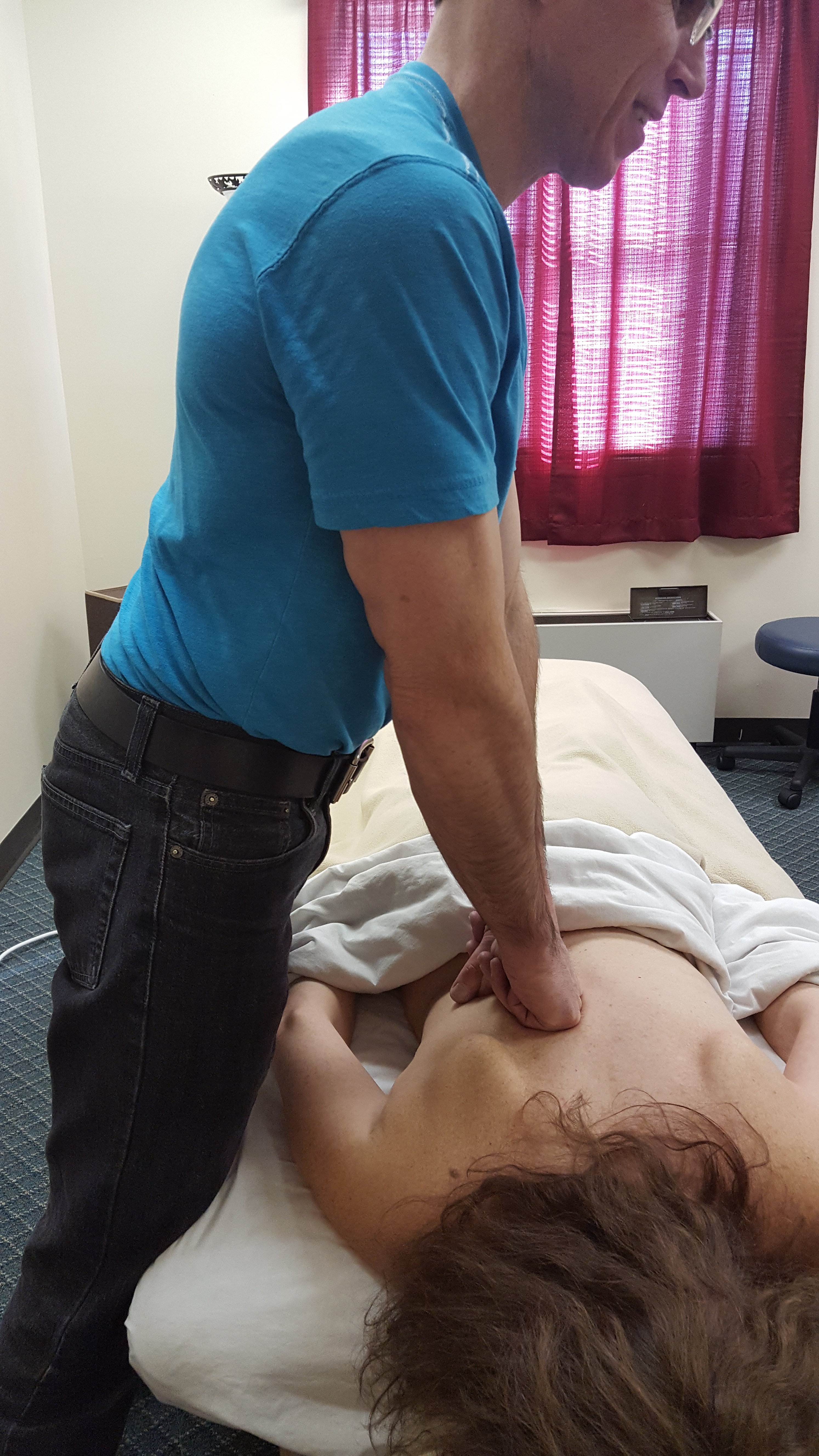
    If you’re using a knuckle as a thumb replacer, drop your table lower than you normally would so that you have enough distance to lean and use your body weight to generate pressure. More about that here.

    So that’s one way you can save your thumbs so that you can do more massages. Here’s another good replacement for a thumb.

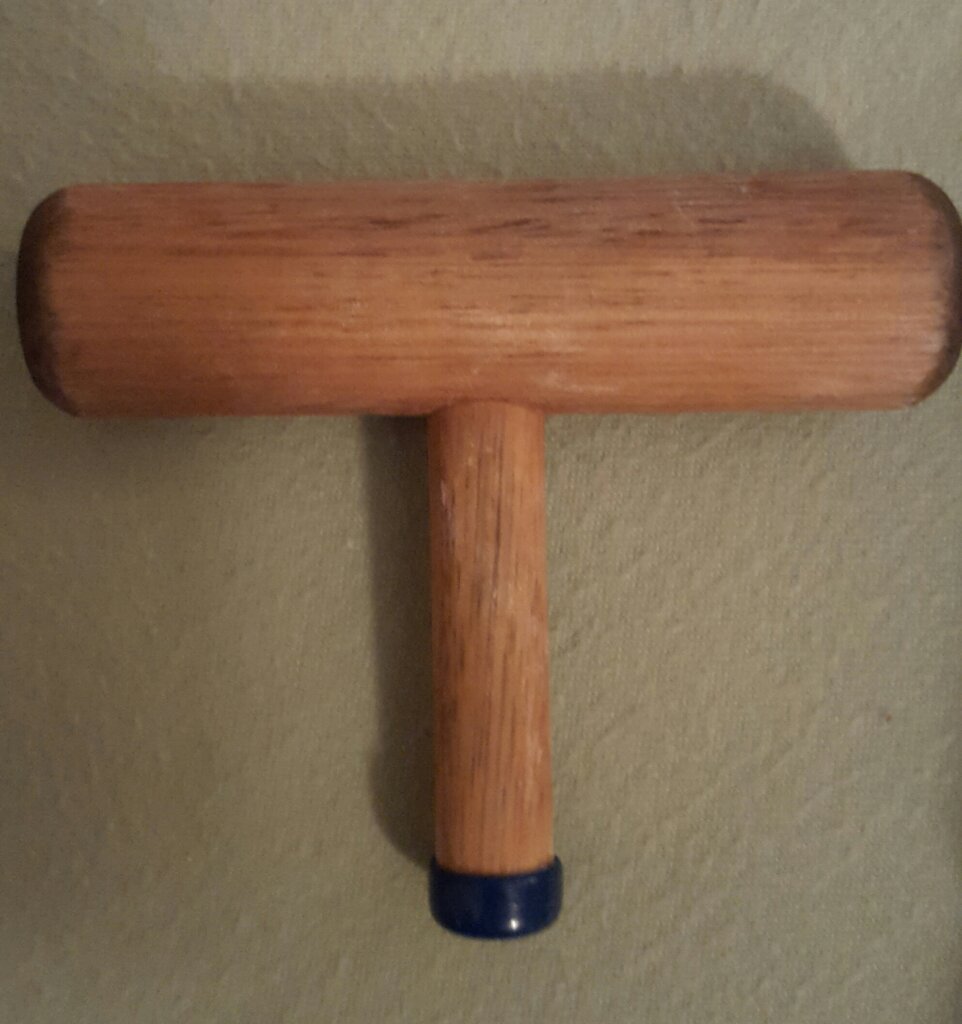
    A massage tool, like this T-bar.

    But I can’t feel anything with a piece of wood or plastic, Mark!

    I hear ya.

    That’s another reason why a thumb is the perfect tool for detail work because it has a lot of nerve endings and is great  for palpating.

    Here’s the thing, that hunk of wood that’s replacing your thumb can be “sensitized” by simply putting a finger or thumb next to the tip.

    More about that here.

    That’s great, Mark, but I tried a massage tool as a thumb replacement and it didn’t work for me.

    I experienced the same thing when I first tried massage tools. Using a massage tool to massage was like using boxing gloves as oven mitts to take my vegan mac and cheese out of the oven.

    Remember when I said we have to dig deep when we ask why?

    This is the time to do that.

    Here’s what I think we’re stuck on using thumbs: We’re taught to rely on our thumbs, and our experience in the massage room (thumbs work great) conditions us to never stop using them.

    Breaking away from something that works (even at a cost) is scary.

    I’m going to lose clients.

    I’m going to hurt someone.

    Someone is going to complain.

    But like anything you want to change, you simply have to keep working through the hard times.

    This video will help you get reps in with a massage tool to get you through the hard times.

    [embedyt] https://www.youtube.com/watch?v=lBYhV9tDaBM[/embedyt]

    Okay, that’s thumbs. But there’s  a lot more we can do to save our bodies so that we can AND want to do more massages.

    Just take the “why” question and apply it to everything you do in massage.

    How the Why Helped Me Do More Massages

    I’m certified in neuromuscular massage therapy.

    A core belief of the NMT program that I went through was that if you worked the totality of the muscle (origin, insertion and body), you’d get a better “release”.

    Unfortunately, working into the attachments of muscles is tough on your hands and upper body.

    But I continued to do it with each massage.

    Then many years later when I was teaching a back class an MT participant challenged me: Why should I do origin/insertion massage?

    Huh…there was no research to support it.

    And clinically, I didn’t see a difference between those I treated with static pressure on tight and pain spots and those I treated with origin and insertion massage.

    To be honest, I was only doing origin and insertion massage because that’s what I was taught to do and I was comfortable doing it.

    That’s when I decided to change how I did massage.

    Though I still work attachments at times I don’t do origin and insertion massage as part of my regular pain relief massage.

    The results are that my clients are still happy, and my upper-body is very happy!

    Do More Massage By Asking Why

    Stand up for your body.

    Don’t unnecessarily sacrifice your body parts to the cause.

    Ask “why” all the time when doing massage.

    When a specific technique is killing you, I’m positive you can find a way to get the job done without hurting your body.

    It’s time to stand up for your website, too.

    Because you can do more massages now doesn’t mean you have more massages to do.

    You need to bring in clients.

    A good website can do that for you.

    And a good website is not hard to do.

    Here’s how: How to Build a Good Website Fast.

    Need more help?

    Sign up for my email group.

    Every week I’ll send you my latest everything about saving your body, making more money and building a massage business.

    It’s free.

    Sign up below:-)


  • Massage Body Mechanics 201: Relax Your Hands

    Massage Body Mechanics 201: Relax Your Hands

    I didn’t understand massage body mechanics when I was a massage student, and I thought every MT had hand pain.

    My hands got to be such a problem that I went to my teacher, Telema, for help. She watched me work on a fellow student.

    What she told me to do seemed too subtle to be important at the time, but it’s actually a cornerstone to keeping my body pain-free when doing massage today.

    It was “relax your hands”.

    I know, “relaxing your hands” hardly seems like an advanced massage body mechanics strategy, but there are layers. And the deepest layer can actually make your whole body feel better.

    Layer#1: Relax the Hand that’s Working

    The first layer is to relax the hand(s) that’s doing the work.

    Back in the day, Telema would tap me on the shoulder when I was tensing my hands in a glide stroke or when I was over-squeezing.

    As time went on, I realized that I tensed my working hands out of anxiousness because I was wasn’t confident in my massage. Once I gained confidence, I was able to relax my working hands.

    Layer #2: Relax the Hand that’s NOT Working

    Next, Telema addressed my non-working hand. To my surprise, whenever I had a hand to my side, it was tense, too.

    Not sure why. Maybe it was playing Simon Says with my other hand.

    Regardless, paying attention to the non-working hand, and then relaxing it if it was tense, was an easy fix.

    The Advanced Massage Body Mechanics Tip

    The bonus to relaxing your hands while massaging is that it will help you stay pain-free when delivering pressure.

    It works like this. The act of relaxing your hands becomes a trigger for you to relax your body.

    When you relax your body you can be super-efficient at delivering pressure.

    Layer #3: Relaxing Hands to Relax Your Body

    There’s a big parallel between sports and massage here.

    If you’re tense playing a sport, you’re performance will probably suffer.

    Think of the times you’ve played in a game, competed in an event, performed on stage where having a tense body helped?

    Okay, so you can’t be Gumby and ooze all over the place. There needs to be a certain amount of tension in your body. But excess tension wastes energy, is unnecessary and gets in the way of efficient execution.

    Don’t Take My Word for It  

    Try this. Hold your arms out in front of you as if you were going to lean into someone on the massage table. Now make really tight fists.

    Do you feel the contraction of those hand, forearm, arm and shoulder muscles?

    With the tightened fists, lean forward as if you’re going to apply deep pressure to gluteus maximus and friends.

    Keep those fists tight!

    You should feel that your power (and strain) is coming from your arms and shoulders. That’s a lot of muscle work going on.

    Advanced Body Mechanics: Relaxed Lean

    Now, straighten back up. Keep the fists, but make them loose fists. Relax your forearms, arms and shoulders.

    Think of each arm, from loose fist to shoulder, as one connected unit. Now lean, but stay relaxed.

    Where does your power feel like it’s coming from?

    It should feel like it’s coming from your lean with no strain in your shoulders and arms. And you should feel like you’re able to lean all your body weight easily.

    The relaxed lean is super-efficient and easy on your body.

    [embedyt] https://www.youtube.com/watch?v=s2GcDbM0R5I[/embedyt]

    There’s another benefit to having relaxed hands. “Relaxed hand” leads to a “relaxed lean” which leads to you falling asleep on your client…haha…joking…where I’m going with this is that a relaxed body helps with palpation, too.

    Relaxed Body for Better Palpation 

    Did you ever have a client who wants you to work a particular tight or tender area and you can’t find it?

    You’re looking and pressing and looking and pressing and the next thing you know your client is kicking his feet like he’s trying to swim across the English Channel.

    Do you remember what your body was doing when you were searching so intensely?

    It was probably straining and tightening and working hard, right?

    Next time you feel your body tightening, especially your upper-body, try this: Relax your hands. 

    That will signal you to relax your body.

    When your body relaxes the only way you are going to be able to deliver pressure is to lean.

    Once you’re leaning you can put all of your attention into what you’re feeling as opposed to having your attention divided between what you’re feeling and how you’re going to get there.

    It All Starts with the Hand

    The idea behind having relaxed hands is simple—conserve energy and tax you body less. You can do that in three ways:

    1. Relax the hand that’s working.
    2. Relax the hand that’s not working.
    3. Relax your hand to relax your body.

    When you relax your hands, your forearms, arms and shoulders automatically relax, too.

    That can be a signal for the rest of your body to relax. Once you’re in that relaxed zone you can become hyper-efficient at leaning to deliver pressure with a minimal amount of effort.

    If you’re just plain done with being in pain when doing massage, this course that I’ve developed over my 25+ year career as a massage therapist will forever change how your body feels when doing massage.  

    No, it’s not going to make your body hurt worse. Haha.

    It’s going to make your body feel better AND you’re going to be able to do more massages than you could ever do before. 

    Promise.

    Have a question?

    DM me on Messenger.

    Chat box is to the right:-)

    P.S. You can get more body saving tips by signing up for my email group. I’ll let you know when new articles, tutorials, downloads and videos are out. The subscription is free and you can unsubscribe anytime.


  • How Do You Hold a Massage Tool?

    How Do You Hold a Massage Tool?

    How do you hold a massage tool?

    If you want to do massage more than 5 years then you need to hold a massage tool in a way that’s not going to hurt your hand.

    Start by setting your table low. 

    Why low?

    So that you can lean your body weight into the massage table, pinning the tool between your hand and the tissue you’re working on.

    Once the tool is pinned you can relax your hand.

    I’m going to help you understand what this looks like in a second, but first I want to introduce you to one of my favorite massage tools: The t-bar.

    My neuromuscular massage instructors told me that the t-bar would save my thumbs when doing precise work.

    They were right. It did save my thumbs.

    But, unfortunately, it made my fingers cry.

    Crying fingers meant I used the t-bar sparingly, and I never got confident with it.

    It’s Not the Massage Tool

    For a long time I thought the massage tool was the problem.

    But it turns out that this wasn’t true. I was the problem–specifically, how I held the massage tool.

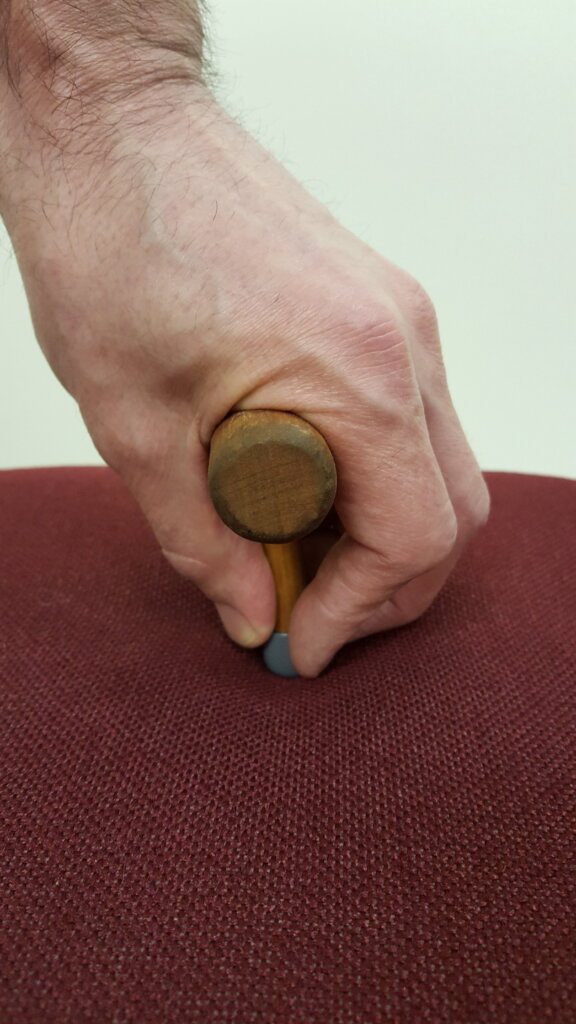
    Here’s how we were taught to hold the t-bar in neuromuscular massage training.

    You can see that my fingers are doing a lot of work at the end of the tool and, subsequently, they were in a lot of pain after doing a massage.

    Hmm…was there a way to hold the t-bar that wouldn’t stress my fingers?

    1. Lean

    My options increased once I lowered my table. When I lowered my table I could lean and use my whole body to generate pressure.

    When I did that it was easy to…

    2. Pin the massage tool.

    I’d pin the massage tool between my hand and the muscle I was working on.

    Once the massage tool was pinned, I could …

    3. Relax the hand holding the massage tool.

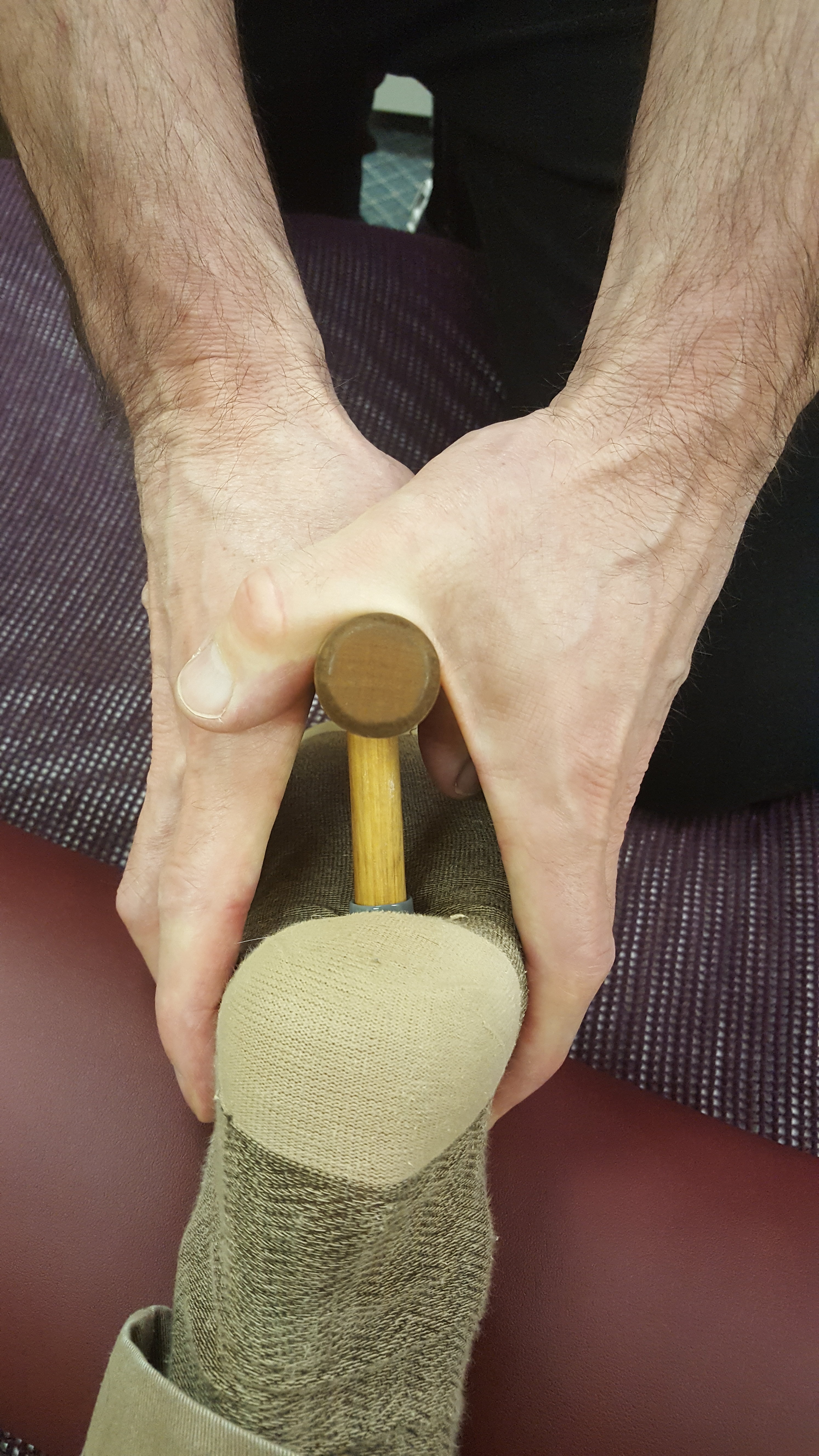
    Here’s my go-to hold now:

    My hand looks pretty relaxed, right?

    It is…but what happens if I needed to crank up the pressure?

    Exactly, I’d wrap my hand around the massage tool and grip hard so that the tool wouldn’t fall out of my hand.

    Fortunately, there’s an answer for over-gripping when doing deep pressure. 

    It is to use a guide finger/hand or a second hand. 

    4. Guide Finger/2nd Hand

    A guide finger by the massage tool helped me stabilize the tool in my hand so that I didn’t have to tighten my hold when applying more pressure.

    In this picture I’m not directing a lot of the pressure (my body weight) into the guide finger because I’m basically using the guide finger to stabilize the tool.

    A guide finger also helped me with delivering pressure.

    Applying Pressure with a Massage Tool

    Say you want to use your T-bar to press into a trigger point with medium pressure.

    This is where a lot of MTs usually abandon ship and I get it.

    You’re taking a hunk of wood or plastic and trying to press with a certain amount of pressure.

    How the hell is that going to go well?

    Well, the trusty guide finger will help you out.

    First, with your guide finger palpate where you want to apply specific pressure.

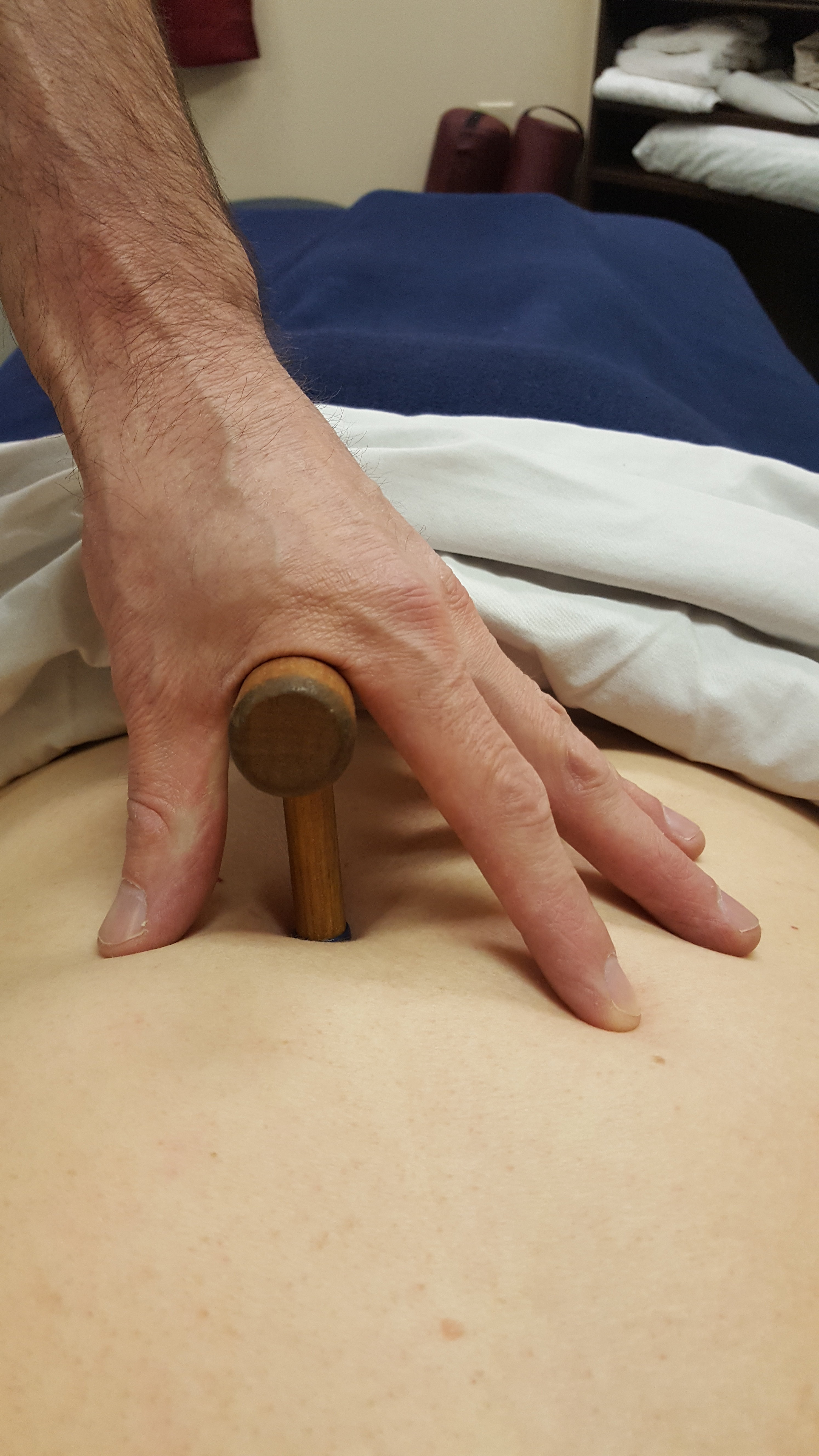
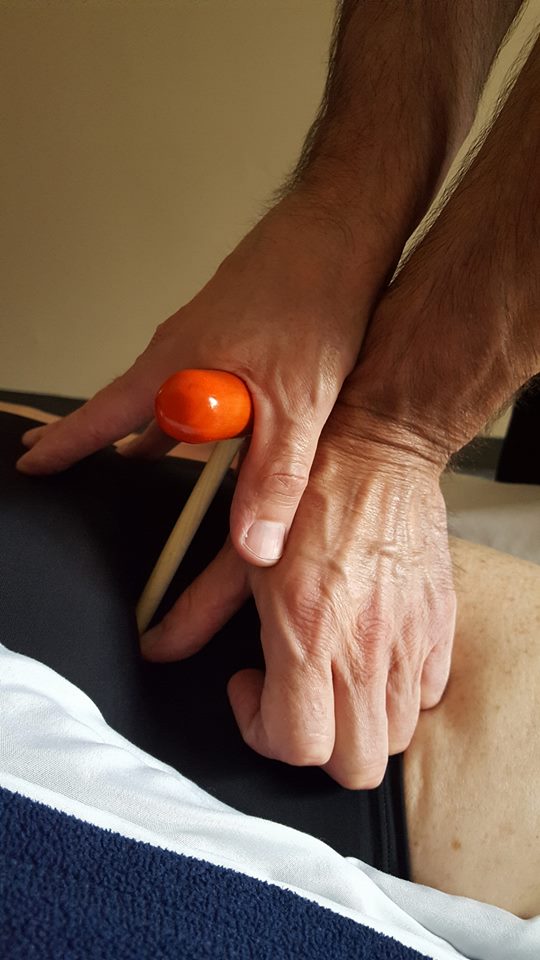
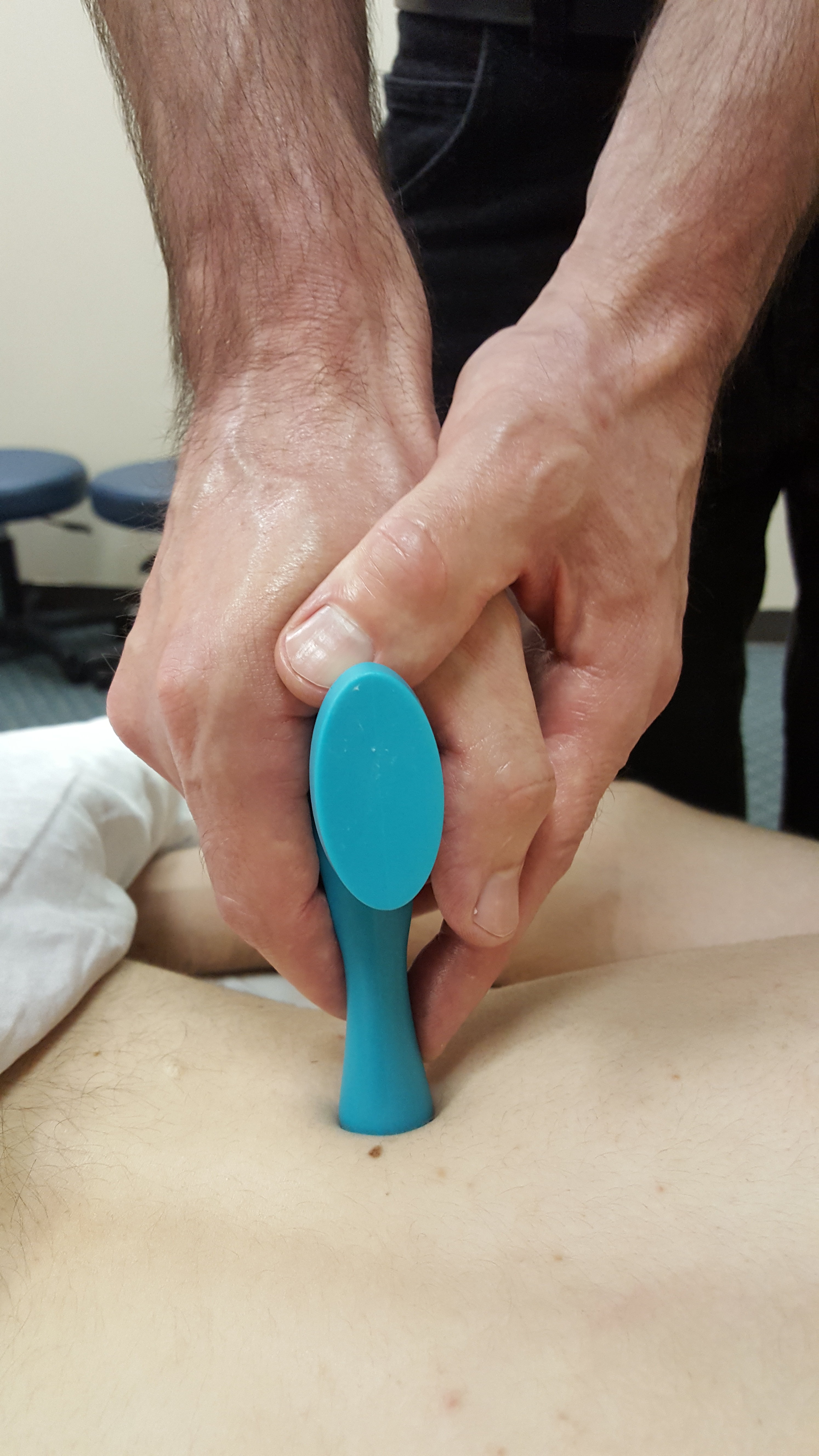
    In the picture below my thumb next to the tip of the massage tool is my guide finger.

    Once you find the area press with your guide finger at the specific pressure you desire.

    Next slip in the massage tool tip where your guide finger was and mimic that pressure.

    It’s really not hard to do.

    And once you start getting some reps in you’ll be able to start “sensing” pressure through the massage tool.

    So, the guide finger helps stabilize the massage tool, find trigger points/tight spots and is the mechanism for determining pressure with a massage tool.

    It will also save you from making someone scream Ouch!

    How Not to Make Someone Scream when Using a Massage Tool

    Let’s just say it, massage tools look intimidating.

    One time a client looked up from the massage table and saw all my massage tools spread out on my stool.

    She said, It looks like I’m about to get a dental treatment.

    Come on, I said, I’m not licensed to administer Novocaine. 

    The fact that massage tools can look threatening doesn’t mean they need to cause pain. 

    And you can pretty much eliminate times when you press too hard or press into something you shouldn’t, like a bone or a lipoma, by doing this one thing: Do an exploratory massage stroke without the massage tool.

    Without your massage tool do a glide stroke and note the areas where you may want to apply more or less pressure.

    I’m going to call those notable areas speed bumps because you should be slowing your stroke down as you approach them.

    Once you have a road map of your speed bumps you can glide with your massage tool.

    As you approach a speed bump lighten your pressure with the massage tool. And once you’re on the speed bump you can then determine how much pressure you want to apply with your massage tool in a safe and slow way.

    This is what an example looks like:

    Speed Bump Map for the Back

    Destiny wants her back worked.

    So, before you pick up your massage tool you do some exploratory massage strokes to get a feel for her back. 

    Here are the speed bumps you find: Right side between scaps tight; T8 spinous process not aligned; L2 areas tightness; L5 lypoma.

    Here’s what your massage tool stroke might look like:

    You start your stroke above the scapula and before you get to your first speed bump between the scapula and the spine, you slightly lighten your pressure with your massage tool.

    Once you understand the tightness and location of the speed bump with you massage tool, you start to apply the pressure you think is appropriate with the massage tool.

    You settle for medium pressure and you ask Destiny how that feels.

    She says, Perfect.

    You then glide to the next speed bump, the misaligned T8 spinous process.  You lighten your pressure before you hit the speed bump.

    The area next to the misaligned T8 doesn’t feel tight and the client is reactive to your pressure. You decide that your massage tool is not needed here.

    You continue on to speed bump number 3, tightness around L2. 

    You lighten your pressure, get on the speed bump and then hear Destiny sigh. You lean into your massage tool a little more to exert more pressure and you sense that Destiny is relaxing even more.

    This speed bump likes the focused and deeper pressure.

    You spend a little more time there and then continue on to the last speed bump, what you think is a lipoma around L5.

    As you approach this speed bump you opt to use your guide finger to palpate this area.

    Yep, you’re fairly certain it’s a lipoma.

    No tool work needed here.

    No screams.

    No pressing on things you shouldn’t be pressing on.

    Boom.

    It was a clean and effective massage-tool, glide stroke and your client loved it.

    So I’d diverged a little here because I thought it was important to show you that a massage tool is not a lethal weapon and, in fact, could be a very effective relaxation tool.

    Now I need to tell you one more thing about holding a massage tool: Vary your holds to help avoid overuse injuries.

    Vary Your Holds

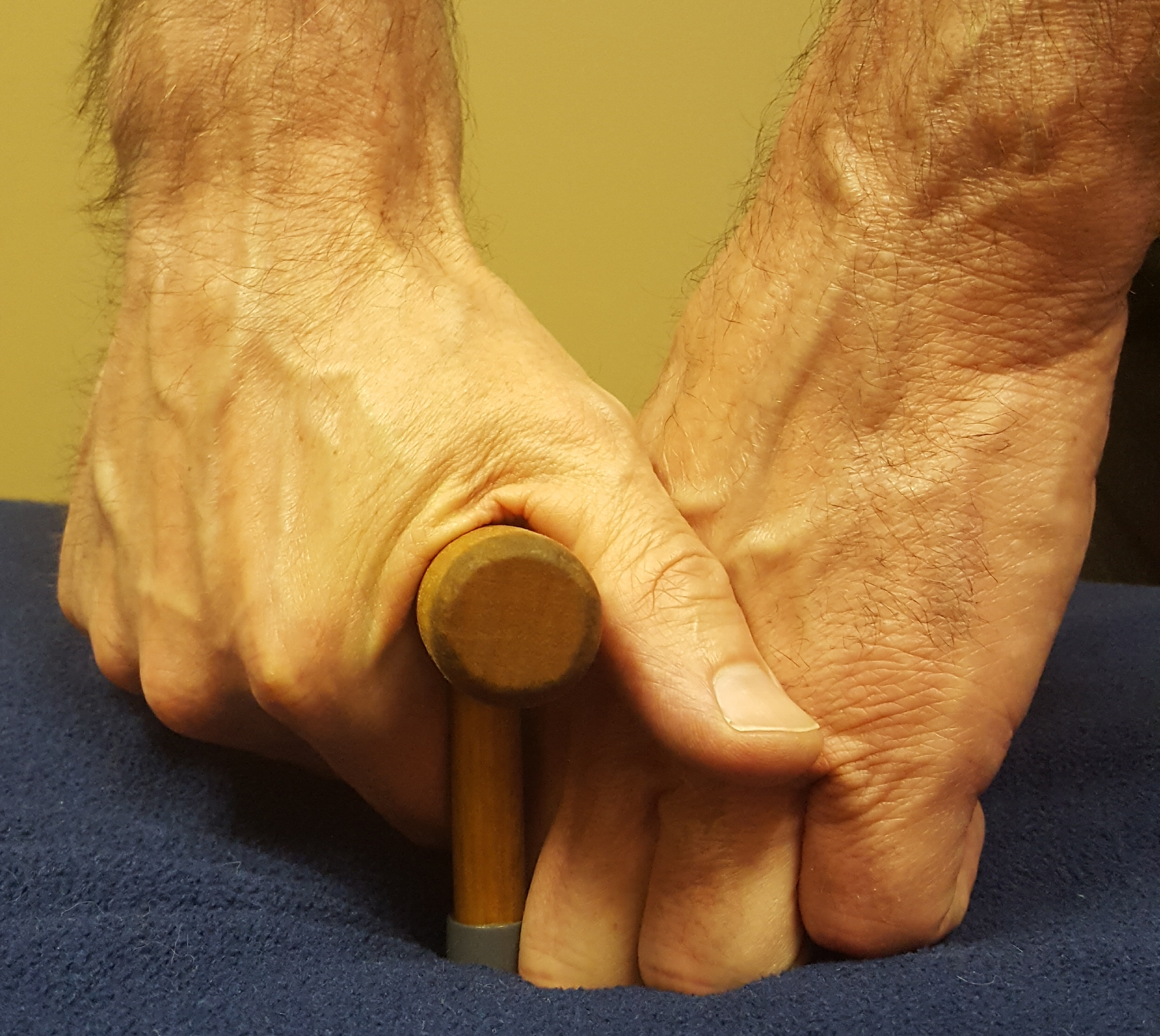
    Here are some variations on my go-to hold. This is a fist-as-a-guide-hand hold.

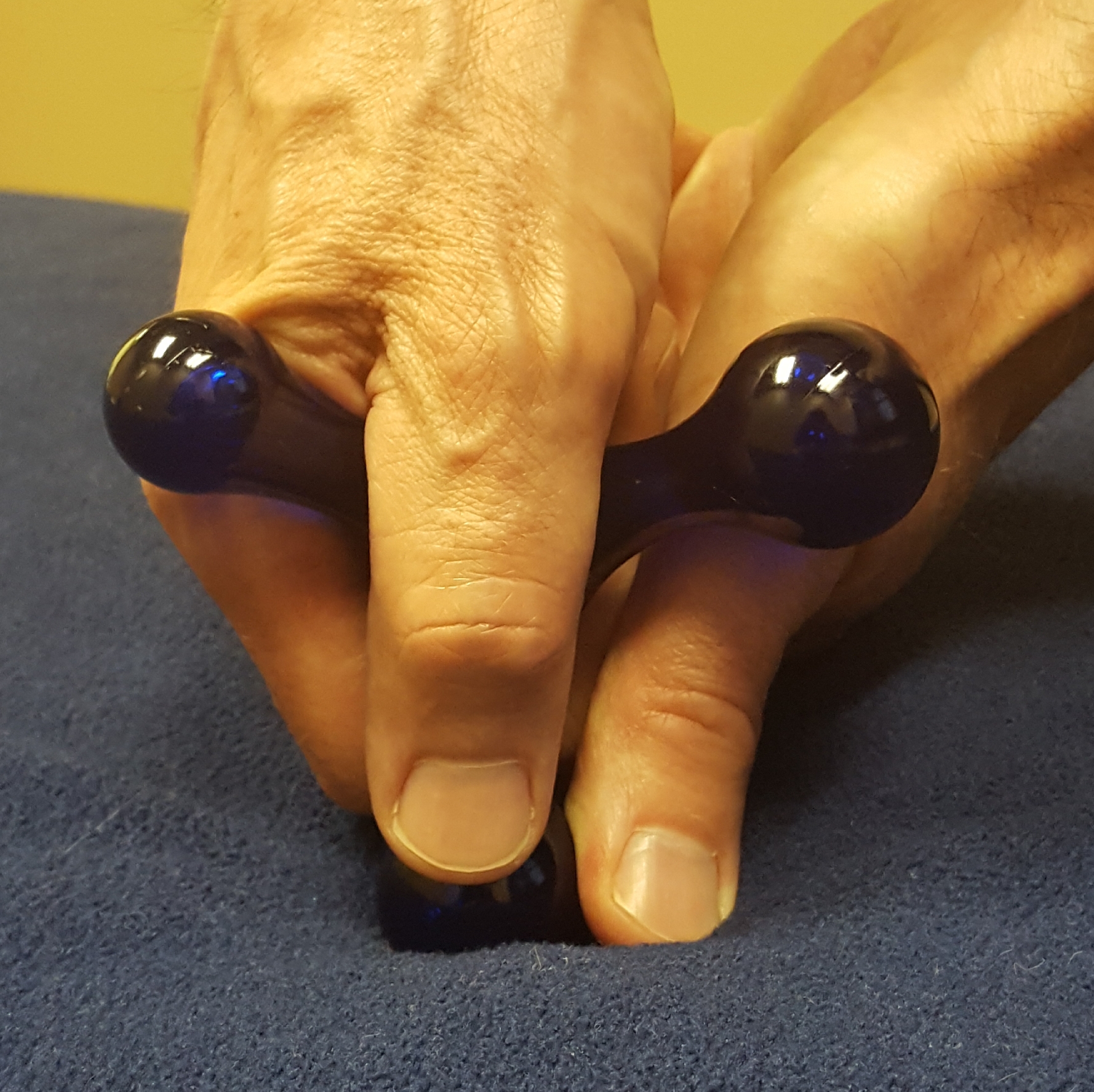
    This is a two-handed hold (both hands on the handle).

    This is a two-handed hold on a TheraPress.

    Once you have 3 or 4 holds down pat your massage world will change.

    Your hands won’t burn out. You’ll be able to increase your massage max. And you won’t fear deep work.

    Let’s do a quick recap.

    How Do You Hold A Massage Tool Recap

    So, how do you hold a massage tool so that it doesn’t hurt your hand?

    1. Lean.

    2. Pin the massage tool.

    3. Relax the hand holding the massage tool.

    4. Add a guide finger or use two hands to stabilize the massage tool.

    You can sense pressure and palpate with the guide finger.

    Sprinkle in different holds and voila your hands are going to love you.

    In this video I demonstrate how I use two hands to hold a massage tool:

    [embedyt] https://www.youtube.com/watch?v=V9rNmUwU_J0[/embedyt]

    Want to know more about how I use massage tools for focus work, relaxation massage and deep pressure massage?

    Check out my online, home study class: How to Use a Massage Tool