Category: Building a Pain Relief Massage Practice

  • Start a Massage Business: Connect with the Right Physical Therapist

    Start a Massage Business: Connect with the Right Physical Therapist

    About 20 years ago, when I was about to start a massage business, I went on a quest to find a physical therapist. I wanted to build a professional relationship with a PT who was approachable, would answer my questions and collaborate with me when treating certain clients.

    Guess what?

    I finally found one!

    Don’t get me wrong, there are a lot of great PTs out there. That wasn’t the problem. Finding the one who was willing to take the time to discuss a client’s case in depth was the hard part.

    Interview with a Unique Physical Therapist

    In this vlog-ish post, I interview Dr. Charlie Johnson. He’s a Doctor of Physical Therapy and he has a lot to say about PTs and finding the right PT to work with and/or refer to. I’ll think you’ll welcome his fresh perspective and you might even be a little surprised as to what he has to say about the PT world.

    In the Start a Massage Business show notes that proceed the video, I list the PT resource that Charlie mentions during the interview as well as Charlie’s contact information.

    Start A Massage Business: Connect with the Right Physical Therapist Show Notes

    Thanks for watching! Here’s the resource that Charlie had mentioned during the show:

    Where to find a Physical Therapy Specialist:

    www.abpts.org

    Charlie’s contact info:

    Charlie Johnson, PT, DPT, OCS

    Email: charliejohnsondpt@gmail.com

    Website: www.physicaltherapyjohnson.com 

    Compiling Your A-Team of Health Practitioners

    Here are some final thoughts regarding recommending other health practitioners to your clients.

    When you start a massage business, you’re going to get some clients that don’t respond to massage. (If you’ve been doing massage for a while, I’m not telling you anything knew.)

    What you do next, is as important, and in some cases, more important than the actual massage.

    And it boils down to one question: Do I have a recommendation that could help my client?

    This is when you need an A-team of health practitioners to refer to.

    Compiling an A-team comes at a cost. You have to invest time and energy. But here’s the thing, once you do, it will completely change how you practice massage.

    Here’s Why Recommendations Are a Must When You Start a Massage Business:

    1. When massage isn’t working for a client you may still be able to help her by pointing her to someone who may have an answer.


    In my arsenal of health/fitness practitioners to refer to are acupuncturists, podiatrists, MDs, orthopedists, physical therapists, exercise physiologists, personal trainers, chiropractors, running coaches, and psychologists.

    2. You can stay in the loop when your client is seeing the person you’ve recommended (if she gives you permission).


    Staying in the loop is like coming out of the massage room into a bright lobby. At first you squint and can’t really see anything. Then after a few seconds, you see the desk and chairs and, oh, hey there’s your next client, Steve, and everything comes into focus.

    When you start referring out and are in the loop, you start to see the bigger world of how you can help someone out. And once you experience helping someone out in the bigger world, you’ll never be content to keep things in your massage room again.

    3. Clients appreciate, hope and sometimes expect that you can help beyond massage.


    And we can. I’m not saying that we’re the gatekeepers. I’m saying let’s take our recommendations as serious as we take massage so that we can provide our clients with vetted health and wellness options when appropriate.

    4. From your efforts to do right by your clients you’re building trust with your clients and other health practitioners.


    Through these actions and interactions with your clients and other health practitioners you’re establishing your reputation in the health world. And your reputation will serve as your advertisement for the rest of your career.

    5. There are some health practitioners who’ll be a perfect match with you both in helping people and growing your business. These will be the practitioners who will send referrals your way.


    For more about finding the health practitioners who are a perfect fit both professionally and as a referral source, check out How to Get Massage Clients: Referrals.

    P.S. If you’re about to start a massage business or are trying to pick up clients, jump on my email list to get the latest video, tutorial and article about how to get a steady flow of new clients. The email group is free and you can unsubscribe anytime:-)

     

  • How to Palpate Like a Chiropractor

    How to Palpate Like a Chiropractor

    Early on in my massage career I cut my massage teeth in chiropractors’ offices. Over the years, chiros have become colleagues, and I’ve learned two very important things from them: 1. Don’t be afraid to work the muscles/ligaments on and around the spine, 2. Palpate the spine (and around the spine) for tight and tender areas. Now I palpate like a chiropractor but with a different purpose in mind.

    Squirting Massage Lotion

    There are differences between how MTs approach a body and how chiros approach a body. Once when taking a neuromuscular seminar I partnered up with a chiroprctor during the practice sessions. When it was his turn to work on me, he literally took the bottle of massage lotion, held it above my back and squeezed, as if he were squirting ketchup on a bun.

    Granted, most chiros wouldn’t squirt massage lotion on a patient. However, this example does illustrate that massage clients and chiropractic patients have different therapeutic touch expectations.

    A chiro can get away with being abrupt and mechanical with her touch because the expectation is primarily about correcting an issue, not relaxing the body. However, we need to maintain a sensitive touch and keep connectivity with the client in order to fulfill an expectation of relaxation.

    Though different in some ways, we’re similar in other ways. A big one is that we both deal with back pain. That means that both chiros and MTs need to know how to palpate back muscles and the spine.

    How to Palpate Like a Chiropractor

    Lesson #1: Don’t be afraid of the spine.

    The first hurdle to palpating the spine is to understand that we’re not going to hurt someone if we touch their spinuous processes. Chiros do it all the time. In fact, they are experts at palpating the spine.

    Becoming comfortable with palpating the spine simply comes down to getting reps in. I’ll show you how to do that in a minute.

    Lesson #2: Palpate the spine (and around the spine) for tight/tender areas.

    Palpating the spine can give us clues as to where we might want to work. For example, if I’m palpating the spinous processes and one is tender or seems off center from the spinous process above and below it, I would investigate for tenderness and/or tightness in the paraspinal muscles on either side of the misaligned and/or sensitive spinous process.

    When I investigate, I often find tight or tender spots in the paraspinal muscles, and in my experience, clients get pain relief when I work these areas.

    Two Ways to Palpate Like a Chiropractor

    Here are two ways that I palpate like a chiropractor but in a relaxing way. One is with fingers on top of the spinous processes and the other is with fingers around the spinous processes.

    You don’t need to apply a lot of pressure with either technique, just enough to feel the spinous processes. When I apply pressure I also do a gentle and relaxing back and forth (perpendicular to the spine) motion.

    If I find a spinous process that is “off” and an area to either side of the spine that is tight and/or tender, I will apply focused and appropriate pressure. Check out this pain scale video for establishing appropriate pressure.

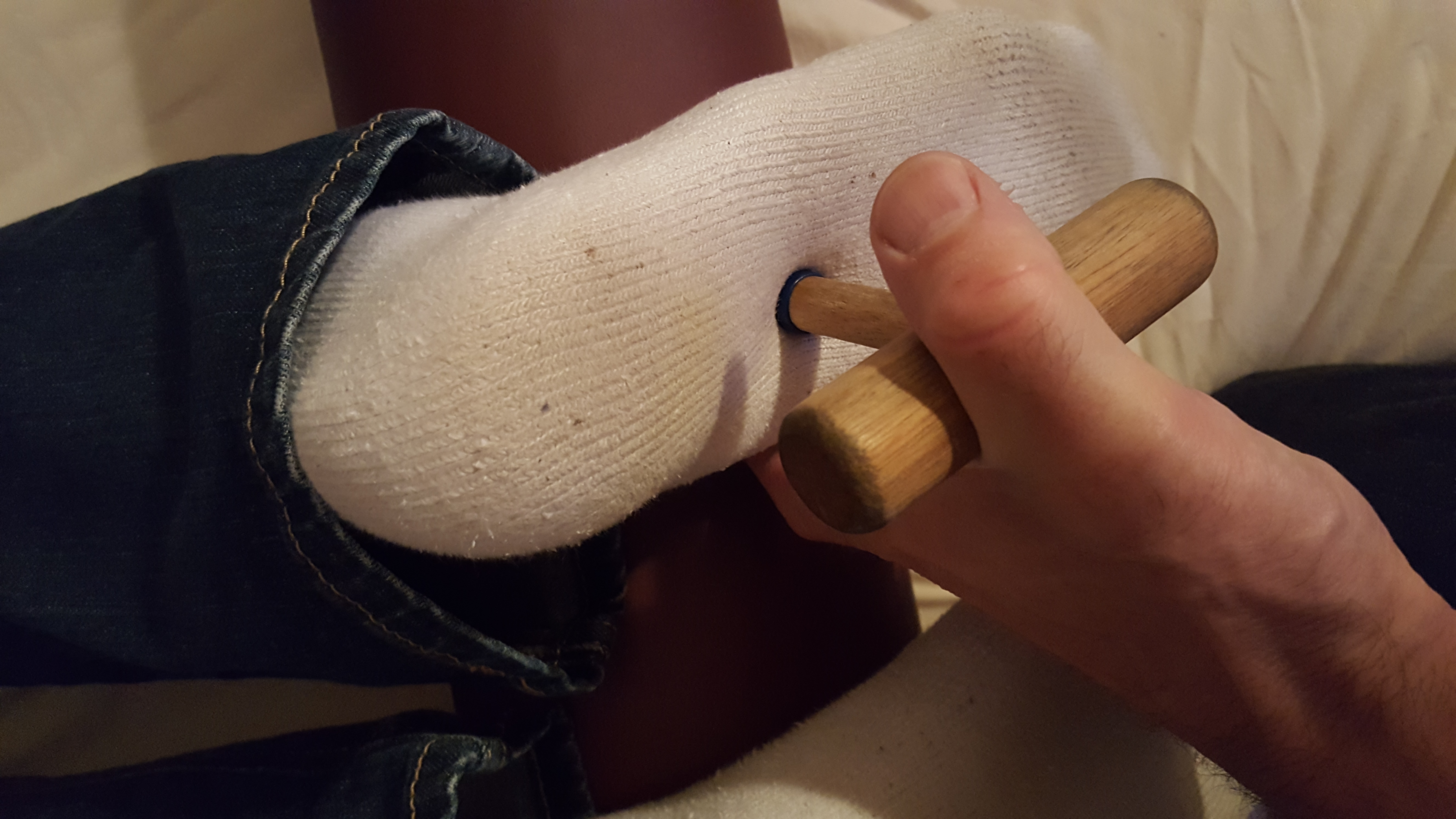
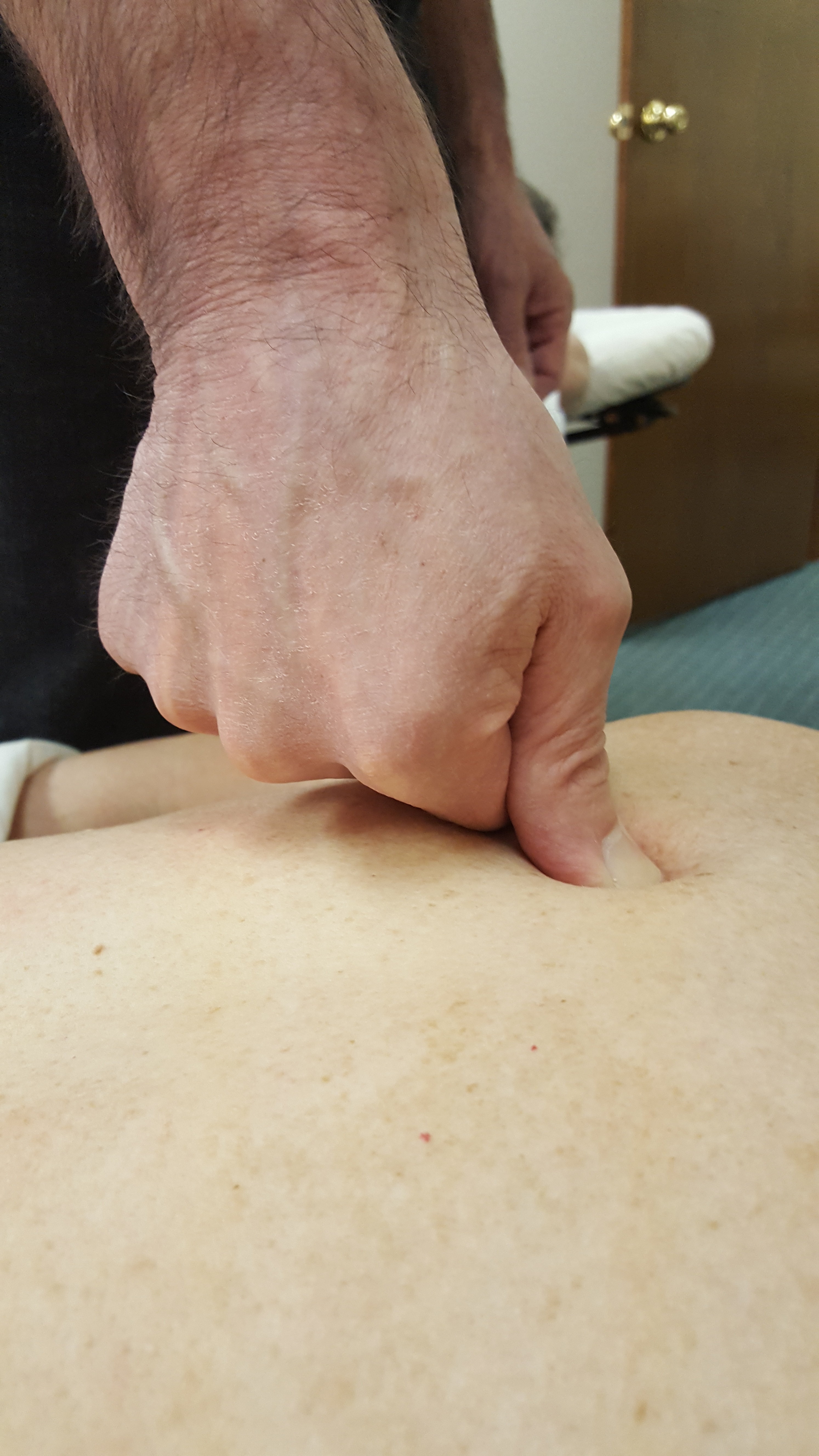
    I’ll use combination body parts (barred thumbs, thumb and fist of same hand, knuckle and thumb) and massage tools (specifically the T-bar and L-bar) to apply pressure.

    In this video I demonstrate the 2 spine palpation techniques: Massage Palpation Techniques for the Spine. (My massage model got sick. So the camera person is on the table and I’m filming myself doing the massage palpation techniques—so it’s a little shaky.)

    Small and Big Picture 

    Palpating the spine can give you a big picture and a detailed view of the client’s back. Go up and down the spine for a big picture view (e.g., reveal a scoliotic pattern) and when you find a spinous process irregularity, zero in on that area. By working the paraspinal muscles near the irregularity, you might just address that one area that has never been worked before. And you might give your client greater pain relief.

    How do you build a massage business with pain-relief clients?

    Go here: Jumpstart.

    Jumpstart is a free course that has everything you need to get to 30K a year working for yourself.

    Need to take a meh massage business to a dream massage business?

    Go here: Accelerator.

    This is how I took my 40K business to 80K+.


  • Tension Headaches: A Muscle Overlooked

    Tension Headaches: A Muscle Overlooked

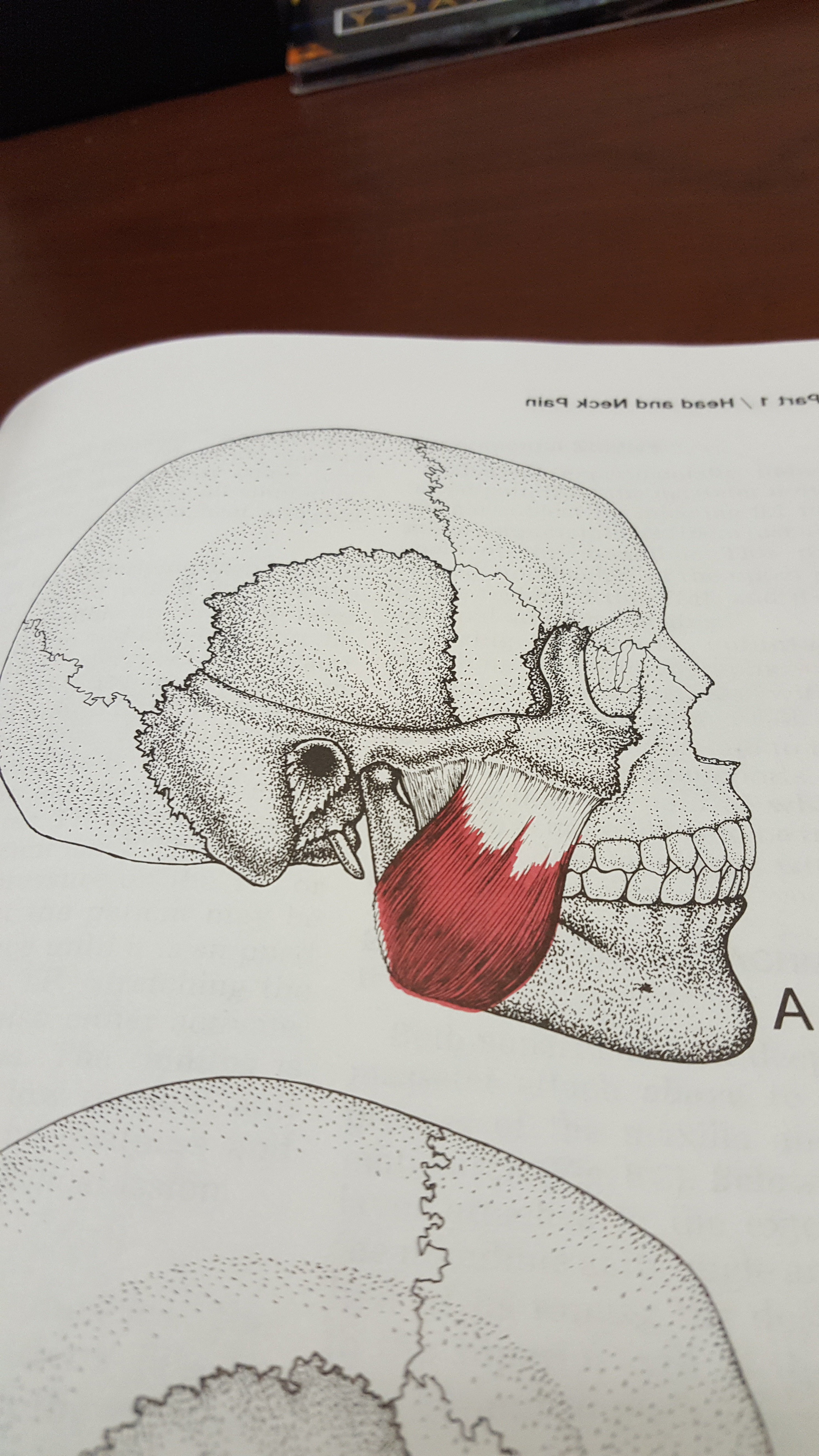
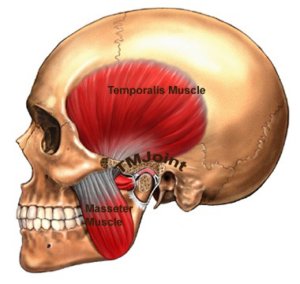
    Not one of my clients would ever pass up on suboccipital work for a tension headache.  But as good as suboccipital work can be for relieving headache symptoms, there’s evidence to suggest that jaw muscles could also be contributing to tension headaches. And one in particular—the masseter—is easy to overlook.

    Why Jaw Muscles?

    Jaw muscles may be involved in tension headaches via trigger points. In general, a trigger point can be looked at as a tender, soft or tight area within a muscle that can produce pain elsewhere.

    Why would jaw muscles have trigger points? Science writer, Paul Ingraham speculates that dysfunction could be one reason.

    Partial Antagonist

    The suboccipitals along with other neck muscles help balance the head on the spine. Interestingly, the jaw muscles act as partial antagonists to the suboccipitals.

    Really? But they’re not connected to the spine so how can they act against the suboccipitals to balance the head?

    According to Ingraham, it doesn’t matter if they are connected: “…muscle studies have shown that the jaw muscles behave much like they would in a more normal push-pull relationship with the suboccipitals. They function together and dysfunction together.” (Quote taken from PainScience.Com)

    Dysfunction stresses muscles, and it’s reasonable to assume that trigger points could develop as a result of the added stress to the muscles.

    It’s also worth noting that the masseter is a muscle used for grinding and chewing. The combination of dysfunction and muscle overuse could ramp up muscle tension even more.

    jaw-muscles

    Spread the Rub

    Even knowing this (thank you Paul Ingraham), I sometimes still forget to work the masseter—mainly because it’s not right next to the headache area.

    Meanwhile, muscles that are close to or are part of the area where the headache is occurring, like the temporalis, get lots of my rubbing. That’s why I have to constantly remind myself to spread the rub. Sorry.

    My Approach

    I don’t believe there’s one pain-relief massage formula for tension headaches. Here’s one that works for me:

    Step 1: Go to the headache pain.

    I always go to the headache pain area first for two reasons. One, I want the client to know that I’ve heard her by addressing her actual headache area. When I do this, I’m building  therapeutic rapport.

    Two, if I can desensitize (reduce the pain in) the headache area, my client will start to reap the benefits of a calmer central nervous system.

    By the way, to understand if I’m effectively reducing a client’s pain,  I use a pain scale. Here’s the video for the pain scale approach: Pain Relief Massage: How to Find the Right Pressure Video.

    Step 2: Work any area the client associates with the headache.

    If the person has pain somewhere else (neck or jaw) before or at the same time the headache actually occurred, I work that area using the pain scale system.

    By doing so, I further connect with my client because I again show her that I’m listening to her. Secondly, I can start to desensitize a secondary pain area and continue to evoke a parasympathetic response.

    Step 3: Get that masseter before you forget!

    Finally, I cover the other neck and jaw muscles that weren’t covered in steps 1 and 2–like the masseter!

    Here are my “at the bare minimum have to get muscles” on my tension headache hit list:

    Temporalis

    Masseter

    Suboccipitals

    Jamaar’s Headache

    Here’s what it looks like in action. Jamaar came into my office complaining of headache in the front and sides of his head. As we continued to talk, he grabbed the base of his skull and said that he thought it started there.

    When I got him on the table, the first thing I did was to reduce the pain in his temporalis and frontalis muscles (the headache pain). Next, I reduced the pain in his suboccipitals (the area he grabbed and associated with his headache pain).

    Lastly, I worked the remaining muscles that could be contributing to his headache pain, like the masseter.

    Once all the work was done, I finished up with a scalp massage. Hmm…that sounds pretty good. Sign me up!

    Quick Glance

    Tension headaches are in our pain-reduction wheelhouse. I’ve found these keys to be helpful when treating clients with tension headaches:

    1. Communicate with the client to gauge if you’re helping her. I use a pain scale system: Pain Relief Massage: How to Find the Right Pressure Video.
    2. Go to the headache pain.
    3. Work any pain area the client associates with the headache.
    4. If you haven’t already gotten them, go for the temporalis, masseter, and suboccipitals.

    Join My Email Group

    Want to get my latest info about pain-relief massage, how to make more money and how to grow a massage business while staying pain-free in the massage room?

    Sign up for my email group below. It’s free:-)

  • -ITIS vs. -OSIS: Why You Need to Know the Difference

    -ITIS vs. -OSIS: Why You Need to Know the Difference

    Research has shown that most people diagnosed with conditions like plantar fasciitis actually don’t have inflammation (-itis) anymore. Instead they have a condition (-osis), like tissue degeneration.

    The medical treatments for tissue inflammation and degeneration are different and may negatively impact treatment outcomes if misapplied. By understanding the difference between the two diagnoses, you can not only fine-tune your massage, but you can also help your client get the correct diagnosis and find the best medical treatment.

    The Past

    It’s a common misconception that inflammation is always associated with tendon/fascia problems. But when researchers examined the tissue of people with conditions diagnosed as plantar fascittis (research study), they didn’t find a lot of inflammation. Instead they primarily found collagen degeneration.

    [bctt tweet=”Most plantar fasciitis cases are degenerative not inflammatory. This changes treatment.” username=”Mark LiskeyMarkLiskey”]

    So What?

    This is big. For one, if a tendon/fascia condition is not an inflammatory condition, then “corticosteroid injections and nonsteroidal antiinflammatory medications (NSAIDS) may not be the most effective options”.

    This could mean that your client who has persistent plantar fasciitis may never have had the appropriate treatment plan.

    What May Help?

    Preliminary research (plantar fasciitis study, hamstring tendinopathy study) suggests that eccentric strengthening exercises may be helpful with -osis conditions (which is what most people have).

    But since many doctors still bundle the terms tendinitis and tendinosis together, they may not appreciate what this can mean for the person in terms of treatment and treatment outcome.

    What’s It Mean for Us?

    Knowing the difference between –isis and –osis changes how I work with a client before, during and after the massage.

    Pre-Massage

    For example, let’s say Sabrina is a runner and she comes to my office with a diagnosis of tibialis posterior tendinitis. First, I’m going to check for visual evidence of inflammation. Is there swelling in the tendon/attachment areas and are they warm?

    During the intake, I will find out if her condition has been persistent (staying the same or getting worse over a course of many weeks). What treatments has she had? Did she have injections that gave her temporary relief? Typically, the positive effects from injections are short lived when it’s a tendinosis condition (Treatment of Tendinopathy: What Works, What Doesn’t and What’s on the Horizon).

    If there are no visible signs of inflammation and Sabrina has had the condition for a while, I’m going to treat her condition as an –osis.

    During the Massage

    This means that I’m going to massage the tendon and foot attachments, rather than avoid them. However, using a 1 – 10 pain scale, I will only work within a 3 – 4 to reduce the pain in these areas. In the surrounding area and the body of the tibialis posterior, I will work in a 4 – 5.

    For a quick tutorial on the pain scale system I use, check out this Pain Relief Massage: How to Find the Right Pressure video.

    Post-Massage Recommendations

    Here comes the tricky part. If you suspect that your client is misdiagnosed and she should get rechecked, you’re going to want to put that bug in her ear. Here’s how I do it.

    First, I lay the groundwork during the intake. After I look for inflammation and consider my client’s injury history, I explain my treatment plan. This is the perfect time to mention the research around “-itis” versus “-osis”.

    Next, since I use a pain scale approach when working tendon/fascia conditions, I’m regularly interacting with the client throughout the massage. This would be another opportunity to talk about “-isis” versus “-osis”.

    I’ve found that during this time the client will often circle back to the pre-massage conversation of finding a solution for her condition. At this point, I go deeper into the topic of “-isis” versus “-osis”.

    After the massage, I do a wrap up. In the wrap up, I tell the client what I did and what I think might be helpful going forward, like getting rechecked to make sure she has the correct diagnosis. It’s not uncommon for me to start by saying, “If it were me…” or “If it were my (fill in the body part)…”.

    Follow-Up

    Finally, I follow up 2 to 3 days after the massage. In this conversation, I don’t press the client about going back to make sure the diagnosis is accurate, but I will give her my opinion if she asks for it.

    Ultimately, my goal is to provide my client with the most current information so that she can make an informed decision about her tendon/fascia condition.

    Getting it Done In 3 Steps

    If you think your client has an “-osis” condition instead of an “-isis”, help her this way:

    1. Tailor your massage to reduce her pain by using a pain scale system and appropriate pressure.
    2. Make her aware of the symptom and treatment differences between “-osis” and “-isis”.
    3. Follow up and answer her questions.

    At times, you may feel like an outsider because you’re operating with the most current information which, in this case, challenges conventional thinking. But your client will thank you for your effort—especially if you can help her get out of pain.

    If you want my latest information about pain relief massage and growing a massage business, sign up for my email group. It’s free:-)