
Category: Building a Pain Relief Massage Practice

  • Common Sense Ways to Treat Sciatica

    Common Sense Ways to Treat Sciatica

    Good news! You don’t need to be certified in medical massage to treat sciatica. You don’t even need to know the latest myofascial technique.

    In fact, you can do a lot of good with sciatica if you just understand some basic physiological mechanisms and back research which surprisingly (or not) correlates to common sense.

    What is Sciatica Really?

    Sciatica is a symptom, not a condition. The symptoms are pain in buttock and/or down the leg. The cause is irritation of the sciatica nerve.

    We’ve been conditioned to think that most of the time nerve irritation has to do with the spine, like a herniated disc. To this day, I’m guilty of this.

    Aadila came in telling me that the doctor said she had sciatica. Her pain was in her buttock and half way down her hamstring.

    My first question was: Do you have back pain?

    No.

    Have you ever had back pain?

    Yes.

    Where?

    (She points to her mid-back.)

    I see…how about your lower-back?

    No, not that I can remember.

    Are you sure?

    Pretty sure.

    No stiffness?

    Nope.

    How about when you get up in the morning..?

    Well, on occasion…

    Aha!

    Hold on there, Wilbur! You’re proceeding as if sciatica is a condition—specifically, an impinged nerve at the spine.

    According to science writer Paul Ingraham, I’m actually barking up the wrong tree. He says most sciatica arises from muscle “knots” not nerves impinged by a disc or by the narrowing of a vertebral foramen.

    That’s fantastic—for us. If it’s not a nerve issues due to a spinal condition, we’ve a better shot at helping a client’s sciatica improve.

    Which brings us to good vibrations.

    Good Vibrations

    I have to tell you, I don’t always trust something that just “feels right.” Why? Because what “feels right” is usually influenced by experiences and knowledge. And those two things can seriously bias objectivity.

    Here’s an example of how trusting your gut can go really wrong.

    Scott Hornoff was a detective who like his fellow detectives trusted his gut. But then one day, his fellow detectives, trusting their guts, were convinced that Hornoff was the person who murdered a local woman.

    Hornoff was tried and found guilty. The problem was, he didn’t do it. And he spent 6 ½ years in jail before he was exonerated.

    Most unsettling is that the detectives’ gut feelings never changed. Hornoff became a free man only because the real murderer confessed!

    We’re still talking about massage here, right?

    Yep.

    When you have a muscle ache, you rub it back and forth. That feels like the right thing to do. But does this gut reaction actually help with the pain?

    Our survey says…

    It sure does!

    Vibrating a muscle causes proprioceptive confusion. Ingraham says:  “If you move or shake the body at random, the brain gets a deluge of nonsensical proprioceptive data. The nervous system, overwhelmed by the random stimuli, effectively “gives up” and stops resisting the movement: providing you with deep, muscle loosening relaxation!” You can read his article here.

    Here’s What I Do

    Here’s my technique for vibrating muscles when someone comes in experiencing sciatica.

    1. I locate a sciatica pain area.

    Next I need to know how much pressure to use.

    1. I press and hold the pain area.

    This is the tricky part. Too much pressure can cause more pain. I have safeguards for not pushing too hard. One is the client’s reaction.

    I’m looking for him to say “That feels good” or “The pain is lessening” as I press on the area.

    If I don’t get one of those answers, I revert to using the pain scale. The short version is: on a pain scale of 1 to 10, I want to press until the client says it’s a 3 (or 4 it’s not acute sciatica). Here’s the longer version: Pain Relief Massage Video: How to Find the Right Pressure.

    I hold the pain area until the pain starts to lessen. If it gets worse, I leave the pain area alone for awhile. Eventually, I circle back, but this time I’ll apply less pressure.

    Then there’s the piriformis…it can be very reactive because of the sciatica nerve going under it (or in some anomalous cases, through it).

    If the person feels zapping in the buttock or down the leg when I’m pressing the piriformis (or around it), I lighten the pressure. And if I’m using thumbs, I’ll try a broader body part, like fists.

    If direct pressure is just too painful, I’ll try skin rolling.

    Once I get the pressure down, then it’s on to…

    1. Vibrate the pain area.

    I gently pin the pain area and apply the appropriate pressure. Then I vibrate the pain area with a back-and-forth motion keeping my pressure consistent.

    For a client with raging sciatica I don’t apply deeper pressure as I’m vibrating like I normally would when working a tight spot. This is sometimes tough for me to control because by nature I’m smidge-deeper-pressure pusher.

    I vibrate the pain area long enough for it to feel good, but not so long that it feels annoying. I’ll cut it short when in doubt.

    If I really think a smidge deeper pressure might provide more pain relief, I’ll go back to the area and I’ll do the vibration at a smidge deeper level.

    And that’s it…well almost…

    More Common Sense 

    Heat is another low cost pain reliever. The heat acts a neurological sedative. When I worked for a chiropractor, we used heat packs from a hydrocollator. But you could simply use a heating pad.

    Education can also help. If you’re client is experiencing sciatica, share this research with her.

    It says that bed rest is no better than mindfully (pay attention to your back) going about your normal life. This tidbit of info could be HUGE for a person experiencing sciatica pain for the first time. For one, she can stop worrying about whether working is making her sciatica worse.

    Fired Up! Ready to Go!

    Don’t back down from sciatica.

    You have a lot of treatment tools to use like vibration and heat. Not medically sounding enough to compete with the chiro next door who is using spinal decompression (formerly known as spinal traction)?

    You can always say you’re using a proprioceptive confusion technique and a neurological sedative device, but you might be on shaky grounds when you whip out the $20 heating pad you had bought on Amazon.

    If you’re looking for more info on treating sciatica, I talk about how to NOT make sciatica worse in this article: Don’t Wear a Fancy Red Tie When Treating Sciatica. I learned the NOTs the hard way—by actually making sciatica worse in some of my clients.

    Hey, what can I say. There’s a learning curve.

    I’m here if you want to talk about a particular case or if you have some sciatica techniques you’d like to share.

    And if you want to know about new articles, videos, classes, etc., coming out, just enter your email below. You can unsubscribe whenever you want:-)


  • My (Simple) Secret To Better Pain Relief Massage Therapy

    My (Simple) Secret To Better Pain Relief Massage Therapy

    What’s my simple secret to better pain relief massage therapy?

    Find the client’s pain areas before she gets on the table.

    I told you that it was simple. But my simple tip packs a big therapeutic punch.

    First, I’m going to explain how I find the client’s pain areas pre-massage.

    How to Find Pain Areas Pre-Massage

    During the intake, I talk to my client about her pain areas.

    Then I ask her if I can palpate those areas right then and there before she gets on the table.

    It’s at this time that I find the exact locations of the pain areas.

    Then I make a mental note and write pain location information in my therapy notes before I start the massage.

    Now I’m ready to kick the crap out of some pain…well, you know what I mean…

    Onto the why.

    Why Palpate Pain Areas Pre-Massage

    Understanding where to go before a client gets on the table is therapeutically huge.

    For one, when you find the pain spots you’re showing your client that you’ve listened to her.

    Secondly, you’re also acknowledging her pain.

    That’s a whole lot of care and concern coming her way.

    Care and concern reduces a client’s treatment-related stress.

    1. Reduce Treatment-Related Stress

    Speaking of stress, remember the last time you went to the doctor?

    Did you feel at ease?

    Yeah, right…

    In fact, you probably were a little stressed out.

    One reason why you may have felt stressed out is because in the US medical system, pain is primarily viewed as a function of tissue damage (biomedical view), and the psychological and sociological components of pain are ignored, resulting in the patient feeling alienated and stressed.

    I explain the biomedical view in greater detail in 4 Lesson On Chronic Pain–Notes From a Mountain Guide.

    Don’t biomedical-ize your clients before they get on the table.

    The MRI and X-ray are the appropriate tools to help figure out pain issues.

    Our hands are the appropriate tools to reduce treatment-related stress.

    And when you use your hands (ears and words) to reduce stress before the massage, you’re client is more likely to believe that you’re the person to get the job done.

    2. Gain the Client’s Confidence

    When I first started doing pain relief massage I never looked for pain spots pre-massage.

    Instead I let my bumbling fingers poke and prod until my client gave me a clue like: Ouch!

    In retrospect, I am confident that my clients had little to no confidence in my ability to find their pain, let alone relieve their pain, which brings us to the how-much-pressure question.

    Palpating a pain spot before the client gets on the table is also the perfect time to experiment with how much pressure you want to apply to the pain spot.

    3. Find the Therapeutic Pressure

    If you accidentally press too hard pre-massage and get a grimace from the client, that’s okay.

    At least now you’ll know the pressure parameters to work within when you start the massage.

    Pre-massage palpation can also help you rule out areas that are inflamed and shouldn’t be massaged.

    One more thing.

    At the end of a heavy day your memory may get foggy (like mine does). But if it does, pre-massage palpation will you help you…

    4. Remember Where All the Pain Areas Are

    Going through a pre-massage palpation protocol makes the pain spots stick in my memory.

    And I don’t find myself in the embarrassing situation of missing a pain area I should have worked.

    Oh, sometimes knowing where a pain spot is pre-massage doesn’t guarantee that you’ll find it when the client gets on the table.

    Where’d the Pain Spots Go?

    Here’s how I find a “lost” pain spot: I create contrast.

    First, put your fingers or thumbs around the area where you think the pain spot is.

    Press down and move back and forth over that area.

    If you don’t feel anything, press deeper and make your back-and-forth stroke longer and faster.

    If you’re still having trouble, close your eyes so that your focus is in your fingers.

    Stress Be Gone!

    I’m a pre-massage palpation junkie because my stress is reduced when I find the pain areas before the client gets on the table.

    When I do the client relaxes and I gain competency points.

    I also find the starting point for the appropriate therapeutic pressure and I burn the pain areas into my memory.

    Here are my quick steps for finding pain spots pre-massage.

    Pain Relief Massage Therapy: Steps for Finding Pain Spots

    During the intake…

    (1) ask the client if you can palpate his pain spots,

    (2) then locate pain spots on the client,

    (3) test out pressure, and

    (4) recall and write down where the pain areas are.

    Like I said, it’s a simple thing.

    But the therapeutic bang is big.

    Does your pain relief massage therapy practice have a website?

    My website history reads like a Stephen King horror novel.
    And my massage practice suffered because of it.

    Don’t be me then.

    Here’s how to fix website woes: How to Build a Website Fast and Cheap.

    Need more help?

    Get my latest everything weekly.

    Just sign up below. (It’s free:-)


  • Get Your Client Out of Pain: Put a Stake in the Ground

    Get Your Client Out of Pain: Put a Stake in the Ground

    What makes or breaks a massage treatment plan?

    Whether or not you commit to a course of action.

    In other words, you may have hundreds of ideas about why someone is in pain and a hundred more ideas about how to treat that pain, but until you commit to a course of action, you can’t determine if what you’re doing is working.

    This may seem straightforward, but committing to a course of action is not necessarily easy to do.

    Life and Death

    A couple of years ago, my wife, Lisa, and I were in a should-we-commit-or-shouldn’t-we-commit situation.

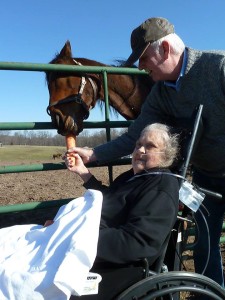
    Her sister, Patty, an avid horse rider, was dying of emphysema and she had one last request. She wanted to pet rescue horses.

    The problem was that Patty was extremely weak. A trip to the horse rescue farm could hasten her demise if not do her in right there on the farm.

    The easy way out was to do nothing and let nature take its course.

    After a lot of back-and-forth, the family decided to put a stake in the ground. We, and the nursing home staff, took Patty to the farm.

    In the massage room, as in life, fully committing to a course of action without knowing the outcome can be scary, but when you do, you really start helping clients get out of pain.

    Create a Massage Treatment Plan

    Committing to a course of action usually involves having a massage treatment plan.

    Right about now, you’re thinking, crap, SOAP notes and Latin names for muscles.

    No need to whip out your muscle chart.

    I’m talking about a much more on-the-spot, happening in your brain as you talk to the client, massage treatment plan.

    For example, Moyor comes in with pain in his trap area. You palpate his neck and shoulders and find his traps and levator scapulae to be tight, but it doesn’t seem like his cervical erectors are as tight.

    So, you plan to work all neck and shoulder muscles, but the majority of your focus will be on traps and levator scapulae. 

    As you start the massage you find out that your initial pre-massage palpation is accurate regarding the tight traps and levator scapulae. But then you also discover that his scalenes are tender.

    So, at this point during the massage you commit to a course of action of working his traps and levator scapulae with static pressure and firm effleurage. You also commit to static pressure work on the scalenes.

    Now comes the scary part with having committed to a course of action: The results.

    Managing Your Reaction to the Results

    There will be immediate results. Does Moyor feel better after the massage?

    And there’ll be down-the-road results. Does Moyor feel better 3 days after the massage?

    If Moyor feels better after the massage and/or 3 days later, you’re golden.

    But what if he doesn’t?

    What if he feels worse?

    This is what happens.

    That little voice awakens in your head.

    And it says: Dude, you suck.

    You start doubting if you can help people in pain because you’ve committed to a course of action and it didn’t work out.

    After all, you’re not Dalton, Myers or DeLany. 

    You’re just you with a simple treatment plan.

    Simple Can Be Effective

    Okay, little voice, time for a reality check.

    First, a treatment plan doesn’t have to be complex to be effective.

    In fact, overly complex treatment plans have a drawback.

    If you have a complex plan and it doesn’t work, you’re going to have a lot more question marks about what you should adjust for the next time.

    Whereas, with a simple plan it will be easier to figure out what you want to do next.

    Complex Doesn’t Mean Better

    Also, there can be a tendency to put too much stock in complexity.

    We think that the more complex a system of analysis/treatment is, the more successful it will be.

    But is that true?

    Has one discipline or modality cornered the market with providing pain relief?

    That last time I checked, my pain-relief massage business is doing just fine.

    Still feeling a little iffy?

    Check out: How to Get Good at Pain Relief Massage.

    So, okay, even if you accept that what you have to offer in pain relief massage is legitimate, that still doesn’t completely shut up that little voice berating you for committing to a course of action that didn’t help your client.

    And at this point I’m going to say something that sounds so ridiculously rah-rah that your gonna rupture a capillary from your eyeballs rolling back in your head. 

    Ready?

    There is no failure when you commit.

    If the client has no response or the pain worsens after your treatment, you now have the opportunity to adjust your massage treatment plan or try a plan B (if you have one).

    Or maybe it’s time to collaborate with another health professional.

    Or maybe it’s time to refer your client to someone else (e.g., orthopedist, physical therapist, chiropractor, etc).

    Some of my best work happens when I refer a client to the right person (usually a doctor for a diagnosis), and I’m part of a team effort.

    Failure is “NOT Committing”

    I used to think that firmly committing to a course of action was cocky.

    But I was wrong.

    Committing simply means that you’ve weighed the options as best as you can and you’re not going to let indecision make the decision for you.

    And once you commit you now have something to work with.

    After the massage you can answer important questions, like…

    Did what I do work?

    Do I need more time to work my massage treatment plan?

    Do I just need to tweak the current plan?

    Do I want to try something different next time?

    Should I punt to someone else?

    Our Commitment to a Course of Action

    Fortunately, when committing to a course of action in massage there are no life and death results to deal with.

    But outside the massage room there are.

    Within 36 hours of the trip of petting her favorite horse, Tom Thumb, Patty was dead.

    Did we make the right decision for Patty?

    I’m not sure.

    There was that faint smile on Patty’s face as Tom Thumb chomped on a carrot from her hand.

    Patty Feeding A Carrot to a Horse

    But I’m almost certain that the trip sapped the last vestiges of life from her body.

    I can only say this: Putting a stake in the ground, and not letting indecision determine her fate, was the only thing that we could live with.

    And I’m okay with that.

    R.I.P. Patty.

    Commit to a Course of Action

    It’s 2020 and it’s time to commit to a course of action.

    Do it in the massage room.

    Do it in your business.

    If you’re starting out with your business, this is a free course that can take you to 30K: Jumpstart.

    If you can pay the bills, but need to take your massage business to the next level, go here: Accelerator.

  • How to Get A Client Out of Pain: A Key Question

    How to Get A Client Out of Pain: A Key Question

    There’s a massage skill that has nothing to do with your hands, but is really important when treating a client in pain. The skill is to ask the right massage intake question.

    Of all the questions (excluding medical history and contraindications), there’s one question that could vastly improve your chances of helping someone in pain.

    No more suspense.

    It is: What has worked to relieve your pain before?

    Oxycontin and vodka.

    Okay, I’m not talking about drugs and booze.

    I’m talking about what kinds of musculoskeletal treatments (physical therapy, chiropractic, massage therapy, yoga therapy, Pilates, etc) have helped with the pain in the past.

    Once you have that information, drill down and find out what specifically about the treatments worked.

    Then, if possible, incorporate the things that worked into your massage.

    Here’s an example of how you might ask this important massage intake question.

    Asha came in with neck and shoulder pain. She was a medevac nurse and speculated that having to carry heavy equipment and wear night vision goggles was the cause of cervical condition.

    To relieve the pain she had tried lots of treatments. The cortisone route didn’t really help. Chiropractic had helped some. Bill helped the most.

    Who was Bill?

    He was a physical therapist who did hands on work with her.

    Hmm…I asked her what he did.

    She explained that he did some massage and stretching.

    Then I asked her if he did manual traction on her neck as part of the stretching? And, if so, did that help?

    The answers were yes and yes.

    Next I asked if Bill ever tested her neck flexion, extension and rotation.

    He had. Flexion and extension–no pain. Some pain in rotation.

    Lastly, I asked about Bill’s massage pressure.

    Firm pressure relieved the pain.

    So, at that point I knew my treatment starting point would include specific work in the cervical erectors with firm pressure. I would also stretch her neck and do manual traction.

    At the end of the session, Asha was a happy camper.

    A companion massage-intake question to what makes a pain condition better is: What makes a pain condition worse or simply doesn’t help?

    Maria came in with sciatica. The pain was in her right buttock and down her leg, but not below her  knee.

    She had been dealing with the condition for a month and half, but it had improved. And she rated herself as being 60% better.

    Here’s how my questioning went with her.

    Have you had massage before?

    Yes, I get shiatsu from time to time. I really like it. I feel so much better afterwards.

    (Maria had won a GC to see me. That’s why she wasn’t going to her Shiatsu person.)

    Oh, did you ever get shiatsu when you had sciatica?

    Yes. It was very helpful.

    Now I had an idea of how I was going to treat Maria’s back problem—using a lot of static pressure.

    Next the companion question: What makes it worse?

    Maria told me that sitting makes her sciatica worse.

    Okay, how about lying face down?

    I’m good, she said.

    I worked on Maria supine, fairly confident that I wasn’t going to aggravate her back condition.

    I used static pressure on tight/tender areas in her spinal erectors. That was very relaxing and pain relieving for her.

    When I got to her glutes, I knew I was going to back off on my pressure because sitting bothered here which could mean that the nerves in her gluteal area were fired up.

    And they were.

    I used oblique angles of approach when working the glutes and piriformis so that I wouldn’t be pressing down onto angry nerves, and used a pain scale technique to make sure that the pain was lessening as we worked.

    Maria had significant pain reduction when we were done.

    Here’s the key massage intake question and companion question recap:

    “What has helped?” led me to using static pressure.

    “What made it worse?” led me to using a pain scale, oblique angles of approach and lighter pressure in the gluteal area.

    Why I’m So Adamant About This Massage Intake Question

    Asking the right questions was hammered home with me after sitting in on many intakes with a PT friend.

    I noticed that he was always coming back to identifying what is making a condition worse and what is making it better or, at the very least, not making it worse.

    Once he had an idea of the parameters he should initially work within he then had an idea of how he could address the pain without making it worse. Once he got the pain down, he could start to test the parameters.

    It takes time to ask the right questions.

    I give and an extra 30 minutes for new clients. (You can download our intake here: [download id=”618″]).

    During that time, I ask the important massage intake question: What treatments/techniques have lessened the pain in the past.

    Then I incorporate the techniques that had worked (and I’m competent with) into my massage.

    And I avoid the techniques that had been a bust or had made things worse.

    Need more help? 

    Join my email group.

    I send you my latest everything weekly.

    It’s free.

    Sign up below:-)