Category: Building a Pain Relief Massage Practice

  • Massage Technique Course Versus Massage Business Course

    Massage Technique Course Versus Massage Business Course

    When’s the last time you took a massage business course?

    Hey, I get it. I once avoided them like the plague.

    For one, I wasn’t so interested in being business-y, especially when I thought being business-y meant that I had to be a jerk.

    Two, my brain just didn’t think in terms of “business”. It thought in terms of “massage”. Sorry world, deal with it.

    Three, I always needed to improve my massage skills and knowledge. After all, the better I got doing massage, the more clients I would have.

    My massage brain ran the show. But guess what?

    It didn’t work out so well for me.

    Why not?

    Money.

    As in, I didn’t make enough.

    The Case for Taking a Massage Business Course

    At some point in massage we all face the money thing. We love massage, but where’s the money?

    Believe it or not, it’s out there.

    And if you’re not making the money you want to make it’s because you’re not approaching massage from a business perspective.

    This is soooo fixable.

    Let’s start by examining the massage brain we all possess.

    Changing Our Massage Brains

    1. First, you don’t have to be a jerk to be business-y.

    Uh, remember Enron and Lehman Brothers, Mark?

    They were jerks. But you’re not. I’m not. Millions of other businesses aren’t. Jerk-y is a choice. We’ll never be that and no one will ever make us that. Period. End of story.

    2. Next, massage brain says I can’t learn this business stuff.

    And besides, experts say to focus on what you’re good at—that’s why I stick to massaging clients.

    That’s easy to say if you’re not a one person show. But when your livelihood depends on just you, you better learn how to bring in clients.

    By the way, learning the business stuff won’t be as bad as you think it will be for this reason: You just need to be competent at the business stuff, not great at it.

    I manage our one office in Phoenixville.

    Is it my strong suit?

    Absolutely not.

    Did I learn enough to make it work?

    Yes.

    Will I hand that managing baton to someone else as we grow so that I can focus on what I’m good at?

    Can’t wait for that day:-)

    The point is that you may not like a business job, but you can learn to be competent at that job with a little work.

    Last massage brain hurdle and it’s a biggie.

    3. Massage brain says you have to prioritize improving your skills over everything else.

    Staying on your game is really important, BUT it’s a big, fat mistake if improving your skill is your only plan to bring in more clients.

    I know this firsthand. When I became certified in neuromuscular massage I thought my office at the gym was going to explode with clients.

    Not even a little bang.

    The fact is that more knowledge may help you to do a better massage, but it isn’t the key to bringing in clients.

    What is?

    Marketing.

    Time to Get Business-y

    I think this article is a really good place to get your feet wet with marketing. Though it’s not a  massage business course, it has very practical advice about marketing for us massage brain people.

    Oh, you’re sad.

    Don’t be.

    We’re not trying to turn you into Warren Buffet here. You just have to get competent with doing business-y things, like bringing in clients.

    You can take a massage business course.

    You can read my article.

    You can read other peoples’ articles.

    Just take a step in the business direction. And at some point more clients will start coming in.

    Once that happens you’ll never want massage brain running the whole show again because you’ll have more money AND you’ll have the security of knowing that you can bring in clients consistently and forever:-)

    Free Getting Your Business Off The Ground Course

    If you want a jump start with the business stuff, check out my free Jumpstart course.

    And if you want need to take your business to the next level, go here: Accelerator.



  • How to Get Your Massage Into Mainstream Medicine

    How to Get Your Massage Into Mainstream Medicine

    Mainstream massage will be connected to mainstream medicine.

    And if you’re not moving in that direction, I think you’re going to miss out an opportunity.

    I’m not talking about getting hired by an orthopedist or physical therapist to do medical massage.

    I’m talking about aligning your massage business with mainstream medicine to serve your clients better and to develop a network of connections and potential referral sources.

    Where Should You Start?

    Not with MDs and DOs.

    They have zero time and little motivation to respond to you. That’s not a slight against them. That’s just their reality.

    The place to start is with PTs.

    Why?

    Because there’s a new, PT business model in town—finally.

    This new business model accepts insurance patients but also accommodates cash patients.

    It has after-care programs for patients who have finished PT and want more help, and it offers a monthly membership for patients who want to continue to use the facility to exercise.

    The PTs here don’t use the word “discharge” when a patient completes a PT program because they want the patient to come back for other wellness needs, like customized exercise training programs and nutritional counseling.

    The business philosophy of these PT wellness centers is 100% patient (customer) care.

    They compete with conveyor-belt, PT businesses where the therapist walks away and lets you do the exercises by yourself.

    Bye-bye conveyor-belt, PT businesses.

    Win/Win for Mainstream Massage Businesses and Clients

    This is obviously good for patients, but it’s good for us, MTs, too.

    Why?

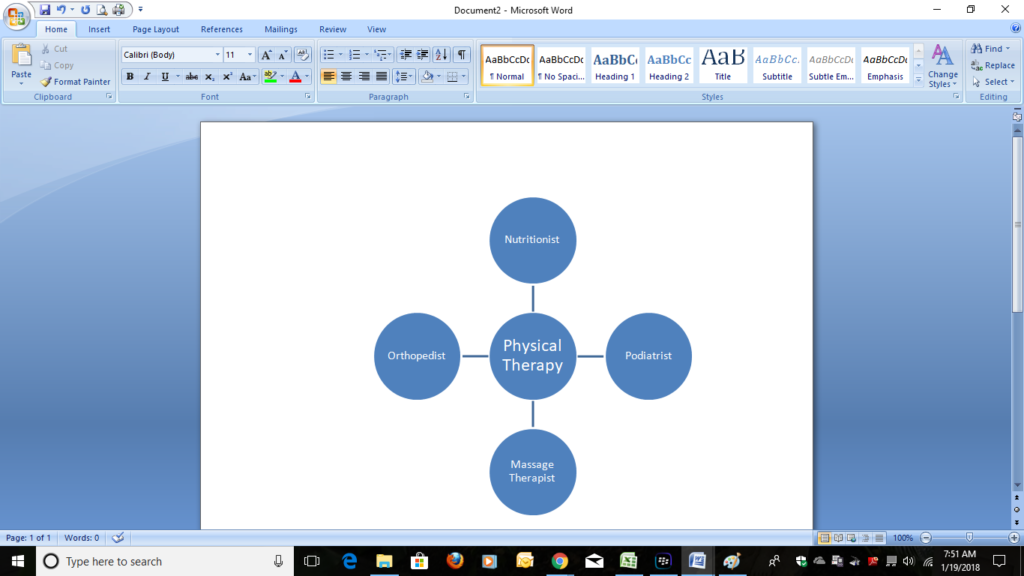
    Picture a PT wellness business as a wheel with spokes.

    At the center of the wheel is the actual business of doing physical therapy.

    The spokes are all the things that PTs need to be connected with in order to be a concierge wellness service, like orthopedists, podiatrists, nutritionists…and, yes, massage therapists.

    (Closest I could get to a wheel.)

    Come on, Mark, mainstream medicine doesn’t want us!

    Maybe not all mainstream medicine, but a wellness-based PT business does.

    For one, some of the their patients request us.

    Two, we’re in a position of “gate keeping”.

    What I mean by this is that some of the people who come to see us need physical therapy and ask us for recommendations.

    Mainstream Massage “Gate Keeping”

    Let’s say Ira injuries his shoulder. And he doesn’t want to go to the orthopedist for host of reasons, including he doesn’t think his shoulder warrants an X-ray or MRI, he doesn’t want to shell out a $60 copay and he doesn’t take pain killers or muscle relaxers.

    So who’s Ira going to call?

    Not ghost busters.

    He’s going to call the massage therapist that his best friend Trudy uses.

    You.

    Ira comes into your office. You do your eval, identify the pain area, follow your protocol and treat him.

    He doesn’t show improvement so you tell him it’s time to get a diagnosis and more help.

    By the way, Ira doesn’t need to go to an orthopedist for a diagnosis any longer.

    Doctors of PT can diagnose, too.

    Do you think PTs are starting to prick up their ears?

    I do.

    Soon it will become apparent to many PTs that we’re on the front-line of people who may need PT care.

    Our PT Wellness Experience

    Recently, my wife and I met with a wellness-based PT business.

    It was a very productive meeting.

    They wanted to understand what we do and how they could help us.

    Who would have ever thought, right?

    The most import thing about this meeting was that we’re all on the same page because we all believe that if we take care of the client/patient, business will take care of itself.

    Right on!

    This is the company we want to grow with.

    Getting Your Mainstream Massage Business Connected

    If you think like we do and want to connect with people in mainstream medicine who share your values, here’s what I would do:

    1. Initiate contact with PTs through your clients.

    Here’s how you do that: How to Advertise Better than Massage Envy.

    1. Pick the PT business that matches your client care and business philosophies.

    For us, a wellness-based PT business was the answer.

    1. Go above and beyond.

    Figure out a way that you can add value to their business. An example would be to offer free self-massage demos to their patients.

    As we forge ahead with this new PT relationship, I’ll let you know how it goes.

    And don’t forget, if you need more help, sign up for my email group.

    I’ll send you the latest information on making more money, building a massage business and staying out of pain.

    And it’s free.

    Sign up is below:-)

  • Massage Business 201: Test Your Limits

    Massage Business 201: Test Your Limits

    You’ll never grow your massage business to the size you want until you test your limits.

    Don’t get me wrong, I’m the first to admit that limits are important.

    If you work 7 days a week, you’ll burn out.

    But sometimes a “limit” doesn’t accurately reflect the moment when you should stop something, and sometimes a “limit” changes over time.

    That’s when limits are a problem.

    If you can’t grow your massage business, here’s a limit that could be stopping you: Your massage max.

    Whoa, buddy, hands off my massage max!

    I get it.

    You’re comfortable with your current massage max. If you stay within the limit, you won’t be in pain.

    But, assuming you can bring in clients on demand (I can help you with that here), what’s preventing you from growing your massage business?

    It’s the amount of massages you can do in day, week, month, or year.

    Increase your massage max and you increase your potential to make more money.

    And injury, Mark.

    Not necessarily.

    Here’s how you can safely challenge your massage max limit and grow your massage business.

    Step #1: Think in terms of “massage max for the week”.

    Yes, I did say “week” instead of “day”.

    Why?

    Because, from a practical standpoint, a week makes more sense than a day.

    If you did 8 hours of massage one day, but need to rest for four days before you can do more massage, it really doesn’t help you to increase your income and grow your massage business.

    Step #2: Take your current, weekly massage max and add 3 to 5 more hours of massage to it.

    Adding three to five more massages a week is only a suggestion. It’s how I started testing my weekly max. You may want to start more conservatively with 1 or 2. The point is to test your current limit by exceeding it.

    Step #3: Open up as many days of the week as you can for massage.

    If you only work 4 days a week now, allow yourself to spill over into the other days of the week.

    Don’t panic.

    This is a temporary move. It will give your body time to adjust to the increased workload.

    Step #4: If you feel bodily discomfort make changes to your massage.

    If you feel pain when doing the extra massage, pay attention to your techniques and body mechanics.

    Here are some basic things you can do to help yourself out: Mix up your techniques, become ambidextrous, lean to generate pressure and/or combine body parts to deliver pressure.

    This article provides more help: How to Eliminate Pain When Massaging: Adaptation.

    Step #5: Evaluate

    If you’re in pain when testing your max and you can’t eliminate the pain, then your current massage max is correct.

    Go back to it. No harm done.

    If you’re not in pain when adding in more massages, go to step #6.

    Step#6: Take your new, weekly massage max and fit it into your desired work-week cycle.

    Let’s say your old, weekly limit was 20 hours in 5 days.

    During your massage max testing you added 3 hours per week, but also added another work day. So, you were doing 23 hours in 6 days.

    Now, it’s time to fit your 23 hours into 5 days.

    Give yourself a month or so to make the transition.

    Grow Your Massage Business: “Limit Testing” Bonus

    There’s an extra benefit when you test your massage max limit. You begin to create a habit of testing limits. And when you have that testing mindset, your massage business will grow.

    Here’s an example of how my business grows through testing limits.

    One busy week I was booked to my weekly max early on.  When more people called to come in I decided to challenge my massage max rather than schedule them for the following week.

    That’s when I found out that I could do more clients in a week than I thought could.

    Great! I can see more clients, but my average (limit) for bringing in new clients without paid advertising was 3 to 4 new clients a month.

    Hmm…could I bring in more than 3 to 4 new clients a month without paid advertising?

    Guess what got tested next?

    You got it: My idea (limit) that I could only bring in 3 to 4 new clients a month.

    Testing a Limit Pep Talk

    Testing a limit is a simple idea. But there are a lot of emotional land mines around the thought of putting yourself in a position of temporary discomfort.

    The thing is, the discomfort will go away.

    But the rewards will stay:-)

    Hey, if you’re looking for more discomfort…I mean info about building a massage practice, making more money and staying out of pain, join my email group.

    I’ll send you my latest everything.

    Better yet, tell me what you need help with and I’ll send that info your way. My email group is  free and you can unsubscribe anytime.

    Sign up below:-)


  • How to Get Good at Pain Relief Massage

    How to Get Good at Pain Relief Massage

    I don’t like hype, but what I’m about to say is gonna sound hype-y. Ready?  Want to be a hit with pain relief massage? Then get good at using moderate pressure.

    I say this for two reasons: my experience and a research study.

    Let’s start with the study.

    Massage Pressure and Pain Relief

    In 2010, Tiffany Field, PhD, director of the Touch Research Institute at the University of Miami School of Medicine, published a  study about massage pressure and how it relates to relieving pain in the International Journal of Neuroscience.

    Field had this to say about the study: “The critical thing is using moderate pressure. Light pressure, just touching the surface of the skin or brushing it superficially, is not getting at those pressure receptors. Light pressure can be stimulating, not relaxing.” (Source: Arthritis Foundation)

    The heck with light pressure, Mark, what about deep pressure? I have clients that I need to pound with everything I got.

    Me, too! (By the way, here’s how to pound clients without hurting yourself.)

    That said, I believe that the deep pressure clients are not the norm.

    Why?

    For one, the client who needs deep pressure for pain relief will stand out in your memory (then get labeled as the norm) because he’s harder to work on than everyone else.

    And two, if you get a reputation for deep pressure, you’re going to attract deep pressure clients. And suddenly it’ll seem like everyone who wants pain relief also wants deep pressure.

    Moderate Pressure

    So let’s talk about moderate pressure. What is it?

    Well, I can tell you what it’s not. Moderate pressure is not when you pet or bruise the client—the only two types of pressure I knew how to do when I first started massage.

    “Hey, Mark, can you go deeper?”

    Picture source: birchbox.com

    “Sure!” I’d say as I rolled up my sleeves, then pressed with my forearm until the client couldn’t breathe.

    Neuromuscular Pain Scale

    I did improve over time, but things didn’t really start to click until I studied neuromuscular therapy (NMT). With my NMT training, I learned how to communicate with the client via a pain scale.

    Here’s how it works. Imagine a pain scale from 1 to 10. One means a little pain, ten means a lot of pain.

    For pain relief, the goal was to operate in a 4 to 5. So, the MT would press a tight or tender area until she elicited a 4 or 5 from her client. Then she’d hold the spot for less than 10 seconds.

    If the pain lessened during that time, great, she successfully reduced the pain. If not, she’d revisit the spot a little later, but with less pressure.

    I demonstrate how to do that in this video.

    Moderate Pressure = Firm Pressure

    What I like about the pain scale is that it’s based on the client’s experience of pain.

    So, if Aria’s 5 is Benjamin’s 10, no biggie. Since the value of each number on the scale (1-10) is determined by each client’s experience, I would never be in danger of making Benjamin jump off the table by using Aria’s idea of moderate pressure on him.

    As time went on, I started to see that not only did most of my pain-relief clients want moderate pressure, so did my relaxation clients.

    But my relaxation clients had a different name for moderate pressure. They called it firm pressure.

    Tying everything together, in general, this what moderate pressure looks like in my mind: moderate = firm = 4 or 5 on the pain scale.

    How to Nail Moderate/Medium Pressure

    If you want to perfect moderate pressure, do this:

    1. Use the pain scale technique.

    If you’re worried about the flow of the massage, just use the pain scale technique once at the beginning of the massage. That way you won’t interrupt flow and you’ll get enough info to calibrate your medium pressure for the rest of the massage.

    1. Ask for feedback.

    I would ask for feedback with non-paying customers.

    1. Get a massage.

    A great time to work on your pressure delivery is during a workshop or CE class. During the exchange, it’s easier to picture yourself applying the same pressure as your partner if you’re both doing the same technique.

    Feeling Competent with Pain Relief Massage

    You’re going to feel confident with pain relief massage once you become competent with moderate pressure.

    It’s not hard to do, you just need to get your reps in.

    Refer back to this video to get the pressure scale technique down.

    And if you’re thinking about getting really serious with pain relief massage, then check out this article: Build a Practice with Pain Relief Massage.

    If you want more info about pain relief massage and (fill in the blank), join my email group. I’ll let you know when I have new tutorials, articles and videos out.

    My email group is free and you can unsubscribe anytime.

    Sign up here:-)