As a neuromuscular massage therapist, I would do anything to reach a muscle attachment—even if it meant sacrificing a thumb or a finger. But after many years of “going for attachments”, I started to run out of thumbs and fingers.
For the next decade I worked on figuring out how I could massage hard-to-reach attachments without killing myself.
Here’s my general formula. Later in this article, I’ll show you how I apply this formula to hamstring attachments.
- Don’t glide up to the attachments.
We are gliding machines. Gliding is relaxing. Customers love it and gliding provides a lot of continuity to a massage. However, gliding, especially without moving your feet, can put you in a bad position to access a muscle attachment.
[bctt tweet=”We, MTs, are gliding machines, but gliding could hurt us when working attachments. ” username=”Mark LiskeyMarkLiskey”]
I’ve found that it’s better to get over an attachment and then drop down. In, I Broke a Massage Rule and I Like It!, I explain how to pause, keep your place and reposition your feet without making the stroke feel interrupted.
- Use a variety of tools—thumbs, knuckles and fingers.
If you’re only using your thumbs to work muscle attachments, you’re going to burn them out. In this video, I demonstrate how to use thumbs, fingers, fists and knuckles in a variety of ways: Tools and Power Tools video.
- Use non-dominant hand.
If you’re go-to tool is your right thumb, start using your left thumb more. It will feel awkward at first, but here’s a quick way to get started.
For the next 50 massages, every time you use a dominant-side tool for attachment work (e.g. right thumb), use a non-dominant-side tool (left thumb), too.
Make it easy when you first start by only placing a non-dominant-side tool down for 1 or 2 seconds. Gradually add more time. As you add time, you’ll naturally explore and get better with the non-dominant-side tool.
After 50 massages, you’ll be on your way to creating a habit of using a non-dominant-side tool for attachment work.
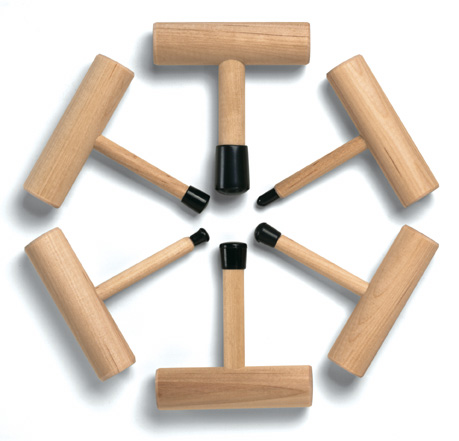
- Use a hand-held massage tool.
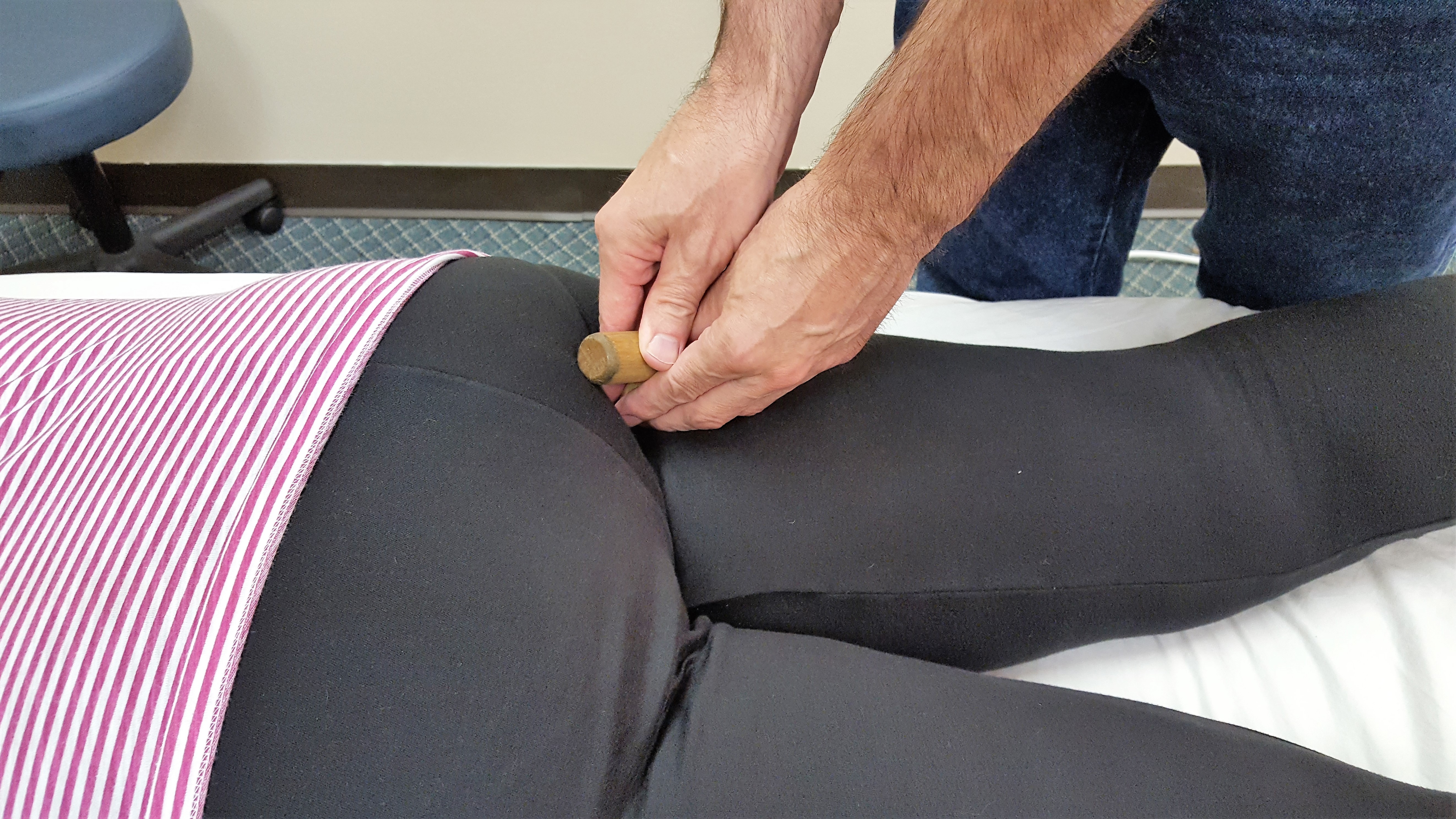
This is my favorite. Why? Because, to some extent, I can give all my fingers a break when I’m using a hand-held tool. Getting started using a hand-held tool is like getting started using your non-dominant side: you need to create a habit of reaching for the massage tool.
So for 50 massages use a massage tool every time you work an attachment—even if it’s just for a second. For a primer on using hand-held massage tools, check out this video: Save Your Hands Using a T-bar/L-bar video.
Going for Hammy Attachments
Here’s how I would use these 4 suggestions to work hammy attachments.
First, I’d relax the client with gliding strokes on the hamstrings. Then when I was ready to work the attachments, I’d position myself over the ischium.
Next, I’d explore the attachment area with my knuckles and thumbs to pinpoint the areas I want to work.
Then I would use my T-bar and L-bar to precisely work the areas that my fingers have identified as “in need of work”. I’d also change my body position so that I can approach the attachment areas from different angles.
I show you what I mean in this video: How to Work Muscle Attachments Without Hurting Your Hands video.
Cut to the Chase
Here are the Cliff’s Notes to working hard-to-reach attachments.
- Position your body over the attachment and then begin.
- Use a variety of tools—fingers, knuckles, fists.
- Incorporate your non-dominant side.
- Use a hand-held massage tool.
If you only have time to check out one video, this one will serve you best: How to Work Muscle Attachments Without Hurting Your Hands video. Let me know how it goes!
My Best Massage Tools Online CEU Course
A while back I almost quit massage because of pain and injuries.
Then I spent a year revamping my massage to see if I could massage pain-free. Massage tools help saved my hands and upper-body.
Most massage therapists shy away from using massage tools because, less face it, it’s hard to be sensitive with a piece of plastic or a hunk of wood–that is unless you have work-arounds.
I use massage tools in every massage from focused pressure work to total relaxation. I can do this because the work-arounds work and are easy to implement.
So, if you’re ready to take the plunge and delve into massage tools, I have an online, home-study course that will make your learning life easier.
Here it is: How to Use Massage Tools (Fearlessly and Effectively).