I used to think pain was part of the job.
I’d finish a day of deep tissue work with my wrists barking, my shoulders stiff, and my thumbs barely able to hold a pen. I told myself it was just the price of helping people.
The problem is, that price adds up.
Pain isn’t a badge of honor. It’s a warning sign. If your hands hurt, your body’s telling you something. And if you ignore it long enough, it’ll make sure you listen—by cutting your career short.
You can do excellent massage work—deep, effective, therapeutic work—without hurting yourself. But you’ve got to unlearn some things first.
1. You have to stop muscling through sessions.
This is the big one. Most therapists rely too much on their hands, arms, and shoulders to generate pressure. That leads to burnout fast. Muscling through every stroke might get you through the session—but it won’t get you through a long career. You shouldn’t be using your strength to deliver massage. You should be using your structure.
2. You have to rethink what “deep” really means.
Clients say they want deep tissue, but what they really want is results. You can create depth through slower pacing, better body mechanics, and focused attention—not just by pressing harder. Real depth isn’t about pressure. It’s about intention, engagement, and staying connected to the tissue without overloading your own.
3. You have to start using your body the way it was built to move—by leaning, not pushing.
Leaning lets your body weight and gravity do the work. It protects your wrists, thumbs, shoulders, and neck.
When you lean in from your core—not just from your arms—you create pressure with less effort. You stay relaxed. Your strokes become smoother and more sustainable. Over time, you’ll be shocked by how much you can get done with less strain.
These days, I do most of my work seated. I’m not exaggerating—my colleagues joke that I sit for 80% of every massage. And they’re not wrong. I lean, I work close, I let my body weight do the job instead of my hands.
In essence, I’m efficient and effective—and I’m not in pain at the end of the day.
Pain-free massage is possible because pressure doesn’t have to come from shear muscular force. It can come from smart mechanics. From gravity, body weight and alignment.
When you stop pushing and start leaning, when you stop working against your body and start working with it—you protect your hands and your career.
And that’s what we’re going to build together here.
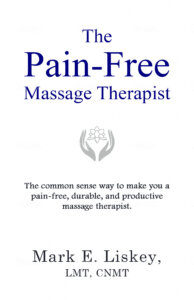
More body mechanics information at www.painfreemassagetherapist.com