Category: Start/Grow Massage Business (0 – 30K)

  • How to Polish the Chrome on Your Massage: Transitions

    How to Polish the Chrome on Your Massage: Transitions

    A while back, I trained MTs to do hotel massage. Some were fresh out of massage school. I used to get overwhelmed trying to tweak their massages, but eventually I discovered something important: If I could help them master transitions, big things, like flow and maintaining consistent pressure, would fall into place.

    Hotel Massage Training

    Hotel massage comes with extra pressure. For example, during a hotel massage the MT has to create a “massage space” before the client even gets on the table.

    So when I was training MTs for hotel massage, I wanted to take some of the pressure off them by thoroughly preparing them. One way to prepare them was to make sure that they could confidently handle the number one massage request: a relaxation massage with some focus work.

    Relaxation massage with some focus work was of special interest to me because I really struggled with it for the first 5 years of my massage career. I wish I had understood good transitions back then.

    [bctt tweet=”Guinness Book of Massage Records: Me–took the longest time to do a decent massage.” username=”Mark LiskeyMarkLiskey”]

    Transitions

    I break down transitions into 2 categories: location and body parts.

    A location transition is when you’ve been working in one area and then move to another area.

    A body part transition occurs when you change how you’re applying pressure. For example, going from fist to thumbs or palms to elbows would be body part transitions.

    Location Transition

    Good location transitioning, moving from one body area to another area, is not necessarily straightforward. There are 3 things that a client could experience during a location transition that would make the massage feel less relaxing:

    1. Varying pressures.

    This happens when you start moving and your pressure changes.

    1. The massage feels rushed.

    You don’t think you’re going to get everything done so you start rushing.

    1. Massage therapist seems disconnected.

    If you’re not searching for things (e.g., tight areas) underneath your fingers (or whatever body part you’re using to massage with), you have a greater chance of going off into la-la land. When that happens the client may feel like you’re just going through the motions.

    Consistent Pressure is Relaxing

    To maintain consistent pressure move you feet. Moving your feet allows you to position your body so that you can easily apply pressure.

    If you’re positioned in front of the client’s head and you’re reaching to work the lumbar area, you’re overextended. In this position, it’s difficult to maintain consistent pressure. However, if you work from the side of the table, near the head, and move your feet (location transition) to get to the lumbar area, you’ll be able to easily maintain consistent pressure.

    In this video I show you what I mean: Moving Your Feet Video.

    Quality Over Quantity

    When I try to slow MTs down, I have them do the One Minute drill. Here’s how the One Minute drill works: The MT has one minute to massage a foot, calf and upper leg. New MTs often panic when I say go, and they rush to get as much done as possible.

    When I do the One Minute drill on the MT trainee, I dial my stroke pace down and I go slower than I normally would. Why? Because for relaxation, it’s been my experience that one slow relaxing stroke blows away ten fast strokes. During the exercise, I may only get a couple of strokes in from foot to ischium—but you better believe those strokes are relaxing.

    Search to Stay Engaged

    Losing focus with your fingers can also happen when making a location transition. Again, the thought of having to get somewhere—I need to get to the traps to do the detail work—sometimes overrides the importance of keeping the stroke relaxing.

    But when your fingers (or whichever body part you’re using to do the massage) are engaged you won’t lose focus and the client will probably relax even more. For one, engaged fingers are sensors and will warn you when a pressure adjustment is needed. Also, engaged fingers demonstrate that you care about what you’re doing. This helps build therapeutic rapport which can further help the client relax.

    Body Part Transitions

    Body part transitions, changing how you apply pressure, like palms to thumbs, can seem intimidating, especially when it’s done in the middle of the stroke. And sometimes an MT will overuse a body part because he’s simply not comfortable transitioning to another body part.

    But transitioning between body parts is not difficult, if you keep this in mind:

    Keep body part #1 on the client while you’re putting body part #2 on the client.

    For example, if you’re using your right thumb to glide and want to switch to your left, keep your right thumb down until your left thumb is on the client as well. When both body parts are down, you can calibrate pressure–make sure your right and left thumbs are exerting the same pressure. You will also maintain constant contact with your client by always having a hand on the client. Constant contact is relaxing and reassuring.

    For deep pressure, combining body parts (e.g. two fists side-by-side) will save your hands. Switching between combined body parts is no different than switching between single body parts–you just need to keep a hand, fist or forearm on the client at all times.

    Here’s I how do it: How to Combine Body Parts to Deliver Pressure video. (In the video I refer to combined body parts as “power tools”. I no longer use the term power tools because it got confusing when I would talk about massage tools and power tools at the same time.)

    In a Nutshell

    Here are my 3 top picks for doing solid transitions:

    1. Move your feet to put yourself in a position to exert even pressure while transitioning.
    2. Keep body part #1 on the client while putting body part #2 on the client in order to maintain constant contact and even pressure when making a tool transition.
    3. Slow down—even when you’re out of time. One good, slow stroke is better than 10 rushed strokes.

    If you want to see transitions in video form, here they are:

    1. Moving Your Feet Video 
    2. How to Combine Body Parts to Deliver Pressure Video

    And if you’re new to massage, you may want to check out New Therapists Can Be Good Therapists. I firmly believe you can gain years of experience in a short time if you practice the right stuff.

    Join My Email Group

    Want to get my latest info about how to do a great massage, make more money and grow a massage business while staying pain-free in the massage room?

    Sign up for my email group below. It’s free:-)
  • Tension Headaches: A Muscle Overlooked

    Tension Headaches: A Muscle Overlooked

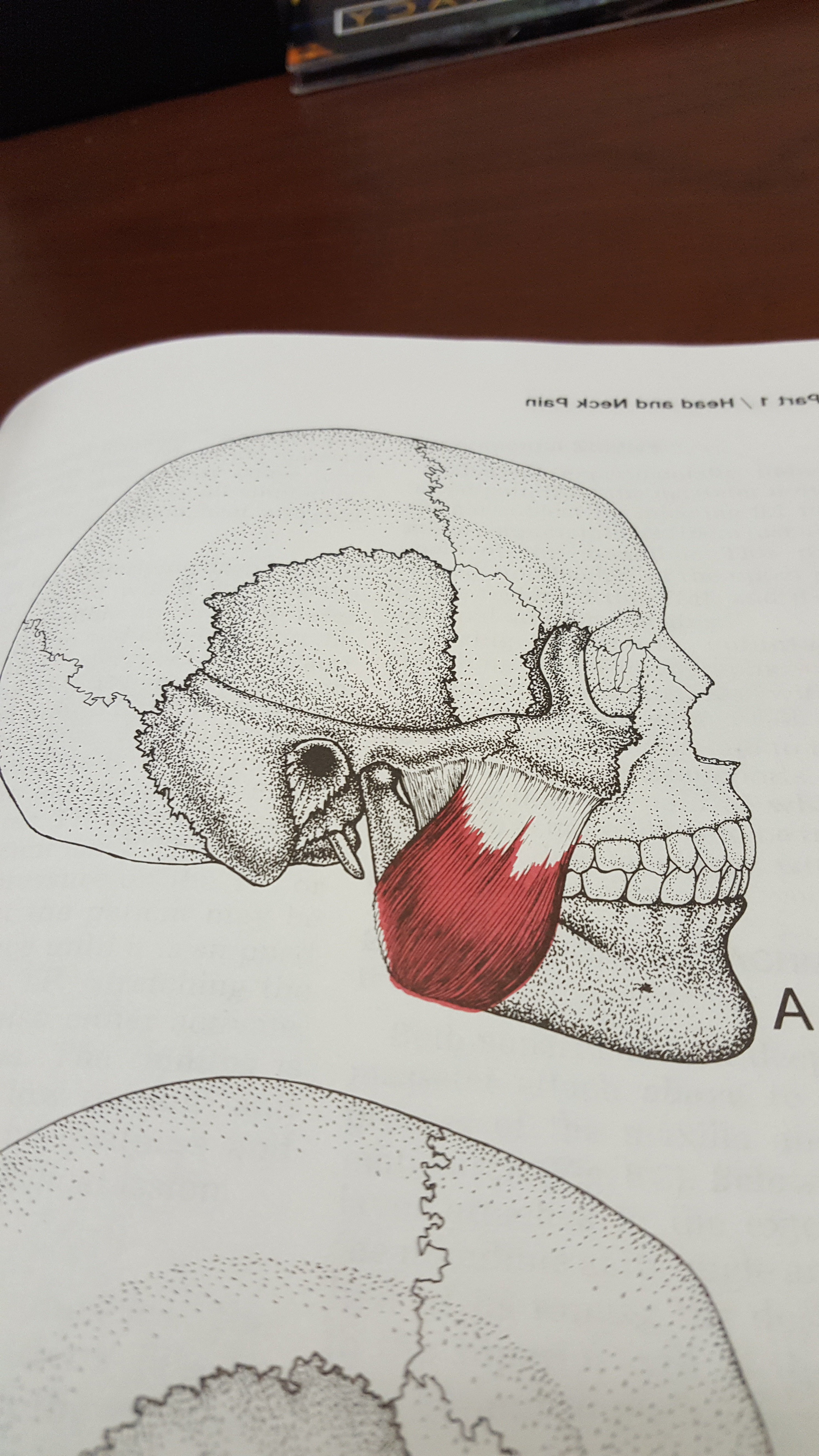
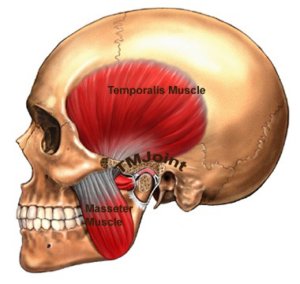
    Not one of my clients would ever pass up on suboccipital work for a tension headache.  But as good as suboccipital work can be for relieving headache symptoms, there’s evidence to suggest that jaw muscles could also be contributing to tension headaches. And one in particular—the masseter—is easy to overlook.

    Why Jaw Muscles?

    Jaw muscles may be involved in tension headaches via trigger points. In general, a trigger point can be looked at as a tender, soft or tight area within a muscle that can produce pain elsewhere.

    Why would jaw muscles have trigger points? Science writer, Paul Ingraham speculates that dysfunction could be one reason.

    Partial Antagonist

    The suboccipitals along with other neck muscles help balance the head on the spine. Interestingly, the jaw muscles act as partial antagonists to the suboccipitals.

    Really? But they’re not connected to the spine so how can they act against the suboccipitals to balance the head?

    According to Ingraham, it doesn’t matter if they are connected: “…muscle studies have shown that the jaw muscles behave much like they would in a more normal push-pull relationship with the suboccipitals. They function together and dysfunction together.” (Quote taken from PainScience.Com)

    Dysfunction stresses muscles, and it’s reasonable to assume that trigger points could develop as a result of the added stress to the muscles.

    It’s also worth noting that the masseter is a muscle used for grinding and chewing. The combination of dysfunction and muscle overuse could ramp up muscle tension even more.

    jaw-muscles

    Spread the Rub

    Even knowing this (thank you Paul Ingraham), I sometimes still forget to work the masseter—mainly because it’s not right next to the headache area.

    Meanwhile, muscles that are close to or are part of the area where the headache is occurring, like the temporalis, get lots of my rubbing. That’s why I have to constantly remind myself to spread the rub. Sorry.

    My Approach

    I don’t believe there’s one pain-relief massage formula for tension headaches. Here’s one that works for me:

    Step 1: Go to the headache pain.

    I always go to the headache pain area first for two reasons. One, I want the client to know that I’ve heard her by addressing her actual headache area. When I do this, I’m building  therapeutic rapport.

    Two, if I can desensitize (reduce the pain in) the headache area, my client will start to reap the benefits of a calmer central nervous system.

    By the way, to understand if I’m effectively reducing a client’s pain,  I use a pain scale. Here’s the video for the pain scale approach: Pain Relief Massage: How to Find the Right Pressure Video.

    Step 2: Work any area the client associates with the headache.

    If the person has pain somewhere else (neck or jaw) before or at the same time the headache actually occurred, I work that area using the pain scale system.

    By doing so, I further connect with my client because I again show her that I’m listening to her. Secondly, I can start to desensitize a secondary pain area and continue to evoke a parasympathetic response.

    Step 3: Get that masseter before you forget!

    Finally, I cover the other neck and jaw muscles that weren’t covered in steps 1 and 2–like the masseter!

    Here are my “at the bare minimum have to get muscles” on my tension headache hit list:

    Temporalis

    Masseter

    Suboccipitals

    Jamaar’s Headache

    Here’s what it looks like in action. Jamaar came into my office complaining of headache in the front and sides of his head. As we continued to talk, he grabbed the base of his skull and said that he thought it started there.

    When I got him on the table, the first thing I did was to reduce the pain in his temporalis and frontalis muscles (the headache pain). Next, I reduced the pain in his suboccipitals (the area he grabbed and associated with his headache pain).

    Lastly, I worked the remaining muscles that could be contributing to his headache pain, like the masseter.

    Once all the work was done, I finished up with a scalp massage. Hmm…that sounds pretty good. Sign me up!

    Quick Glance

    Tension headaches are in our pain-reduction wheelhouse. I’ve found these keys to be helpful when treating clients with tension headaches:

    1. Communicate with the client to gauge if you’re helping her. I use a pain scale system: Pain Relief Massage: How to Find the Right Pressure Video.
    2. Go to the headache pain.
    3. Work any pain area the client associates with the headache.
    4. If you haven’t already gotten them, go for the temporalis, masseter, and suboccipitals.

    Join My Email Group

    Want to get my latest info about pain-relief massage, how to make more money and how to grow a massage business while staying pain-free in the massage room?

    Sign up for my email group below. It’s free:-)
  • How to Tell your Client that Her Doctor is Wrong

    How to Tell your Client that Her Doctor is Wrong

    As you’re building your massage practice, you don’t want to burn bridges—with clients, referral sources and other health care professionals. But there may be a time when acting in your client’s best interest means that you must speak up.

    Here’s how I recently got my point across to my client without throwing the doctor under the bus.

    Lucy is a Good Runner

    Lucy was training for a marathon, and her running coach, Ian, sent her to me. Lucy had been diagnosed with plantar fasciitis by her podiatrist who specialized in running injuries. An X-ray didn’t reveal a bone issue.

    Before seeing me, the podiatrist had given Lucy a cortisone shot and treated with her shock wave therapy (sonic waves directed at a soft tissue area). Lucy was also seeing a chiropractor.

    Ian’s Concern

    Ian had seen a lot of injuries in his decades of training runners and was concerned about how long it was taking Lucy to heal. In addition, she was experiencing a new pain across the top of her foot. Nevertheless, the podiatrist had given the Lucy the green light to continue training for her marathon.

    Even with the green light to run, Ian had modified Lucy’s training to pool work and the stationary bike. He was also concerned that Lucy was being over-treated with cortisone, shock wave therapy and adjustments.

    I Work on Lucy

    When I started working on Lucy’s foot, I discovered that she had a high pain tolerance. So we used an adjusted pain scale to make sure that I wasn’t applying too much pressure. After the massage, she said her foot felt better. I told her that if it were my foot and it didn’t improve in the next couple of days, I would consider getting more diagnostics done.

    The next day she ran 6 miles. It was the first time she ran in a week or so.

    She reported to me that her plantar fasciitis felt a lot better during the run, but the pain across her foot was still there.

    It Gets Worse

    Over the next 2 weeks, Lucy continued to run and started seeing a chiropractor who began treating her with more shock wave therapy. Then on one training day, Ian noticed something different about Lucy’s foot. It was swollen across the top of her foot. With Lucy’s permission, he sent me a pic of her foot.

    Battle Lines are Drawn

    Well, it looked like a no brainer to me—time to get another X-ray, then an MRI. But WAIT, when Lucy asked the podiatrist and chiropractor about the swelling, they both said that they didn’t think she had a fracture and didn’t need an MRI.

    The battle lines were drawn. To get my point across I needed to make sure Lucy understood that her condition had gotten worse under the current treatment plan even though she may not have noticed because of her high pain tolerance and that an MRI was more definitive than an educated guess.

    Here’s what I did to get my opinion across without throwing anybody under the bus.

    1. Provide information that supported my point.

    Since Ian was the one who sent me the pic, I texted him links to Youtube videos that talked about metatarsal fractures. In one video, the podiatrist explained how easily a metatarsal fracture can be misdiagnosed. In another one, the podiatrist showed a manual (and potentially painful) test for a metatarsal fracture—something I was positive that no one had done with Lucy.

    1. Stay in touch.

    After I sent the text to Ian I was going to give the situation 24 hours before I followed up. But Ian had shared the videos with Lucy and shortly after I had texted Ian, Lucy texted me. She had decided to go for further testing.

    Then she texted me when the X-ray came back negative. I texted back: “Great! I hope that the podiatrist and chiropractor are right.”

    When the MRI came back, it turned out that the chiropractor and podiatrist were right: Lucy didn’t have a fractured metatarsal.

    She had fractures in THREE metatarsals! And there was another metatarsal that had a recently healed fracture.

    1. Shut up.

    Yes, I wanted to gloat. But I think gloating is connected to the gambler’s memory where you remember your wins, but not your losses. And if I really thought about it, I had gotten plenty wrong.

    The most important thing was that the guessing was over. Lucy now knew what was wrong with her foot and she could get started with an appropriate treatment.

    Getting Along without Going Along

    For the most part, the Getting Along without Going Along formula has worked for me when it comes to letting the client know my opinion without jeopardizing the delicate balance between the client, myself, the coach and other health professionals.

    It has three parts: 1. support your point in a professional way, 2. stay in touch with the client, and 3. shut up no matter the outcome.

    For other ways that I help my clients out, check out I Saved My Client $5000.

    Need  More Help?

    Sign up for my email group and get my latest info. It’s free and you can unsubscribe whenever you want:-)


  • How to Crush “Getting More Clients”

    How to Crush “Getting More Clients”

    If you’re waiting to feel like a pro before you open your massage practice, you’re wasting precious time. Instead of waiting, think about doing the opposite: put yourself out there.

    Putting yourself out there means that no matter how uncomfortable you feel and/or how low your confidence is, you are in front of the people who can refer clients to you.

    But I’m Weak

    This may seem counter-intuitive— showing the world your massage talent when your confidence is shaky—until you view confidence as a moving target.

    When a client sings your praises you feel pretty good, right?  But a couple of days in a row with no work and you doubt if you can even spread cream.

    The truth is that everyone waxes and wanes with confidence. When you’re waning, here’s a technique to help you along: How to Stop Feeling Like an Impostor.

    Holes In My Massage

    But what if your lack of confidence is partially due to the fact that you have holes in your massage? Great! If you’re putting yourself out there, you’ll now have an immediate need to plug the holes.

    Early on in my career, I wanted to be a pro with pain and muscular conditions. However, my anatomy was weak. One day a chiropractor called and asked me to fill in for a sick MT. That quickly lead to a full-time job and suddenly body parts were flying at me. I needed to get up to speed on anatomy fast!

    So before my shift, I’d call the chiropractor to get my client list (and their conditions) for the day. Then I’d  study the anatomy that pertained to each case before I went in. It worked.

    The reality is that most holes that need to be plugged are a lot smaller than we think.  To quickly patch holes when doing relaxation and pain relief massage, check out my posts New Therapists Can Be Good Therapists and Competing with Bob for Clients.

    Putting Yourself Out There

    There are a lot of ways to put yourself out there and get in front of referral sources. I like this 4 step process. It reduces the scariness by easing me into the process.

    Step #1:  Ask Your Current Clients

    Approach your regular clients for referrals, but instead of simply asking them for referrals, give them an incentive to refer to you, like a free massage for each referral. If you have an email list, you can announce your referral program to everyone all at once. Check out How to Email in More Clients for help.

    Step #2:  Email/Call Other Health Professionals

    Next, do a Google search for local businesses with referral potential. Look for businesses that do NOT have massage as part of their business. My list includes: chiropractors, pain management doctors, personal trainers, individual physical therapists, yoga and Pilates studios, country clubs (tennis and golf), cycling shops and running stores.

    Once you have your list, it’s time to call or email to introduce yourself and make a special offer. As a special offer, free demo massages have worked spectacularly for me.  Here’s a demo-massage email [download id=”688″] that I sent to personal training studios. You’ll need to modify it, but it shows you the main points to get across.

    In the email you’ll notice that I offer the demo massages to the business owner, her employees and her clients. In fact, I give the business owner and her employees each 60 minutes of free massage and her customers/clients 15 to 20 minutes.

    My first goal is to win over the business owner and her employees. If I do, they will champion my service to their customers/clients.

    Step #3: Special Intro Offer

    After the demo-massage customer gets off my table, I tell him about our special intro rate. (Our special intro rate is $45.) If the person liked the demo massage, the special intro rate is hard to pass up. Keep your schedule nearby in case someone wants to make an appointment right then. Seriously.

    Step #4: Ask the New Clients from the Demo Massages

    The people from the demo massages who are now your clients are potential referral sources, too. If you have a referral program, let them know about it. If a demo massage client works at or owns a business that’s a good fit with massage, offer to do demo massages there.

    Putting Yourself Out There Is Currency

    It’s not an overstatement to say: “Putting yourself out there” is currency that you spend to build a practice.

    And you don’t need to be an extrovert to put yourself out there. Most of us aren’t. You just need to follow a plan:

    1. Give your current clients a referral incentive.
    2. Email/call businesses and offer to do demo massages.
    3. Tell the demo-massage customers about your special intro rate.
    4. Offer demo massages to new clients who work for or own a business that’s a good fit with massage.

    Free Course to Jumpstart Your Massage Business

    If you’re just starting a massage business and aren’t making 30K a year working for yourself take this free course: Jumpstart.

    If you’re trying to take a meh massage business and make it a dream massage business, go here: Accelerator.