Category: Uncategorized

  • N95 Masks for Massage Therapists

    N95 Masks for Massage Therapists

    Should you wear a N95 mask when doing a massage during Covid-19?

    Yes.

    Why?

    COVID-19 is an airborne illness. The first place to stop COVID-19 from enter your lungs and going into your bloodstream are at the holes where air comes in, nostrils and mouth.

    A mask keeps the COVID -19 virus out and if you have it, it can help keep the COVID-19 virus in.

    • If N95s are out of your price range or you’re having a hard time finding them, skip to the bottom of this article for some alternatives.

    The Research Behind Masks

    Recently the CDC stated the importance of a mask in protecting the wearer.  And there has been compelling examples from the beginning of this pandemic that masks protect wearers like this one: In July of 2020 two hair stylists in Sprinfield, Missouri tested positive for Covid-19 after interacting with 139 clients and 6 coworkers.

    Here’s the important thing: No one they interacted with was known to get Covid-19.

    How did that happen?

    Most experts think it was because both the hair stylists, fellow employees and customers wore masks.

    Studies bolstered this conclusion.

    Can you say mask up?

    But not with any mask in the massage room. Mask up with a good mask.

    The N95 Advantage

    According to a Duke study, the best mask to protect the user and the people around the user is the N95.
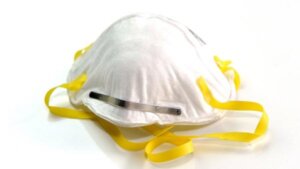
    The N95 is a “respiratory protective device designed to achieve a very close facial fit and very efficient filtration of airborne particles.” (Source: FDA).

    In fact the N95 is so good that it filters out 95% of airborne particles; hence the numerical part of the name—95.

    Think about that for a minute.

    Forty-ish percent of people infected with Covid-19 are asymptomatic; so they don’t know they have Covid.

    What’s the likelihood that someone climbs on your table with Covid, has no symptoms and you massage him?

    Well, without calling in a statistician I think we can all agree that the likelihood increases as the infection rate increases. And right now in the US the infection rate is off the charts.

    Now imagine you’re massaging that person in your massage room for a 90 minute massage. That’s a lot of time to be in close contact with someone who’s infectious, right?

    Wouldn’t you want a mask that leads the pack in filtering out the airborne particles?

    Interestingly, I had a chance to test the N95 out in this exact scenario.

    Manut is my Friday, 8 am, 90 minute weekly massage. Covid-19 cases had been swirling around him.

    His girlfriend’s son had been diagnosed with COVID-19 weeks prior to him getting on my table as a pre-symptomatic (not exhibiting symptoms yet; the next day he did), Covid-19 carrier. At the time when he was potentially exposed to COVID-19 Manut did a 14 day quarantine. After the quarantine Manut came back to see me for his Friday weekly massage.

    Then on a Wednesday he texted me: “Sorry, I’m going to need to cancel. I tested positive for Covid.”

    Huh?

    I knew that this was coming at some point, and I had been preparing myself for the treacherous fall/winter surge, but it was still unsettling. No work (because I would need to quarantine) AND I might be infected AND I may have re-infected my wife, Lisa, who is a long-hauler.

    Shit.

    I had spent 90 minutes in the massage room with Manut at close quarters BUT I had on a N95.

    My N95 was on the saving-my-ass side.

    Long story short, I tested negative for COVID-19 and never had symptoms during my 14 day quarantine, nor did Lisa.

    PPE -1, Infection-0.

    I say PPE because I wore a face shield as well as a N95. And I had good air exchange in my room. Read more about what I do to stay COVID-safe in the massage room here.

    If you’re thinking how do you know that it was the N95 that worked, I’m thinking you’re right. I don’t know. But I do know this: All the measures I took have solid research merit. And since there’s no time for science to figure out which one helps the most, I did them all and I didn’t get infected, which brings me back to my best bud, my N95.

    My N95 Mask Procedure

    In the massage room I wear a N95 with a disposable medical mask on the outside of the N95. After each massage I change out the disposable medical mask, but keep the same N95 on through the course of the day.

    I do this to keep the N95 as “clean” as possible because I don’t throw out the N95 after one use. Instead, I reuse it by rotating it back into my PPE gear after at least a three day air-out period.

    During times when the infection and/or positivity rate is not soaring I have three to six N95s I rotate out throughout the week, depending on how many days I’m working.

    During high infection and positivity rate times I rotate 2 or 3 throughout a workday to keep them as fresh as possible. That means I need around 10-ish N95s in my rotation cycle.

    Taking Care of Your N95

    I air-out each N95 that I’m going to reuse in a paper bag instead of a plastic bag to cut down on moisture which could be a breeding ground for bacteria.

    Each bag is labeled a day of the week. When the used N95 goes into the appropriate day bag, I then write the date on the bag so that I can keep track of how many times I used that particular N-95.

    I give at least 4 days for any virus on the mask to die. These experts recommend 3 – 4 days of airing out.

    Getting a Good Seal

    The N95 is going to be less effective keeping potential COVID out if you don’t have a good seal around your face. The challenge with getting a good seal is that you’re going to have to do the best you can without having special equipment.

    So, let’s get that seal right.

    The N95 has two head bands. The lower one goes around the base of your skull. The upper one should ride high on the back of your skull.

    In a minute I have a video for you showing you how to put an N95 on and how to test the seal around your face, but before I show you the video I want to share the CDC recommendations for testing your N95 seal. They are the Positive Pressure User Seal Check (exhale) and the Negative Pressure User Seal Check (inhale) test.

    Positive Pressure User Seal Check

    For the Positive Pressure User Seal Check you are going “Place both hands completely over the respirator and exhale. If you feel leakage, there is not a proper seal.Go here for the full CDC explanation.

    Negative Pressure User Seal Check

    For a Negative Pressure User Seal Check you are going to “inhales sharply while blocking the paths for air to enter the facepiece. A successful check is when the facepiece collapses slightly under the negative pressure that is created with this procedure.” This CDC download goes into more detail.

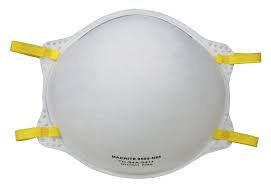
    One thing about the Negative Pressure User Seal Check is that you can’t use that test for some N95s, like the Makrite 9500-N95, which is what I use.

    The Makrite 9500-N95 is oil resistant so it’s rigid which means this mask is not going to collapse when doing a Negative Pressure User Seal Check.
    Now for the video, I asked one of my clients, Charley Herbick, trained in N95 fitting, to show us how to get a good seal with the N95.

    You can see how he does it in this video (and if you want to see new videos, please subscribe to the Make the Most of Massage YouTube channel):

    Taking Off a N95

    Now that you have the N95 on, how do you take it off without contaminating your hands with the COVID-19 virus?

    Simple.

    You don’t touch the mask itself when taking it off. Instead you slip it off using the headbands.

    Take the top headband off, then take the lower one off, like in this.

    Great, right, now you know how to put on and take off a N95, but where do you get them and how much are they?

    Well, they’re not cheap.

    But remember you’re going to be reusing them and that will cut down on costs a lot.

    N95 Pricing

    You’re going to pay about $3.50 t0 $4.50 a mask.

    Wait, Mark, I saw some N95s on Amazon for cheaper.

    About Amazon and N95s…be careful because there are counterfeits circulating on Amazon.

    One way to know if a N95 is a counterfeit is that National Institute for Occupational Safety and Health (NIOSH)-approved N95s have no ear loops. They have headbands.

    Personally, I don’t want to risk having a N95 that is faulty.

    So, to find a N95 that is  NIOSH-certified as a N95 respirator (filters at least 95% of airborne particles) and/or is FDA cleared as surgical mask (liquid resistant) takes a little  research.

    Start your research here: NIOSH – Approved N95 Particulate Filtering Facepiece Respirators.

    In this list you’ll find approved manufacturers and their products.

    After you choose a manufacturer/product, you’ll contact them to get in touch with one of their official distributors.

    My N95 Search

    My research turned up the FDA-approved Makrite 9500-N95 Pre-Formed Cone Particulate Cone Particulate Respirator Mask. It’s both NIOSH certified and FDA cleared as surgical mask (the surgical mask liquid-resistant-clearance is less important for us because we usually don’t slip in a little open heart surgery during our relaxation massage).

    Once I found the approved manufacturer I wanted to go with, I Googled them and then contacted them through their contact form.

    From there, they put me in touch with an official distributor of their products.

    Yes, this is more complicated than simply clicking on an Amazon link, but, again, that easy click yields a world of unnecessary risk in my book–and I don’t want that extra worry that comes with that risk with the 2nd wave coming.

    By the way, the price I paid for N95s through an official distributor of an FDA-approved manufacturer was within the price range of the unofficial distributors on Amazon, which was about $4/mask. (Remember, that a box of 20 for $80-ish will last you a two to three months if you reuse them on a rotating basis.)

    I’m going to tell you the N95 manufacturer I went with, but before I do that I want to let you know that I am NOT an affiliate marketer of their products and or receive any compensation from them.

    So, after searching for a NIOSH certified and FDA-approved N95 mask, I went with the  9500-N95 made by Makerite. The manufacturing company, Makerite, was very responsive.

    They put me in touch with this distributor: SPH Medical Supplies.

    Tony from SPH got back to me and was very informative and helpful. Ultimately, I purchased the Makerite 9500 N95 and the Sekura N95 also made by Makerite.

    The 9500 N95 is both a surgical mask (resistant to fluids) and a respirator.

    The Sekura N95 is not a surgical mask, but is a respirator. Again, respirator meets our working requirements–surgical mask is above and beyond.

    I ordered the Sekura N95 because it’s supposed to be more comfortable than the 9500 N95.

    One more thing to say about getting your N95s: If you hate dealing with the research and have a client or know someone in the medical field, contact that person. She/he may let you order PPE through her/his organization.

    If N95s are out of reach for you for whatever reasons, you’ll be okay. There are alternatives.

    Alternatives to the N95

    KN95

    N95 and KN95 are the same in that “both masks must filter out and capture 95 percent of tiny 0.3 micron particles in the air (hence the “95” in the names).” (RollingStone.Com)

    The difference between the two is in certification. N95s are certified in the USA and KN95s are certified in China. Because a mask was certified in a particular country doesn’t mean it was made there. For instance, according to Rolling Stone, most N95s are made in China, but are certified in the USA.

    The CDC has authorized the KN95 as a suitable alternative to a N95, and KN95s can be cheaper than N95s. Click here to go to a list of FDA-approved KN95 providers.

    Here’s something that I’m really excited about—a mask brace.

    Mask Brace/Mask Fitter

    A mask brace, also known as a mask fitter, is designed to seal a cloth or surgical mask tight around the face. According to the Insider, Dr. John Brooks, the chief medical officer for the CDC’s COVID-19 response, said, “…fitters have been scientifically demonstrated to improve filtration performance by as much as 90% or more, which, again, is getting into that range of filtration efficiency afforded by N95 respirators.”

    Proponents of mask fitters draw their conclusion from studies like this one. And if you’re looking for Sabrina Paseman’s mask fitter, the one used in the mask fitter studies (Source: Insider), go here: Fix The Mask.

    Personally, I ordered four of them and can’t wait until they arrive.

    One more alternative to consider…

    Two Masks

    According to Insider, not enough research has been done regarding doubling up with masks, but here’s what Dr. Anthony Fauci recently said: “So if you have a physical covering with one layer, you put another layer on, it just makes common sense that it likely would be more effective. That’s the reason why you see people either double masking or doing a version of an N95.” (CNBC)

    It also makes sense that two mask would provide a tighter seal, but David Rothamer, coauthor of the University of Wisconsin’s mask-fitter study, says that more studies really need to be done because in some cases more pressure created between the face and the mask due to wearing two masks at once could cause more leakage out the sides and top.

    You can test your seal with two masks by putting your hands around the edges of the masks as you exhale to determine if you have more or less leakage than you did with one mask.

    Winning Formula

    I can’t say 100% for sure that it was the N95 that was the main PPE intervention that prevented me contracting COVID-19 after working on a pre-symptomatic client for 90 minutes because in my little, impromptu experiment, there was no way to tease apart N95 from face shield and good air exchange in the room.

    But I do know that medical frontliners wear N95s and that N95s performed the best for preventing droplet transmission.

    And that’s enough evidence and incentive for me to double down with wearing a N95 in massage room.

    Here’s my COVID-19 safety formula in a nutshell:

    Mask up. (Preferably with a N95 or an N95 alternative.)

    Face shield up.

    Create good air exchange in your room.

    And we’ll get through this:-)

    To get my latest info, sign up for my free, email group.

  • Massage Deep Tissue Techniques

    Here are my favorite massage deep tissue techniques for pain relief and relaxation massage—that are effortless to do and don’t hurt my body.

    The “don’t hurt my body” part is vitally important because if you’re killing your body doing deep tissue massage you’re either going to stop doing deep tissue or you’re going to continue to kill your body and resent your clients who want deep tissue work.

    So, here are three deep tissue techniques that I do all day without being in pain.

    By the way, after I show you the techniques, I’m going to explain the strategy behind each one. Once you understand the strategy you can develop your own pain-free, deep tissue techniques.

    Here’s what we’re going to cover:

    (1) Upper-Trapezius Non-Squeeze Release

    (2) Rotatores and Multifidi Ischemic Compression Release

    (3) Seated IT Band Glide/Press Release

    1. Upper-Trapezius Non-Squeeze Release

    In neuromuscular massage therapy (NMT) training I learned a great technique for releasing the deeper tissue of the upper traps.

    The client is prone. With one hand you grasp the top edge of the trapezius so that your four fingers are wrapped around the superior, anterior edge and your thumb is on the posterior side of the upper-trap.

    In this hand positioning you’re going to grip the upper trap and then “unfurl” the trap edge by moving your fingers towards you and your thumb away from you.

    Once you get the technique down you can exert very focused pressure in the deeper tissues of the upper trap.

    The goals of the NMT trap release are to deactivate hard to get to trigger points and to change ischemic conditions in those areas.

    Though I don’t subscribe to NMT theory any longer, from a pain relief and relaxation massage perspective, I like the NMT trap release because it’s pain relieving and relaxing to clients.

    But there’s a problem with the NMT deep tissue trap release: It beat the dog poop out of my hands.

    This caused another problem. I couldn’t cut it out of my massage routine because a chunk of my clients were used to the NMT upper-trap release and loved it. So I needed to come up with a version that didn’t kill my hands. And that’s what I did.

    Squeezing and rolling with one hand was what caused hand pain when doing the NMT Upper-Trap Release. So, instead of using one hand, I decided to use two. And instead of squeezing, I pressed with two hands.

    By using two hands I could still roll and “squeeze” (now press) the tissue with focused pressure which was what made this NMT technique so effective in the first place, but without straining my hands.

    In addition, for clients with very thick upper-traps, I added a massage tool which allowed me to press with enough force to reach the deeper tissues of the upper-trap.

    Here’s what that looks like:

    Play with getting really specific with your pressure. It’s amazing how focused your pressure can get when pressing between two hands.

    Now, I want to show you a deep tissue technique for back muscles, specifically for rotatores and multifidi. It’s my favorite deep tissue technique.

    2. Rotatores and Multifidi Ischemic Compression Release.

    The multifidi and rotatores are in the lamina groove. Early on in my career, I shied away from anything close to the spinous processes. But neuromuscular therapy taught me that these muscles can be influenced and clients REALLY like getting them worked.

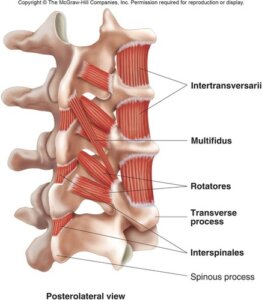
    The Deep Back Muscles

    Here are the multifidus and rotatores:

    They multifidus stabilizes joints within the spine. The rotatores lie underneath the multifidus and are involved in postural control.

    The great thing about the deep tissue technique that I’m about to show you is that you can do this technique through clothes (like when doing demo massages). Being able to deep tissue massage during a chair massage event is a great way to market your skills and has helped me net clients.

    4 Steps for Deep Tissue Rotatores and Multifidi

    Here’s how to get comfortable working these deep muscles.

    Step #1: Find the spinous processes.

    Once you find the spinous processes, you’ve won the battle.

    By the way, don’t be scared of the spinous processes. They are your friends (reference points).

    Step #2: Go just lateral of the spinous processes (maybe 1/2 inch).

    For extra assurance, keep in contact with the spinous processes. You can use fingers from your pressing hand or non-pressing hand to maintain contact.

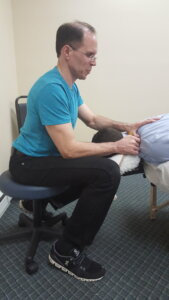
    Step#3: Press down into the lamina groove with a thumb/finger or body parts combination.

    Here’s what that looks like:

    (In the video I use the term power tools.  Now I call power tools “body part combinations”.)

    You may have noticed that in the video that my table is low and that I’m leaning generate deep pressure.

    Why?

    Because when you lean you can transfer your body weight into the area you want to work. In other words, you can use your body weight to generate pressure.

    Leaning makes delivering static pressure in the lamina groove effortless.

    To learn how to lean to generate pressure, go here.

    As you’re learning to calibrate your pressure in the lamina groove, you may first want to use a pain scale system.

    Here’s the pain scale system I use: I tell the client to think of a pain scale from 1 to 10 where 1 is not much pain and 10 is a lot. When you press on an area, you want your pressure to feel like it’s registering in a 3 to 4 range (in acute pain areas) or a 4 to 5 (in non-acute pain areas).

    Here’s my pain-scale-system tutorial video if you want to take a deeper dive: Pain Scale Video.

    When I have a client who responds well to deep pressure in the lamina groove, I use a massage tool to save my hands.

    The massage tool also allows me to deliver deeper and more focused pressure.

    The disadvantage of using a massage tool is that you will lose some sensitivity, but that can be remedied if you use a guide finger.

    Go here if you want to learn how to use a massage tool in the lamina groove.

    Step #4: Be thorough and relaxing with each press.

    When I say thorough, I mean really explore the tight and/or painful areas with ischemic compression. Sometimes you may find the “that’s it!” spot, which when pressed with the appropriate amount of pressure may provide instant pain relief.

    When I say make it relaxing, I’m talking about the speed you move from point A to point B.

    Don’t rush it.

    Zen it.

    The focused, deep pressure can be very relaxing to many. Jump from point to point quickly and you’re undoing the relaxation benefit.

    Here’s a trick for moving at a relaxing pace: Stay relaxed yourself because if you’re relaxed when doing deep tissue work, then you’re probably moving at a pace which is relaxing to your client.

    Though ischemic compression in the lamina groove is my favorite deep tissue technique, this next one is a close second.

    3. Seated IT Band Glide/Press Release

    For most of my massage career I hated working IT bands because they were so hard to get to without having the client turn on her/his side. Then I’d have to deal with the sheet and the IT band was now on an angle and if I was using my forearm it was looking more like I was trying to block a linebacker than do a massage…and the list went on.

    Give me an IT band deep tissue release that is easy to do, doesn’t hurt my body and is effective.

    Here it is—the Seated IT Band Glide/Press Release.

    Wait, Mark, how can you generate enough pressure in the IT band when you’re sitting?

    You lean.

    Just like when you were standing and leaning, you can lean when you’re sitting, but when you’re sitting, you’re leaning from the torso.

    And, yes, you will be able to generate all the pressure you need to and then some.

    For a broad glide, you can use your fists or knuckles or a fist-palm.

    For more focused pressure you can use a knuckle, thumb or a massage tool.

    Or you can use body part combinations like a knuckle thumb.

    The great thing about seated deep tissue IT band work is not only is it easy on your body, but the body part combinations and tools that you can use to get the job done are practically endless.

    Here’s how I do the Seated IT Band Deep Tissue Release:

    Remember that in the beginning of this article I had said that the three deep tissue techniques that I was about to show you had strategies behind them and that you could use these strategies to develop your own deep tissue techniques that wouldn’t hurt your body?

    Well, I want to explain those strategies to you so that you can walk away from here armed with the building blocks to help you create deep tissue techniques just for you.

    Strategies for Pain-Free Deep Tissue Massage

    Here are the strategies behind my deep tissue techniques that save my body:

    1. Squeeze less. Press more.
    2. Lean to generate pressure.
    3. Use multiple body parts (and use tools) to deliver focused pressure.

    Let’s take these three strategies and start experimenting.

    TFL Deep Tissue Release

    The TFL is a tough muscle to access. It’s small and requires very  focused pressure, which begs the question: How do I massage the TFL  with deep pressure without killing my hands?

    In the video below I take the 3 strategies—squeeze less, lean and use multiple body parts/tools—to create a deep tissue technique that doesn’t hurt my body.

    Are you starting to see how these 3 strategies can be applied universally to all body areas that you are massaging?

    Here’s another example of deep tissue work in the tibialis posterior where I use the 3 strategies (more press, lean and use multiple body parts/tools).

    By the way, this massage example is not part of what I would do during a relaxation massage. It would be what I would do if someone came in with a tibialis posterior issue.

    Massage Deep Tissue Techniques In a Nutshell

    So, I showed you three of my favorite deep tissue techniques—(1) upper-trap non-squeeze release, (2) rotatores and multifidi ischemic compression release, and (3) seated IT band glide/press release.

    To get to the deep tissue of a muscle, you need to be able to exert a certain amount of pressure. Sometimes that pressure needs to be precise.

    Once you can exert the appropriate amount of pressure you can hold that pressure, glide with that pressure or do other movements with that pressure, like cross-fiber work.

    To be able to hold that pressure consistently your body can’t be straining. In fact, your body needs to be relaxed which means you need to be using strategies that make deep tissue work easy.

    Leaning, less squeezing and more pressing, and using multiple body parts/tools to deliver pressure are strategies that will take the strain out of your body when doing deep tissue work.

    If you work with these 3 strategies you will not only save your body when doing deep tissue work, you’ll start to develop your own techniques that are unique to you and your style of massage.

    Online Deep Tissue CE Class

    If you want more help, I have a online, home study, CE course that will give you the platform to create your own deep tissue techniques and get competent with deep tissue work without hurting yourself.

    It’s NCBTMB-approved and you can check it out here.

    And if you have a question about my deep tissue techniques or anything else, email me anytime— mark@makethemostofmassage.com. 🙂

  • Black Lives Matter and My Massage Business – Doing What I Say I’m Going to Do

    I hesitated.

    I was editing our massage business website and I had written a sentence. The sentence was edited and ready to be published, but my finger hovered over the publish button.

    The sentence was factual.

    It was what I thought.

    It was what I felt.

    You could say I was the sentence.

    Yet I wavered.

    The sentence was: We support Black Lives Matter and are taking a community approach to fight racism.

    I did hit the publish button, but I can’t deny the unmistakable pause, the flinch, the micro-retreat in the face of perceived danger because I feared, I feared what I couldn’t predict.

    And what I couldn’t predict was this: Am I going to lose clients? Am I going to go out of business?

    Sure, Ben & Jerry’s can speak up because they know who’s buying their ice cream—people that support their views or people who are so addicted to their Chocolate Chip Cookie Dough that they don’t give a f*** what Ben & Jerry’s think.

    But my marketing team (me) was a little underfunded to understand our customer avatar.

    So, I don’t have a good guess as to what’s going to happen next.

    I also won’t have a good guess as to what will happen after I create a website page that’s dedicated to explaining how we’ll fight racism as a business.

    And I won’t have a good guess as to what will happen when a long-term client says something that seems innocuous on the surface but underneath is steeped in racism, and I politely tell her that her comment is not tolerated here.

    There’s a reason why I’ve kept activism and business separate all of my life.

    It’s called I don’t want to jeopardize making a living.

    I don’t tell clients I’m a vegan.

    I don’t tell them I marched with women in DC.

    And I certainly don’t tell them I’m an atheist.

    Did you just feel the sink-your-business effect?

    Just one of those alone, veganism, women’s rights or atheism, may make you want to stop reading my blog right now.

    Shut up, Mark.

    You’re out of your box.

    Stuff it.

    Stuffing it is what I’ve done in the massage room for most of my career.

    Besides preserving my job, stuffing it does have another benefit.

    If when you stuff it, you can step away from your reaction, there’s an opportunity to actually listen.

    And as one seasoned massage therapist wisely reminded me last week: When a client is on your table and you provide her space to talk out loud without judgment, there’s room for her to change.

    In the vegan world there’s an evolutionary psychologist, Doug Lisle, who has a phrase for this subtle form of “activism”: Getting along without going along.

    De-escalate. Insert your thought, feeling, or example in a non-threatening way. Step back and let the person work it out herself.

    Massage, having to establish therapeutic rapport with a client, naturally sets us up for getting along without going along.  

    Denny, was a client of mine who was a dentist. We shared a connection around human rights, and he talked a lot about his experiences of discrimination as a person of color both growing up and professionally.  

    During some of the human rights conversation he’d talk about his faith and his strong connection to Catholic church. Then one day he boxed me into a corner about my beliefs where I either had to out myself or lie to him, and I knew he wanted the truth.

    So, reluctantly, I told him that I wasn’t a believer.

    He was shocked and then blurted out: How can you be so nice?

    Our business relationship didn’t end. Our passionate conversations didn’t end. But what did end was his perception that all atheists are d****.

    In the vegan world there’s an activist, Gary Yourofsky, who uses the opposite approach for change. It’s the enough-is-enough approach.

    The enough-is-enough approach is blunt force. It’s an assault. It causes guilt, shame and trauma to activate change.

    The video of the murder of George Floyd is this.

    Watch it once and you’re outraged, disgusted, and angry.

    Watch it again and you’re even more outraged, disgusted and angry.

    Watch again and again and again and you have to do something to make that video (now in your head) never happen again.

    Gary Yourofsky tells young adults not to look away from the videos of cows being punched and kicked, and baby chicks being ground alive.

    Chris Cuomo on CNN tells viewers not to look away from the police officers who slowly and tortuously murdered George Floyd.

    They know that trauma and re-trauma make you feel bad emotions, like shame, guilt, and sadness. These emotions spur brain change.

    After the Women’s March in DC, I was working on Bob, a client of 20 years. Bob is white, in his 70s and a nice guy.

    When he entered the massage room and as I closed the door he said: Wow, that person that just left was the prettiest woman I ever saw.

    He then went on and tried to engage me in locker room talk, assuming that since I had a penis, I shared his thoughts.

    I shut him down. Cold.

    Bob’s face turned red. He was embarrassed and ashamed. And he knew he would have to work his ass off to restore cred with me.

    He immediately apologized and went on about how he had never done that with me before.

    I let him talk without saying a word. Eventually, he stopped by saying that he would never do it again.

    He hasn’t.

    Has he changed?

    I don’t know.

    To me, that moment wasn’t about facilitating change. That moment was enough is enough, time for the hammer on the head.

    Both Denny and Bob stayed as clients even though I used different tools, getting-along-without-going-along and enough-is-enough, to handle the situation.

    But you should know that the enough-is-enough example with Bob is a little misleading. I had a long-standing relationship with Bob and we had tough conversations. You’re taking a risk if you choose the enough-is-enough method with a new client.

    For me, I’m consciously adding more enough-is-enough tactics into my business model.

    A statement supporting Black Lives Matter and a webpage dedicated to how we as a business are going to fight racism are outright enough-is-enough tactics.

    Since I can’t predict how people landing on my website will feel about this I have to accept that I may lose some potential clients.

    If that happens, there’s a remedy: I’ll put my energy into finding  clients through other forms of advertising, like referral sources.

    Not allowing, Susan, a long-term client to say a veiled, racist comment is an enough-is-enough approach.

    If I lose Susan as a client, I’ll find another client.

    I know I’m sounding callous, and I do care about my clients deeply.

    But here’s what I care about more: True equality.

    Sorry, Susan, I’m not waiting another 10 years for you to make a modicum of change towards being less racist.

    My four godchildren will be 11, 15, 17, and 19 by then. They need equality now.

    Well, that’s where I’m at with my anti-racism checklist for my business. How about you?

    Please leave a comment below and let’s keep this conversation going.

    Also, if you want my latest info, sign up here:

  • Black Lives Matter and My Massage Business

    Black Lives Matter and My Massage Business

    So, here we are.

    Where are we?

    Well, in the US, 112,000 have died from Covid-19 and we’re still counting.

    Forty-three million have filed for unemployment benefits since the pandemic.

    And we have one more chance to rout out systemic racism that permeates our lives and our institutions or as the retired marine general John Allen said, This may be the beginning of the end of the American experiment.

    Strong words, but what happens the next time a black man is murdered by police, the very people who are supposed to protect and serve all US citizens; do you think it will only be police stations that will burn to the ground?

    That is not a political statement.

    That is a prediction based on recent and deep US history.

    The political part comes here: If we don’t make a change we deserve to have our cities, towns and suburbs burn to the ground.

    And I’m calling me out.

    Mark Liskey, as a citizen of the United States of America, as a business owner in Phoenixville, PA, and as an inhabitant of planet earth, BE the change.

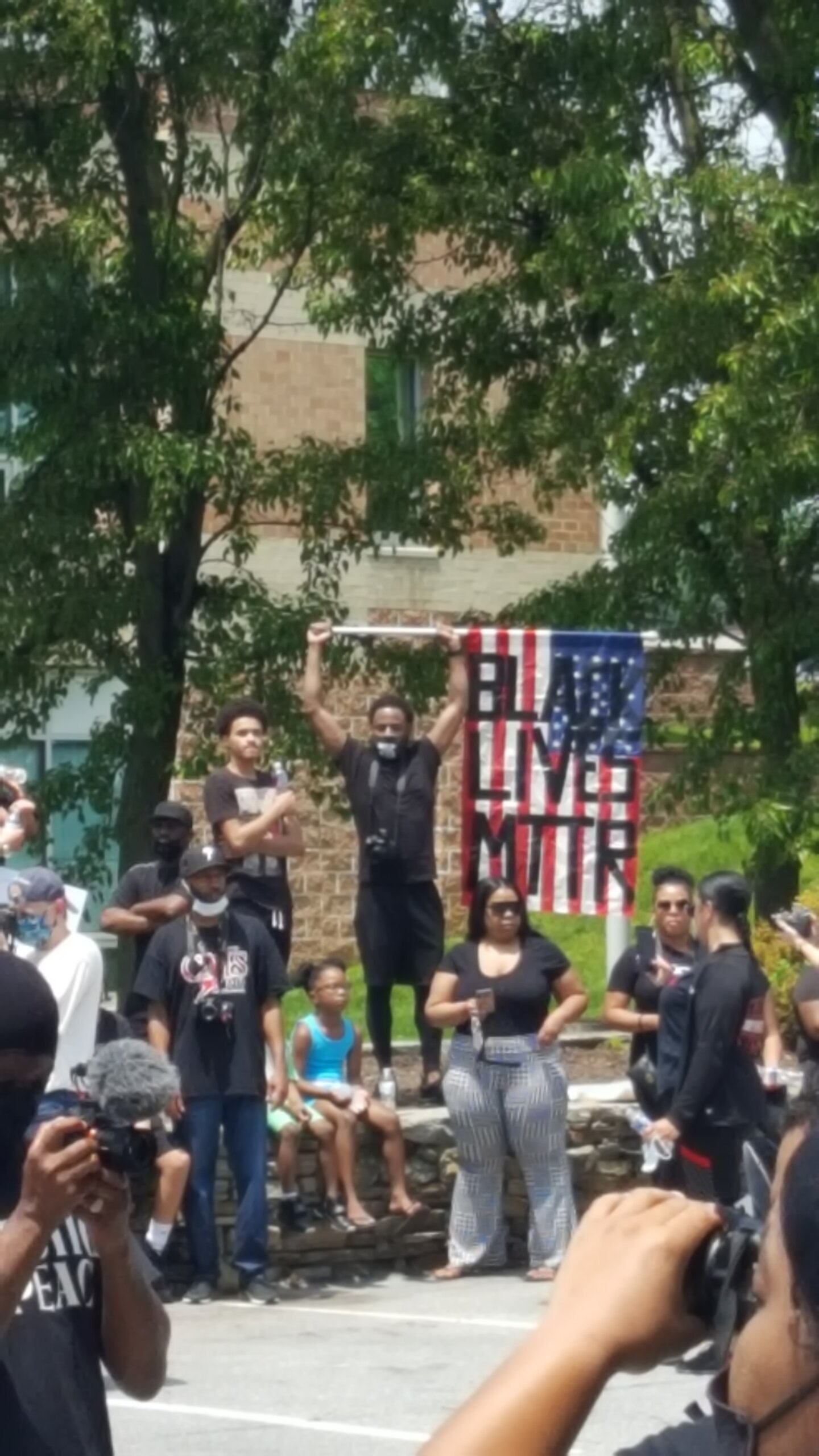
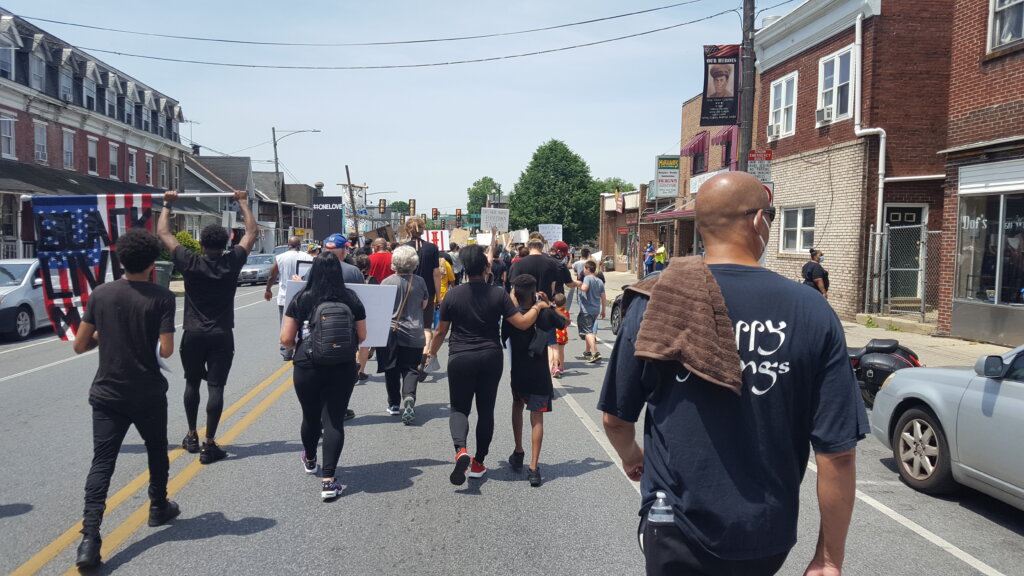
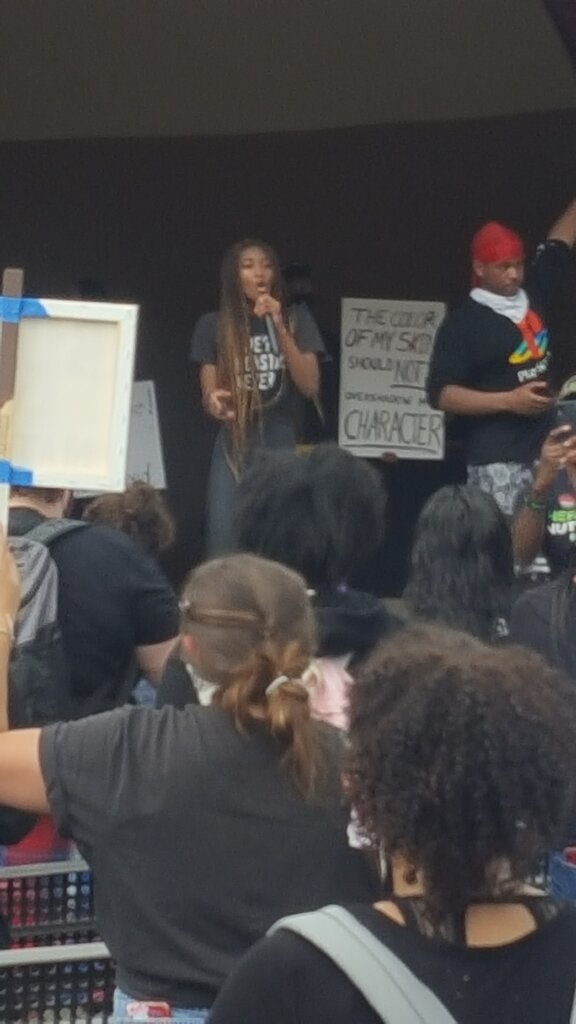
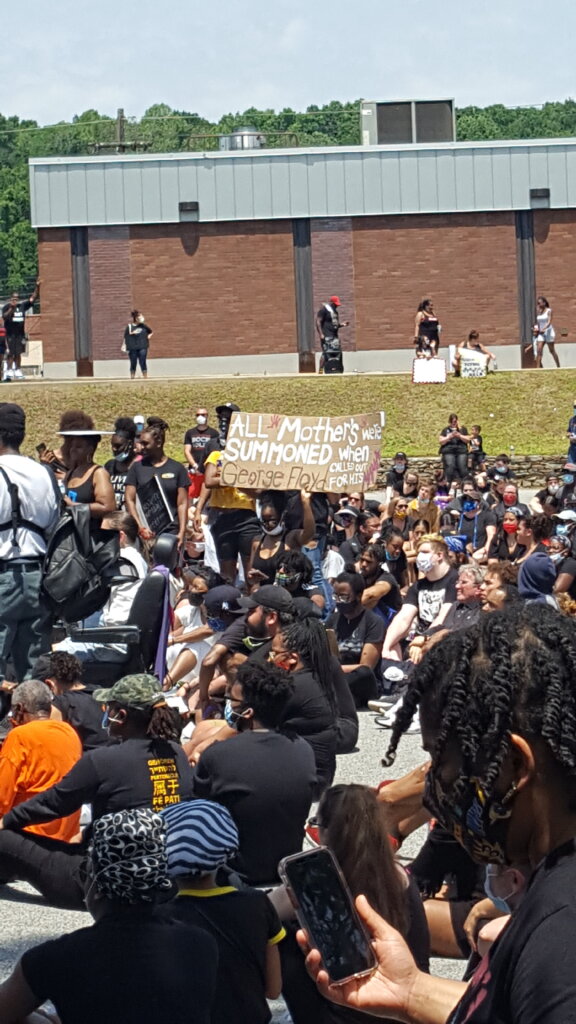
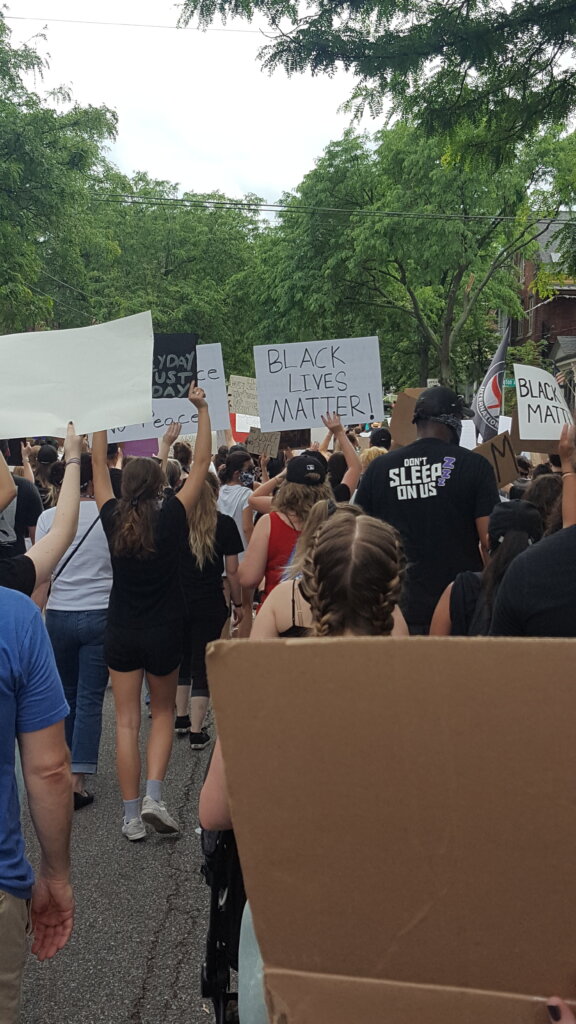
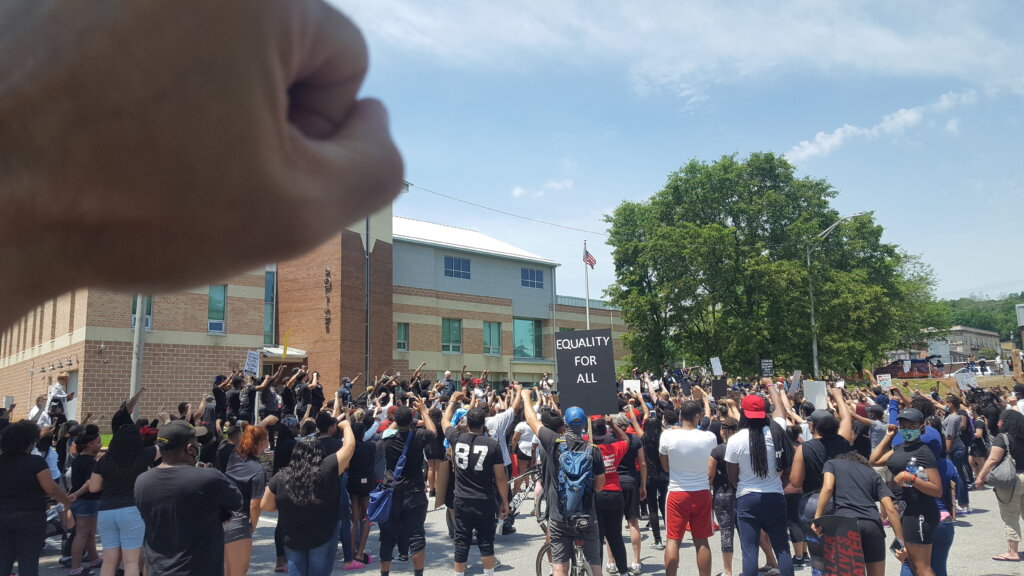
    As a US citizen continue to be part of this:

    And this…

    And this…

    And this…

    And this…

    And this…

    As a business owner in Phoenixville, PA let your customers know that you contribute to and support Black Lives Matter.

    Reach out to local, black business owners in the area and see how you can align to support a black business community agenda.

    Speak up against racism even if it’s a customer you have to confront. 

    DO.

    NOT.

    TOLERATE.

    SILENCE.  

    Oh, remember that community outreach program for people without health insurance that never took off?

    You worked with a local community leader and you created a  discount massage program for your town’s free health clinic whose patients include people of color.

    You know why it didn’t work, right?

    People going to a free health clinic can’t afford to pay for massage at all.

    So, do a free massage clinic day.

    Or a self-massage workshop.

    Or a partner massage workshop.

    Or do all of them.

    The point is, don’t wait for the community leader to get in touch with you. Get in touch with her. Nothing is going to change until you are the change.

    Now we need to talk about you, Mark, as an inhabitant of planet earth.

    Mark, I’m just going to blunt.

    You live in a bubble.

    It’s a bubble that when the light hits it just right you can faintly make out the letters USA.

    Every now and then your USA bubble is perforated by a pandemic or terror attack and you realize that your country is not the only country in the world.

    But as soon as the threat is gone a new USA bubble grows around you.

    But it’s even worse, Mark, because inside that USA bubble is another bubble.

    And this bubble is tough. It’s super-resistant to popping. And you sort of knew you were in it and you sort of didn’t.

    By the way, this bubble has a name.

    It’s called white privilege.

    Get out of your bubbles, Mark.

    And then use your white privilege to help people in the US and the world who don’t have it so that one day there is no such thing as white privilege.

    Well, you got your list, Mark Liskey.

    Get those check marks.

    Then we’ll talk.

    Until then, say their names again and again and again.