Category: Massage Pain-Free

  • How to Massage with Your Fists

    How to Massage with Your Fists

    Let me guess what your go-to tool is for deep pressure?

    Forearms.

    Am I right?

    Mine was.

    But then my neck started to bother me, my elbow felt funky, and my already unstable left shoulder said I don’t think so.

    So, I went searching for another way to deliver deep pressure.

    Guess what I found?

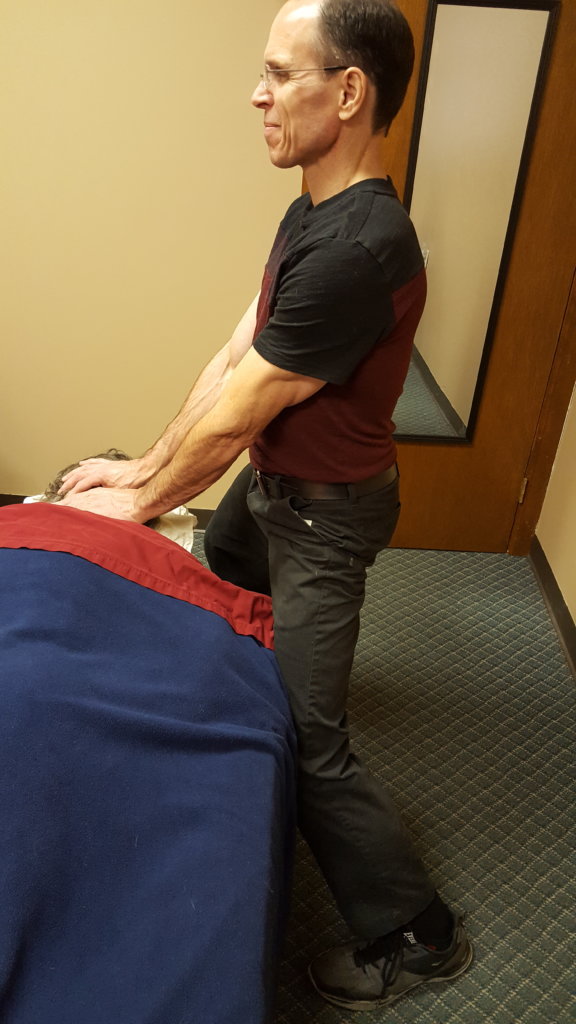
    You got it–fists.

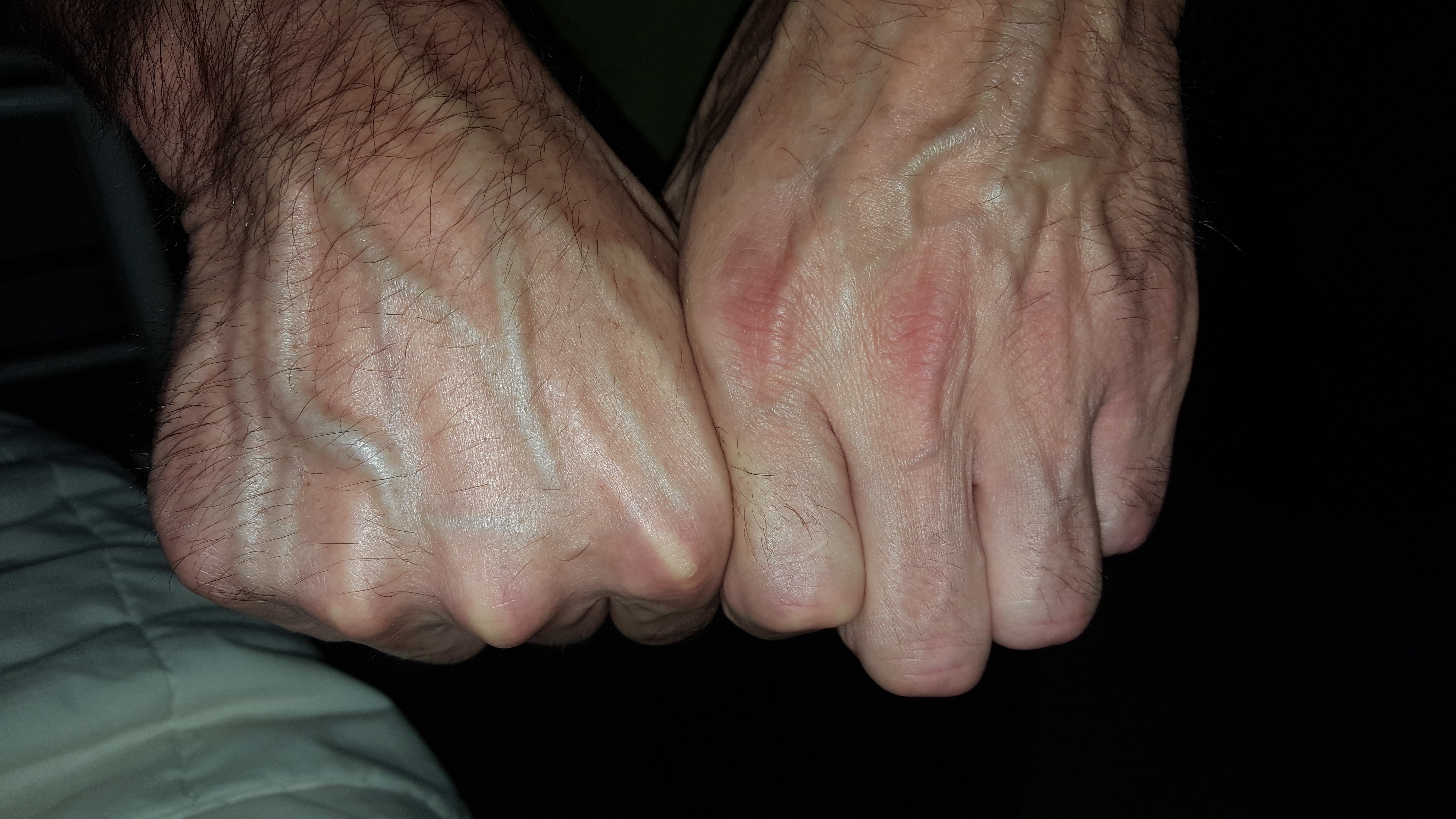
    Well, not exactly balled-up, punch-you-in-the-face fists.

    More like relaxed, I’m-going-to-fall-asleep fists.
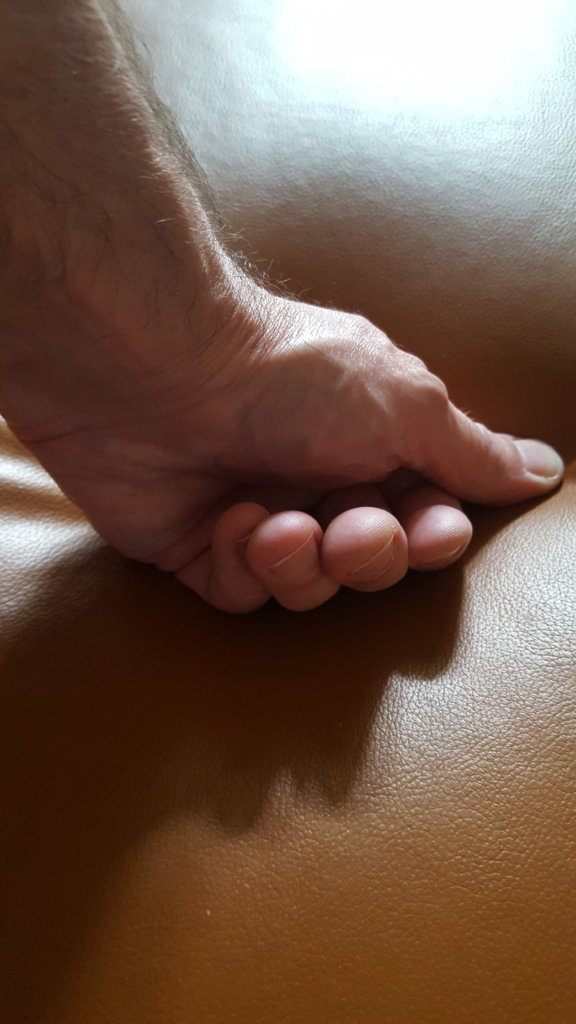
    Why a relaxed fist?

    Because I want to take all unnecessary tension out of my hands AND my fists don’t need to be tight to deliver deep pressure, aka, transfer my body weight onto the client.

    We’re doing massage here, Mark, not fist push-ups.

    Funny you should mention fist push-ups.

    When you do a fist push-up a lot of your body weight is distributed through your arms onto the floor, right?

    Your fists (and feet) are the contact points between you and the floor.

    And that’s exactly how I want to do deep pressure massage with my fists (minus the feet part…lol).

    I want to lean my body weight onto the client so that my body weight is doing the work and my fists are simply the points of contact.

    It’s really not hard to do.

    These 3 steps will make it even easier. 

    Massage with your Fists in Three Steps

    1. Make a lose fists, not a tight fist.

    Okay, so we already talked about a loose fist, but it’s worth mentioning again because my objective is to save all body parts, not just one or two.

    Tightening your hands for no reason is extra muscle stress that you don’t need.

    If you’re a chronic hand tightener when doing massage, read this: Massage Body Mechanics 201: Relax Your Hands.

    2. Lean to generate pressure.

    You’ll probably need to lower your table to get enough leaning distance between your fists and the body part you’re working on so that you can effectively transfer your body weight.

    Don’t overthink this step.

    You already lean when using your forearms, right?

    Leaning with your fists is pretty much the same thing.

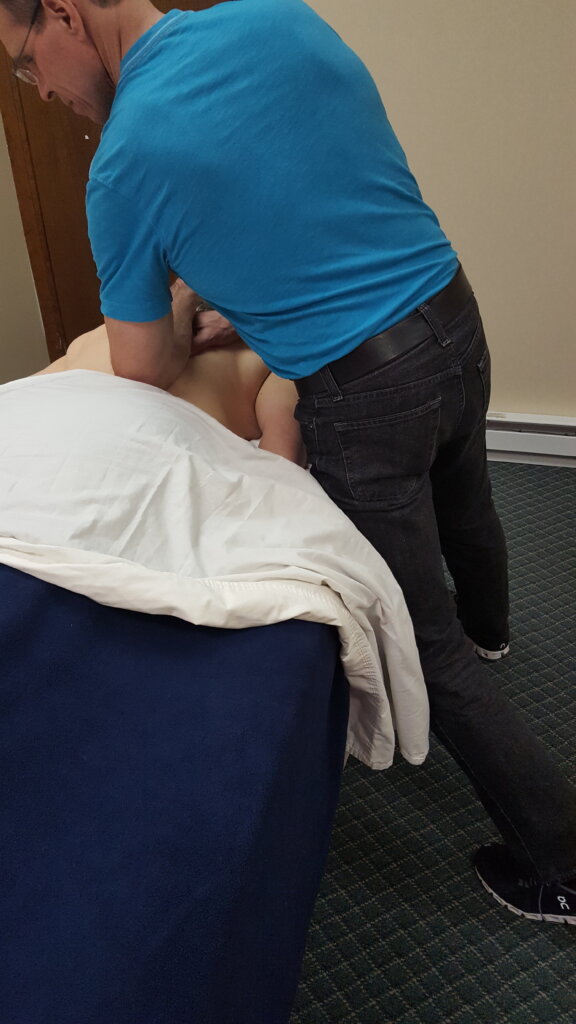
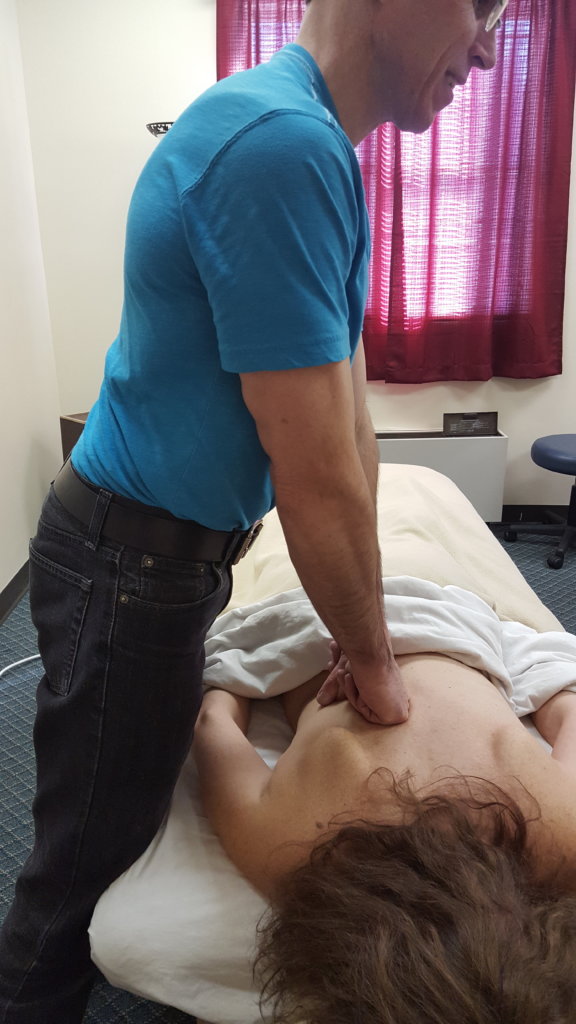
    Just like leaning with your forearm you can lean with your chest parallel to the table.
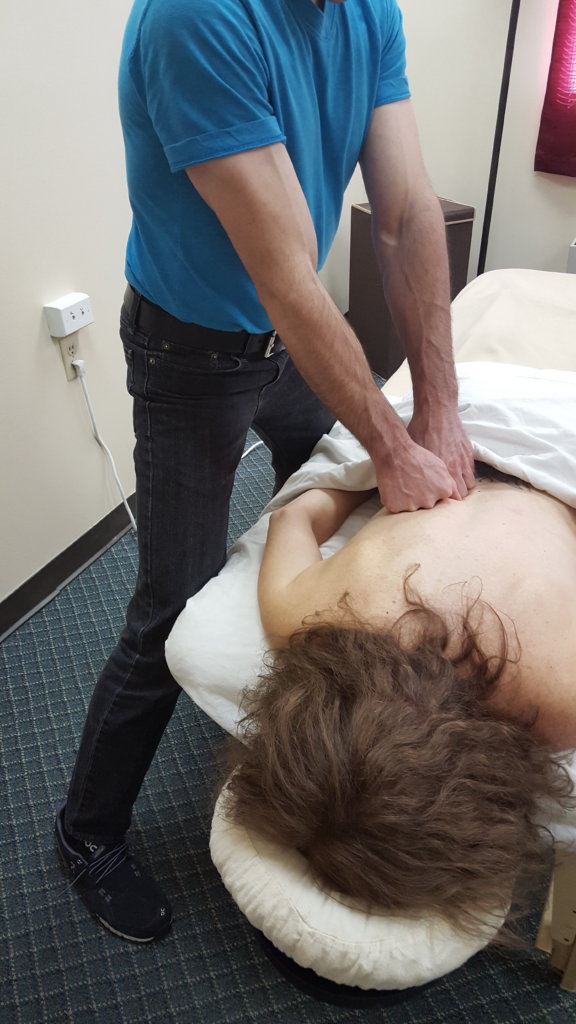
    Or you can lean with your chest perpendicular to the table.
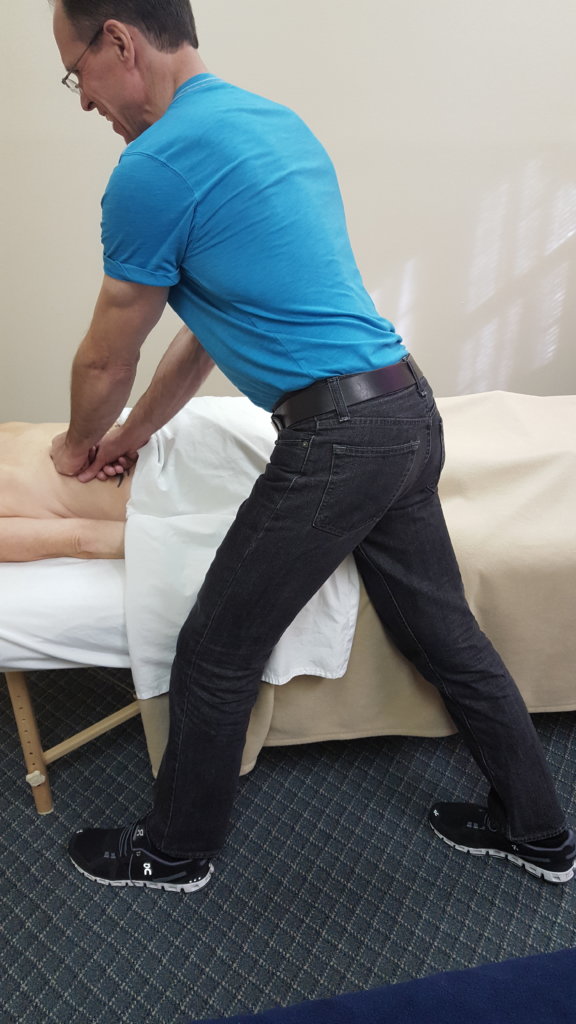
    It’s not hard to do.

    It just takes getting in some reps to get comfortable with leaning.

    Here’s a video that will get you up and running with leaning to generate pressure: Deep Tissue Basics of Massage—The Lean.

    So, now you have enough information to massage with your fists when doing deep, static pressure.

    The only other thing left to do is to glide with your fists. 

    You can lean and glide with your fists in small areas effectively by remaining stationery.

    But if you want to do a long glide (like up the back) then you’ll need to…

    3. Move your feet.

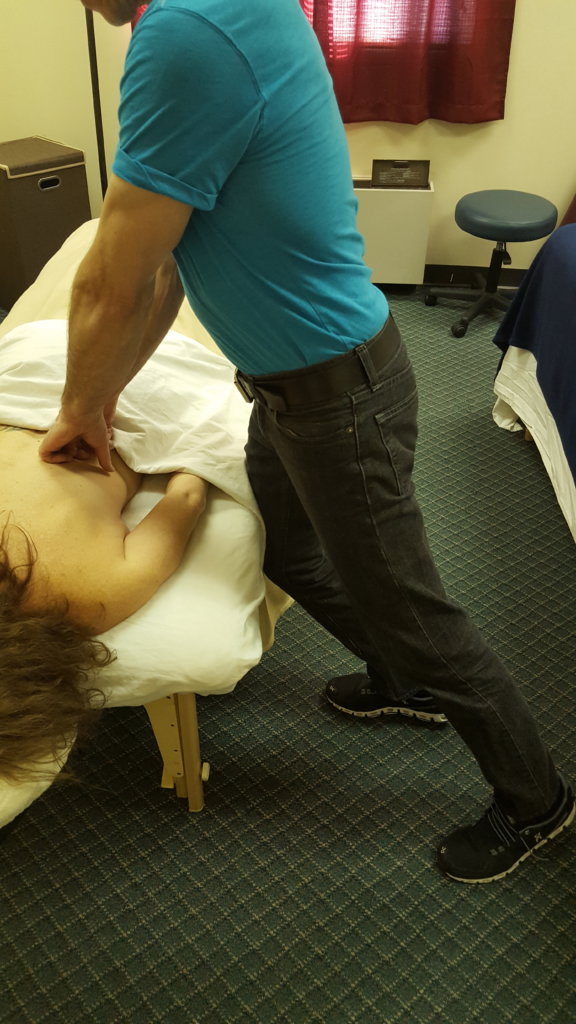
    Moving your feet allows you to keep your shoulder, elbow and wrist in alignment as you glide and transfer your body weight onto the client.

    In this video I show you how I move my feet when massaging with my fists and knuckles:

    [embedyt] https://www.youtube.com/watch?v=omwk-NyVjZU[/embedyt]

    Massage with Your Fists Checklist

    Fists are a great forearm alternative for deep pressure.

    To get competent at massaging with your fists you’ll need to…

    1. Use relaxed fists.
    2. Lean to generate pressure. (Low table.)
    3. Move your feet.

    Boom.

    Now you can have happy everything:-)

    Need more deep pressure help?

    My Delivering Deep Pressure Without Hurting Yourself class is here.

    It’s an online home-study class (3 CEUs) with lots of videos and guidance.

    It’s based on the discoveries and strategies that I used to save my body and massage career.

  • Massage with Your Back to the Table

    Why would you want to do massage with your back to the massage table?

    Well…there are two reasons why I do massage with my back to the table.

    One, I can get a quick rest.

    And, two, I can get more vertical so that I can get out of a static posture.

    By static posture in the massage room I mean a prolonged work position, like hunchy back.

    Before you think I’m nuts, I need to throw some qualifiers in here.

    Strategic Back Bends

    First, I don’t have my back to the table for long periods of time.

    In fact, the times I do are strategically worked into the massage.

    And, two, I’m only using one hand (though I have experimented with two).

    I know, it’s getting hard to picture, right?

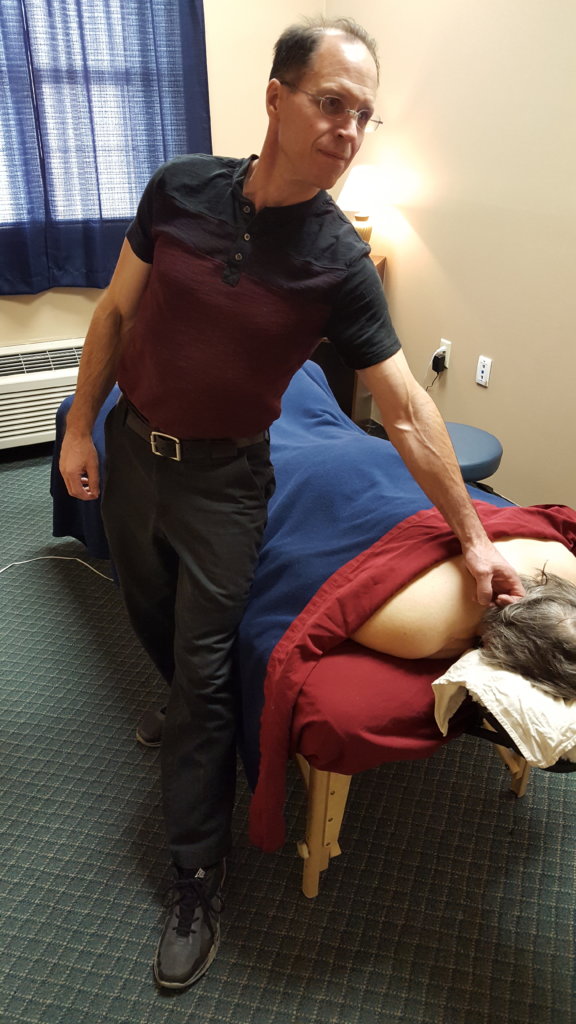
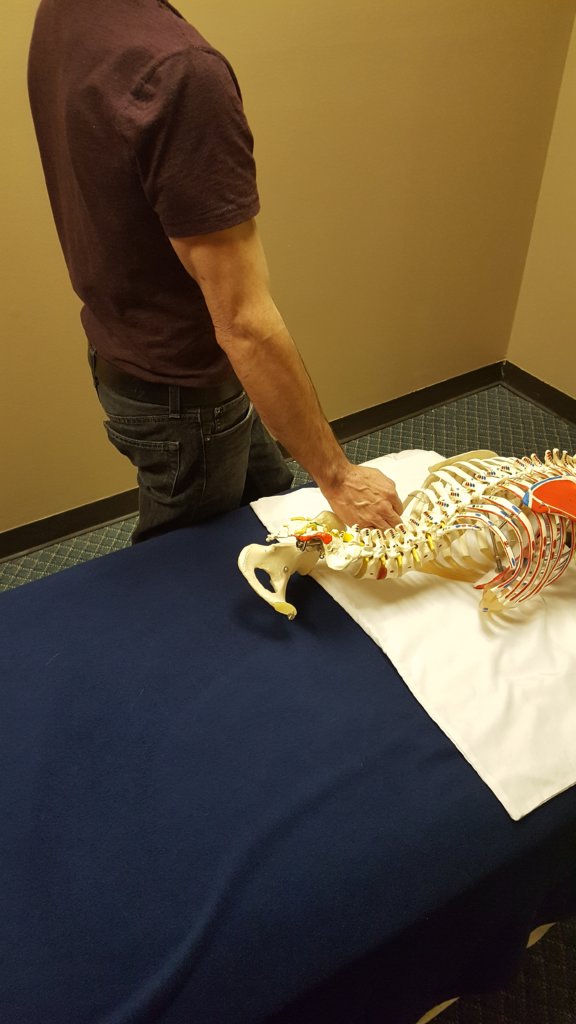
    So here’s what it looks like:

    I’m applying static pressure with one hand.

    And by using only one hand I can stand up straighter than if I had two hands on the client.

    But, Mark, can’t you just stand up straight with having one hand on your client and without having your back to the table?

    You can.

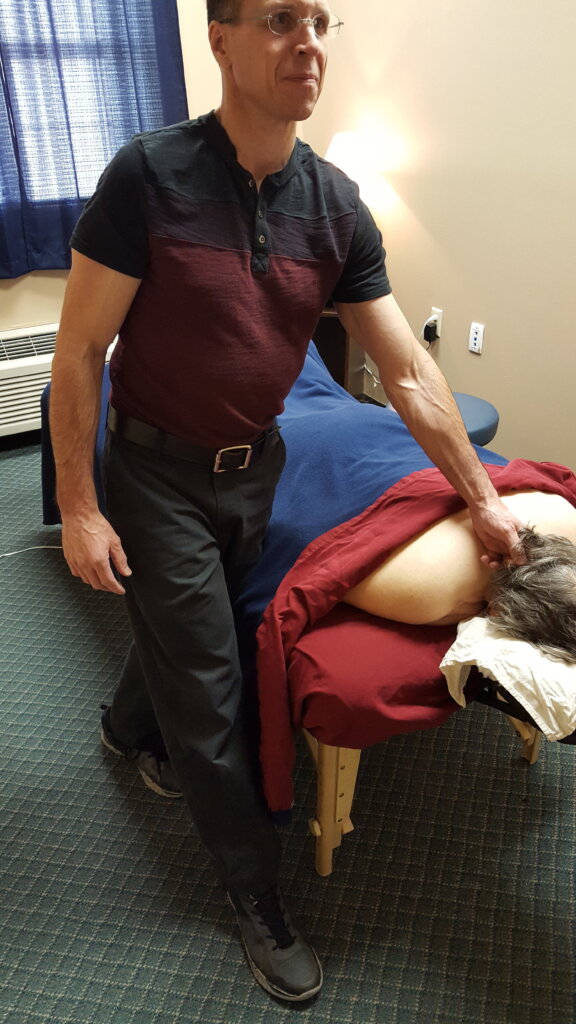
    It looks like this.

    But when you have the back of your legs against the table supporting your weight you can actually lean back a tad and get more extension in your back (like you’re doing a standing cobra).

    Man, does that standing cobra feel good.

    Besides occiput trigger point work, my other favorite times to do standing cobra are with sacrum compression…

    and hamstring compression near the ischium. (It’s a super-comfortable lean into area.)

    Get Your Standing Cobra On

    So what about you?

    Do you actually take time to rest during the massage?

    You should.

    Try the standing cobra rest/recharge.

    Standing Cobra Formula

    Here are the steps:

    1. Pick your areas to try it in.

    My areas are sacrum, hamstrings, and occiput.

    By the way, your table will have to be low to do this.

    Go here for more information about experimenting with a low table.

    2. Turn your back to the table, switch to one hand and lean into the one hand as you straighten your back.

    3. Then allow yourself to lean back into the table so that you create some extension in your back (standing cobra).

    You’ll know you’re doing it right when there’s absolutely no strain in your back because your body weight is supported by the back of your legs against the table and your hand on the client.

    Take strategic rests (resets), like standing cobra, and you’re body will be happier.

    Add if you layer in other strategies you’re body is going to be so happy that you’ll be able to raise your weekly massage max.

    By the way, the How to Deliver Deep Pressure without Hurting Yourself course is here. It’s a 3 CEU online, home study course. It’s packed with videos and guidance. Let’s get you out of pain and keep you out of pain:-)

  • The Secret Weapon That Will Save Your Back: Your Massage Table

    The Secret Weapon That Will Save Your Back: Your Massage Table


    I love my massage table.

    I know that sounds a little strange, but I have a good reason to love my massage table.

    My massage table saved my massage career.

    Here’s the short version.

    Saving My Massage Career

    A while back I stressed my shoulders doing massage in an attempt to save my neck and elbow.

    Then to save my shoulders, I stressed my back.

    At that point I was feeling mighty low and about ready to quit massage because no matter what I did something always hurt.

    But then I discovered a cool thing about my massage table.

    I could lean into it. 

    When I did my back got happy AND I was able to use the strategies that saved my shoulders, elbow and neck once again.

    Why did my back get happy?

    Because it didn’t have to work as hard to keep me upright and it could unbend from the typical massage-hunchback position.

    In a minute I’m going to show you how to lean into the table to save your back (and shoulders and neck).

    But before I do that I want to give you a framework for leaning.

    So, I’ll start from the beginning.

    How My Massage Table Saved My Massage Career

    My daddy was born into a family of sharecroppers living in the rolling hills of Harrisonburg Virginia…haha…not that far back.

    At one point in my massage career I was diagnosed with Cubital Tunnel Syndrome, cervical radiculopathy and an shoulder instability.

    Every time I did massage something hurt and the pain wasn’t going away.

    So I threw myself into an experiment to save my massage career. 

    My Experiment

    I had three rules for the experiment.

    1. Figure out what triggered or caused me pain in the massage room.

    2. Stop doing the the things that triggered/caused pain.

    3. Find alternatives to get the job done.

    The first thing I went to work on was my elbow pain (Cubital Tunnel Syndrome),

    To be honest, it was sometimes hard to differentiate between the pain coming from my neck (cervical radiculopathy) and pain coming from my elbow.

    But one thing for sure triggered both–using my forearms to massage.

    So, out went forearms.

    That stunk because they were a big part of my deep pressure work.

    Hmm…what could replace my forearms.

    I tried fists.

    But when I used my fists at my normal table height I had to really engage my upper body and I ended up tweaking my unstable shoulder.

    Now what? Knees? Believe me, I thought about it for a second.

    But lucky for me I was already familiar with leaning (using my body weight to generate pressure).

    In fact, leaning was core to my forearm work…

    …and massage tool work, too.

    So, now I just needed to lower the table far enough so that I could lean with my body weight using my fists.

    And that’s precisely what I did.

    It worked like a charm.

    There was no strain in my upper-body because my body weight was doing the work.

    My shoulders and neck liked that.

    However, not all my body parts were happy.

    My back started to bother me from working on a low table, especially when the client required less pressure (light to medium).

    Less pressure meant that I couldn’t lean all my body weight onto the client so my back and legs had to do more work. 

    Because I was on a mission to massage efficiently and effectively (aka, to be lazy and expend the least amount of energy as possible) without being in pain, it wasn’t long before my leg found the side of the massage table.

    The leg against the table provided extra support.

    That meant less work for my back to do and, ultimately, it allowed me to change positions so that I wasn’t in the  massage-hunchback position all the time.

    Leaning into the massage table has become a central feature to my body mechanics, so much so that if you randomly pulled the massage table away from me when I was standing during a massage, I would fall on my face 90% of the time.

    Here’s what you need to know to experiment with leaning into the massage table.

    1. You can lean into the massage table for support with all sides of your legs (front, back, side, inside).

    It doesn’t take much leaning to provide enough support to be able to get you out of massage hunchback.

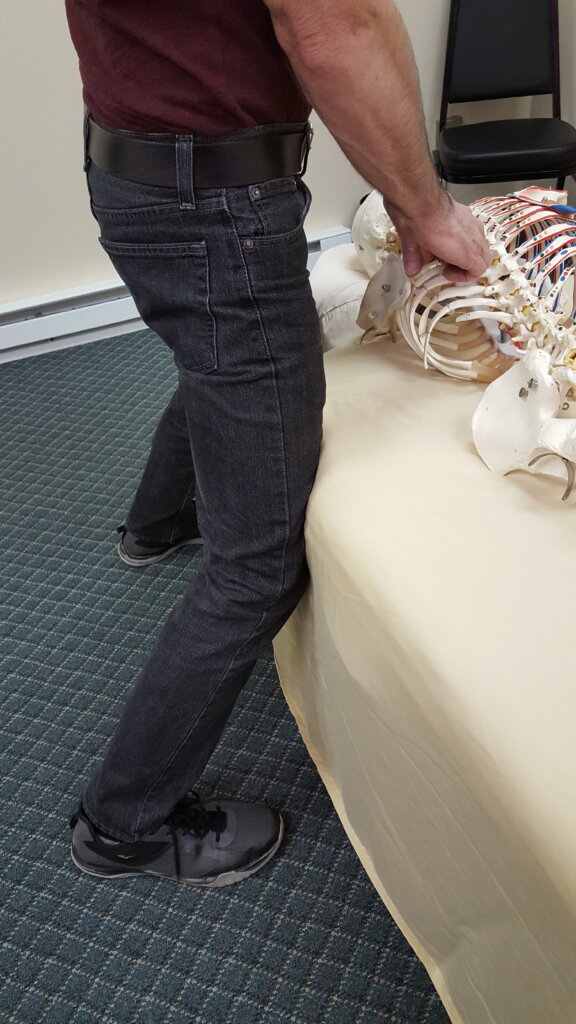
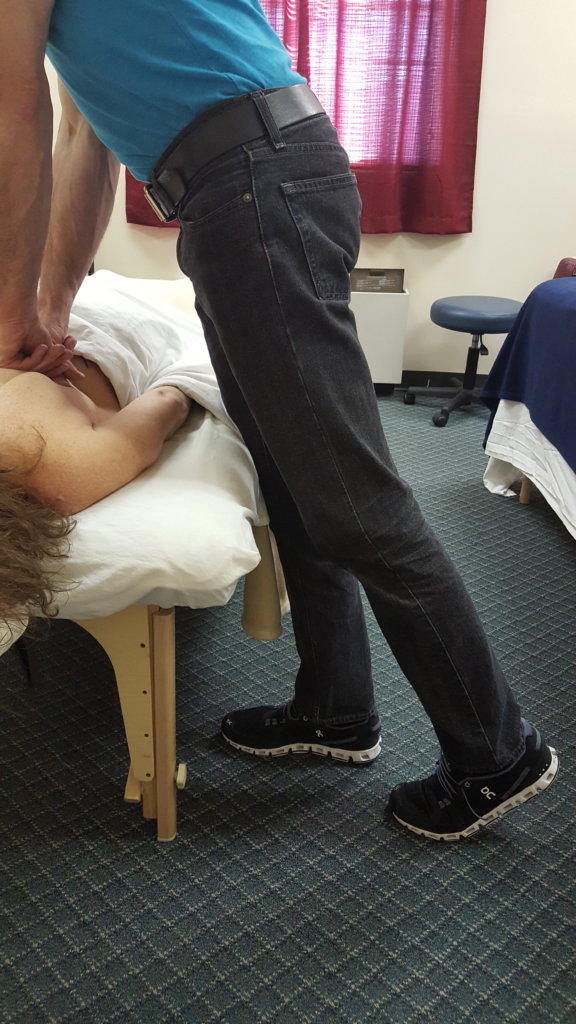
    Here I’m leaning into the table using the inside of my left leg.

    In this next picture I’m leaning into the table with the side of my leg.

    Here’s classic leaning into the front of a leg.

    And here’s what you’ve been waiting for: Leaning into the back of a leg(s).

    2. Think plank when leaning into the table for deeper pressure.

    Deeper pressure is going to require more weight onto the client rather than onto the table.

    So you’re contact leg that’s leaning into the table is going to help stabilize your “planking”.

    Don’t worry about getting more vertical when leaning and doing deep pressure.

    Here’s what leaning into the table delivering deep pressure looks like:

    3. Straighten up and change back positions with light to medium pressure and/or when using one hand to massage.

    For light to medium pressure my stances widen because I don’t want to transfer all of my body weight onto the client.

    The combination of not needing to exert a lot of pressure and having the support of the table is the perfect opportunity for me to unbend my back.

    Time for a Change?

    As you can tell by now, I’m a very lazy creature when it comes to working in the massage room.

    I want a workout in the gym to feel like a workout in the gym.

    And I want the work I do in my massage room NOT to feel like a workout in the gym.

    That’s why I’m addicted to leaning.

    To find more about doing massage effortlessly check out Minimal Effort Massage

    And if you’re ready to jump into massaging pain-free, here’s the online, home-study course (3 CEUs) that will get the job done: How to do Deep Pressure Without Hurting Yourself.

    The course is based off my real-life experiment of overcoming career-ending conditions in the massage room.

    Lean on.


  • Deep, Detail Work—Bring It On!

    Deep, Detail Work—Bring It On!

    How do you do a TFL massage that’s detailed without killing your thumbs and fingers?

    1. Pinpoint the exact area in the TFL that you want to work with a massage tool.

    2. Guide the massage tool with your non-holding hand as you press, pull, reciprocate and/or vibrate that exact area until you create the desired effect that you’re looking for.

    My favorite massage tools for the TFL are simple (and inexpensive), but effective.

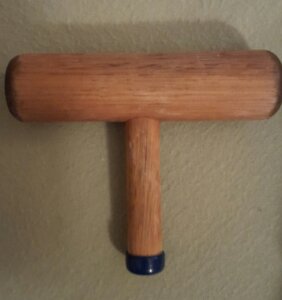
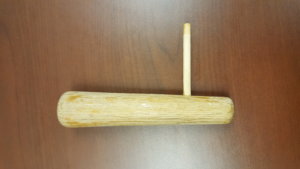
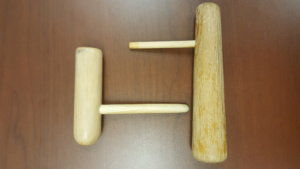
    They are a T-bar…

    …and an L-bar.


    1/3 of the Trick

    The T-bar is an important tool for neuromuscular massage (NMT), and is waaaay better than thumbs for doing detail work on tough to reach muscles like the multifidi and rotatores deep in the lamina groove.

    But when I started practicing NMT, I soon learned that if I gripped the tool too hard, my hand hurt.

    Over the years, I’ve developed ways to grip the T-bar that are easy on my hands. You can check them out on this post, Tools Can Save Your Hands.

    The T-bar was better than thumbs for precision for sure, but I’m greedy and I wanted something even more precise. 

    2/3 of the Trick

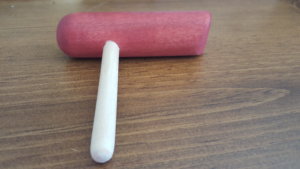
    So I went to my dad and asked him to make some tools for me that would allow me to work muscles super-precisely. Here’s an early model of something that he made that didn’t work out so well.

    PopPop V-Bar Pic

    Not pictured is the massage tool that was about 18 inches long and rested between my shoulder and armpit. This was a removable tip that you could put on the end of it.

    Scary looking, huh?

    Promise I never made anyone bleed.

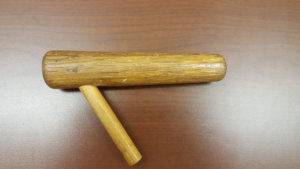
    However, this one was a winner!

    Pop TBar Pic

    The stem diameter was narrower than the T-Bar which gave me greater precision.

    And the stem was offset (the tool sort of looks like an “L”; that’s why I call it an L-Bar).

    That allowed me to get into tight spaces like the neck.

    The Whole Trick

    As my Dad’s health deteriorated over the years, I backed off asking him to help me with new designs. Then one day I was teaching a class on delivering deep pressure without hurting yourself.

    I was demonstrating the tools and explained that I use a massage tool as if it were an extension of my hand.

    Matt Johnson, who was taking the class, took me up on what I had said—literally. He designed a tool with a longer stem that actually extended beyond my finger tips and thumbs. This modification allowed me to access hard to get to areas, like the TFL, with precision and ease.

    PopPop&Matt LBars

    By the way, Matt makes customized massage tools. If you want him to make one for you, let me know, and I’ll put you in touch with him.

    Now, I had the whole trick: a T-Bar and L-Bar that allowed me to deliver precise pressure with my fingers simply acting as guides (no strain).

    Detail work—deep work included—was now a walk in the park.

    TFL Massage

    So, let’s put these tools into action. In this video I’m using a long stem T-bar to pinpoint tender spots in the TFL.

    Wait, Mark, isn’t that supposed to be an L-bar?

    It doesn’t matter if it’s a T-bar or L-bar as long as the stem is long enough to provide enough clearance between the handle and the TFL so that the tool can be held effortlessly.

    Here we go!

    [embedyt] https://www.youtube.com/watch?v=-G7QQuM8V4s[/embedyt]

    Rotatores and Multifidi Massage

    The deep rotatores and multifidi are no are no problem with a T-bar or L-bar.

    In this video I tackle traps and rhomboids, too.

    [embedyt] https://www.youtube.com/watch?v=3yoHT9EM0Lw[/embedyt]

    Using a massage tool, like the T-bar or L-bar is not hard, but it does take some practice.

    Here’s a recap of what you need to do:

    TFL Massage and Rotatores/Multifidi Massage Recap

    1. Pinpoint the area you want to work with a T-bar, L-bar or massage tool of your choice.
    2. Use a guide hand to sense pressure and support the massage tool as you press, pull, reciprocate, and/or vibrate the area with the massage tool.

    The Massage Tool Era

    I believe it’s a new era in massage. We no longer have to accept that pain, injury and burnout are the natural consequences of working hard at massage.

    Massage tools like the T-bar and L-bar are go-to tools for me.

    But they are not the only tools that save my hands and help me do better work.

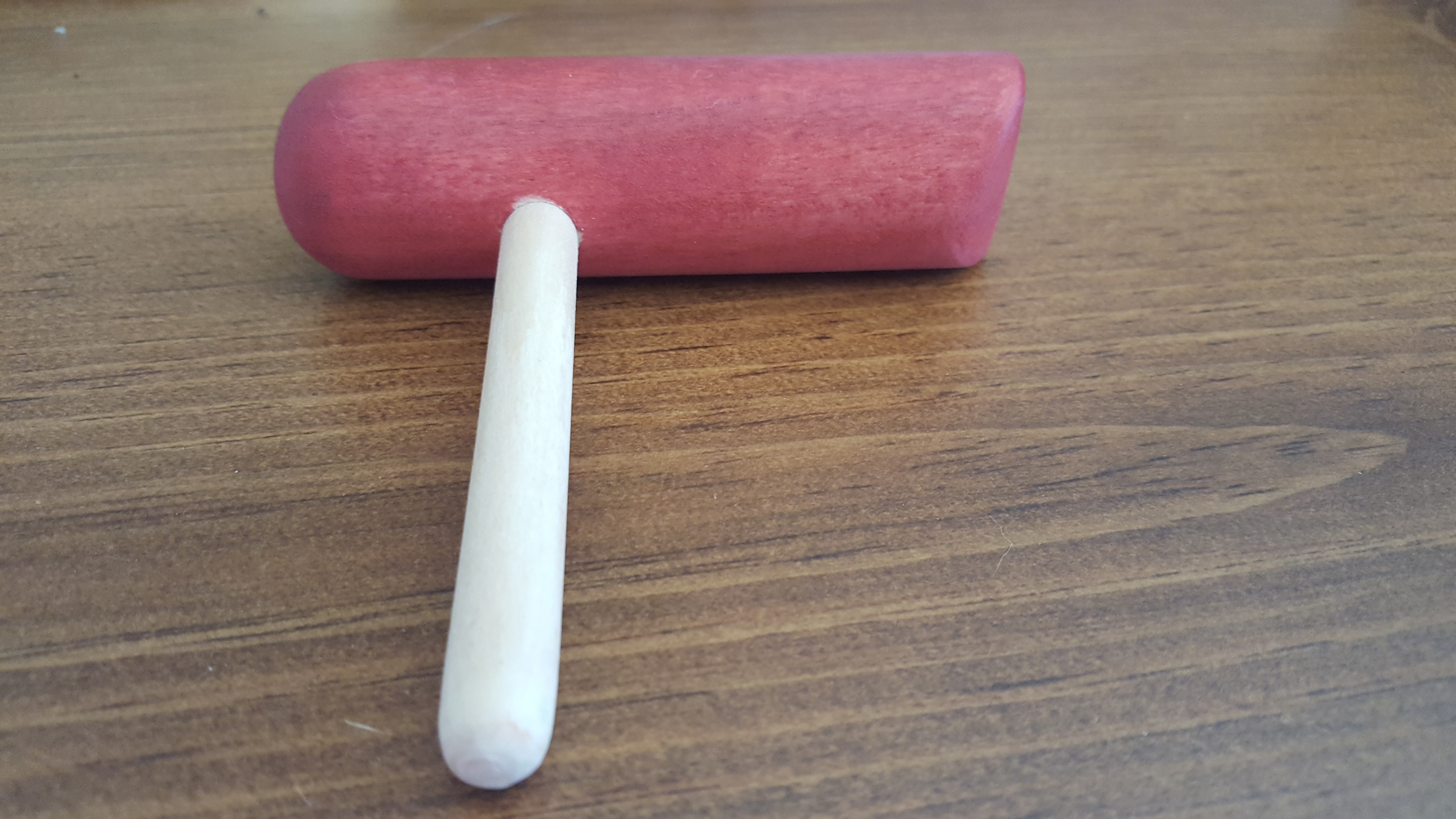
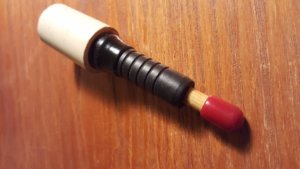
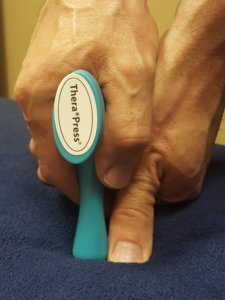
    In fact, I take no less than 7 tools into a massage with me, like this one:

    Okay, so I’m a massage tool addict.

    But here’s the advantage that massage tools give me:

    1. They save my fingers and thumbs.
    2. I can access difficult areas that require a precise and focused pressure better than I can with fingers.
    3. I have more tissue contact options than I do with fingers.  

    How to Use Massage Tools Fearlessly and Effectively (2.5 CEU)

    If you want to learn how to use massage tools so that you can do more massages, make more money and save your fingers and upper-body, then check out How to Use Massage Tools (Fearlessly and Effectively).

    It’s an online, home-study course that you can take at your own pace. In other words, you can practice what you learn in the class as you go along because you have life-time access to the course.

    Yes, it is a NCBTMB-approved 2.5 CEU course, so you can get some of your continuing education credits, but more importantly, it’s a practical course with lots of videos and real massage-life applications. Let me know what you think:-)